The Story
Plant Bio
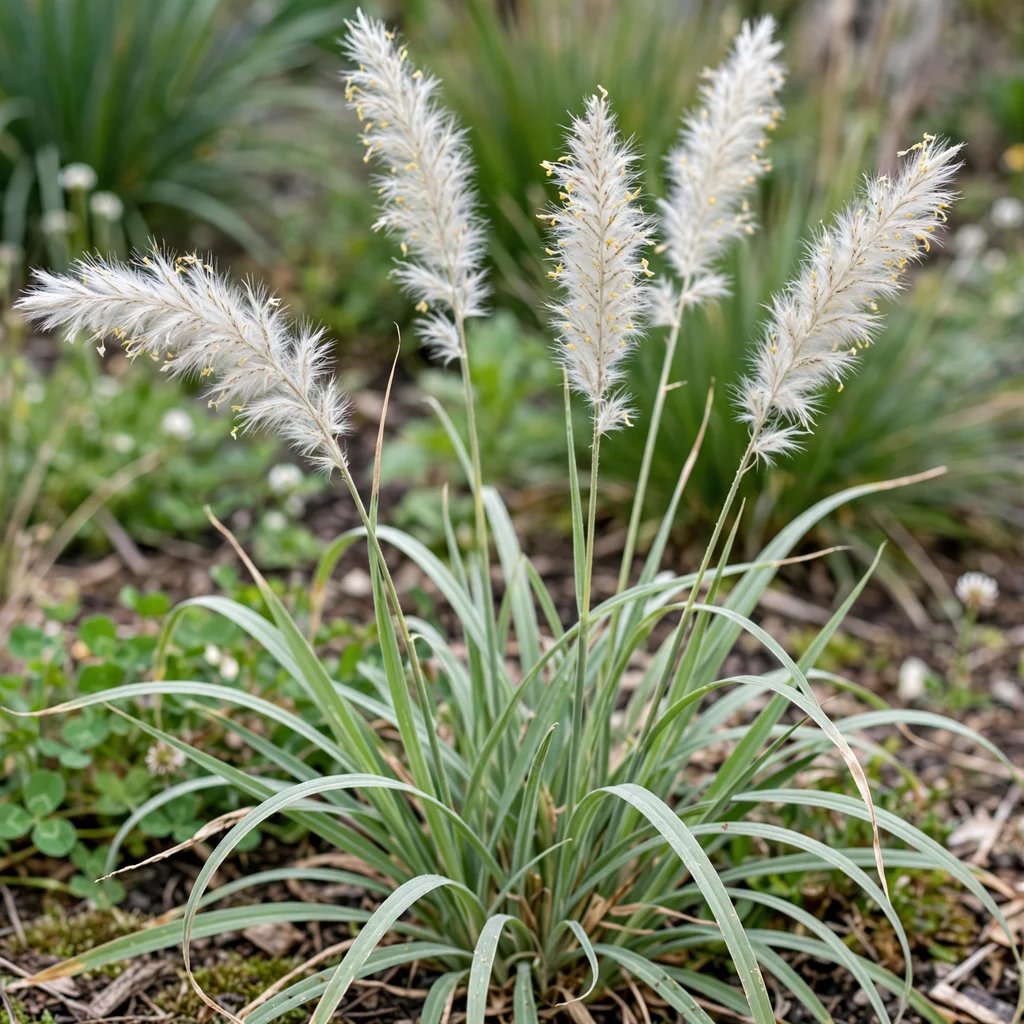
Bothriochloa barbinodis, cane bluestem, is a warm-season bunchgrass that forms erect upright clumps 3 to 4 feet tall and wide from jointed culms. The foliage is pale green with flat coarse blades 8 to 12 inches long, dying back in winter and regreening from the crown in spring.
It is distinguished by fluffy silvery-white plumed heads to 14 inches long carried above the foliage from late spring into early fall, with yellow anthers at pollen shed. Clumps branch at maturity and persist on dry alkaline sand, loam or clay, enduring drought and cold below 15 degrees Fahrenheit.
Uses & Benefits:
Essentials
At a Glance
Plant Type
Grass
Height
42"
Width
42"
Light
Full Sun
Zones
5, 6, 7, 8, 9, 10
Water
Low
Humidity
Low
Lifespan
Perennial
Native To
Southern USA to South America
Toxicity
Non-toxic
Bloom period
Late spring – Early fall
In flower about 5 months of the year
Planting
How to Grow
- Plant in full sun in well-draining sandy, loam or clay soil with alkaline pH.
- Set plugs or sow seed after soil has warmed in mid-spring, 36 to 48 inches apart.
- Water to establish, then reduce to deep infrequent soakings and allow soil to dry between waterings.
- Cut dead foliage to 2 to 3 inches in late winter before new shoots emerge.
- Protect crowns from continuous heavy grazing or close mowing to keep clumps vigorous.
Pro Tip
Cut dead tops to the crown in late winter before green-up; dormant brown plants read as dead, so judge vigor only on new green growth.
Keep It Thriving
Care Guide
Do
- Do plant in full sun with sharp drainage.
- Do allow soil to dry between waterings once established.
- Do leave seed heads for birds and winter structure until late-winter cleanup.
Don't
- Do not overwater or plant in soggy soil where crowns rot.
- Do not graze or mow continuously to the ground through summer.
- Do not crowd into dense airless planting where foliage stays wet.
Seasonal Care Calendar
| Task | Jan | Feb | Mar | Apr | May | Jun | Jul | Aug | Sep | Oct | Nov | Dec |
|---|---|---|---|---|---|---|---|---|---|---|---|---|
| Divide | ||||||||||||
| Pest Check | ||||||||||||
| Plant | ||||||||||||
| Propagate | ||||||||||||
| Spring Cleanup |
Watch Out For
Pests & Diseases
Common Pests
Common Diseases
In the Garden
Landscape Uses & Companions
Landscape Uses
Multiply
Propagation Methods
Good to Know
Common Questions
Cane Bluestem questions
What zones can Cane Bluestem grow in?
Cane Bluestem is hardy in USDA Zones 5–10: in that range it survives winter in the ground. Colder than Zone 5, grow it in a container you can move to shelter for the winter, or as an annual.
Is Cane Bluestem deer resistant?
Yes — Cane Bluestem is rated deer-resistant. Deer typically pass it over, though extreme hunger can override any plant's defenses.
When does Cane Bluestem bloom?
Cane Bluestem typically blooms from late spring to early fall. Exact timing shifts a week or two with your zone — Sow's bloom calendar maps it to your garden.
Does Cane Bluestem need full sun?
Cane Bluestem does best in full sun (6+ hours).
Is Cane Bluestem drought tolerant?
Yes — once established (usually after the first full season), Cane Bluestem handles dry spells with minimal watering. Water deeply its first year to build the root system that makes that possible.
More Bothriochloa to compare
Keep exploring
Explore the genus
Grow Cane Bluestem with confidence
See it in a design of your actual yard, get zone-matched care reminders, and track it season by season in your garden journal.