The Story
Plant Bio
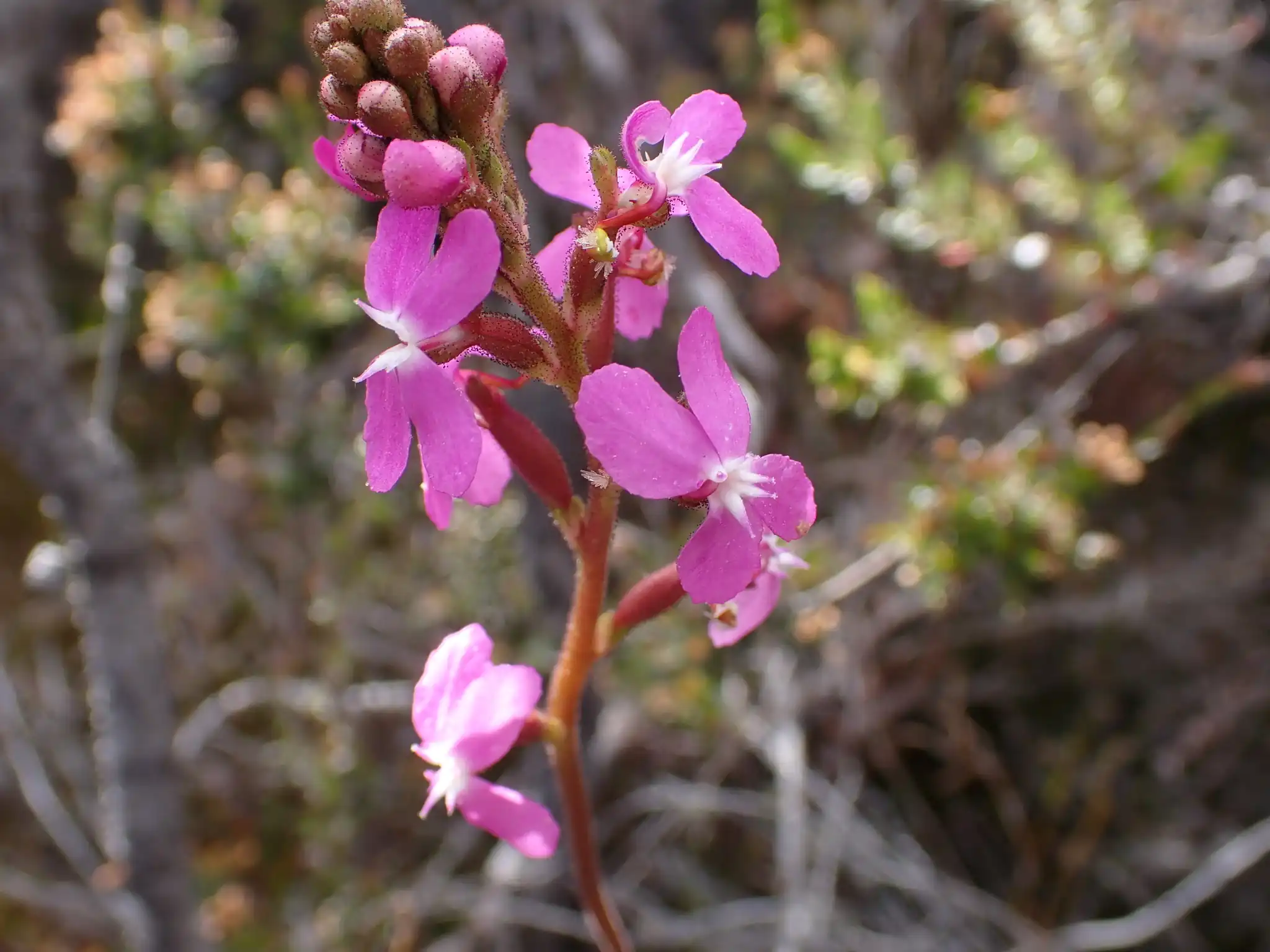
Stylidium graminifolium is a tufted perennial native to eastern Australia that forms a dense basal rosette of narrow, grass-like leaves. Upright, glandular-hairy scapes rise high above the foliage, carrying long spikes of pale to bright pink four-petaled flowers.
The flowers feature a sensitive, hinged column that rapidly snaps forward when touched by a visiting insect to deposit or collect pollen. This spring-loaded column resets after a brief interval to allow repeated pollinator visits.
Uses & Benefits:
Essentials
At a Glance
Plant Type
Perennial
Height
31"
Width
12"
Light
Full Sun, Partial Sun
Zones
8, 9, 10
Water
Low to moderate
Humidity
Moderate
Lifespan
Perennial
Native To
Australia
Toxicity
Non-toxic
Bloom period
Spring – Summer
In flower about 6 months of the year
Planting
How to Grow
- Plant in full sun to light shade in sharply draining sandy or gravelly soil.
- Water moderately during the initial establishment period, allowing soil to dry slightly between waterings.
- Apply a low-phosphorus fertilizer sparingly during spring active growth if grown in low-nutrient potting media.
- Move container plants to a sheltered, frost-free location during severe winter freezing periods.
Pro Tip
Cut spent flower scapes cleanly back to the basal foliage after blooming; cutting back into old leafless stem tissue stops regrowth.
Keep It Thriving
Care Guide
Do
- Provide sharply drained soil mix
- Cut spent flower stalks back to the base
- Grow in bright light or full sun
Don't
- Do not let soil remain wet and waterlogged
- Do not prune into old leafless stem bases
- Do not apply high-phosphorus fertilizers
Seasonal Care Calendar
| Task | Jan | Feb | Mar | Apr | May | Jun | Jul | Aug | Sep | Oct | Nov | Dec |
|---|---|---|---|---|---|---|---|---|---|---|---|---|
| Fertilize | ||||||||||||
| Prune | ||||||||||||
| Spring Cleanup | ||||||||||||
| Winter Prep |
Watch Out For
Pests & Diseases
Common Pests
Common Diseases
In the Garden
Landscape Uses & Companions
Landscape Uses
Companion Plants
Multiply
Propagation Methods
Good to Know
Common Questions
Grass Triggerplant questions
What zones can Grass Triggerplant grow in?
Grass Triggerplant is hardy in USDA Zones 8–10: in that range it survives winter in the ground. Colder than Zone 8, grow it in a container you can move to shelter for the winter, or as an annual.
When does Grass Triggerplant bloom?
Grass Triggerplant typically blooms from spring to summer. Exact timing shifts a week or two with your zone — Sow's bloom calendar maps it to your garden.
Does Grass Triggerplant need full sun?
Grass Triggerplant does best in full sun to part shade. In hot climates, afternoon shade keeps blooms fresher longer.
Is Grass Triggerplant drought tolerant?
Yes — once established (usually after the first full season), Grass Triggerplant handles dry spells with minimal watering. Water deeply its first year to build the root system that makes that possible.
Keep exploring
Explore the genus
Hardy in your zone?
Grow Grass Triggerplant with confidence
See it in a design of your actual yard, get zone-matched care reminders, and track it season by season in your garden journal.