The Story
Plant Bio
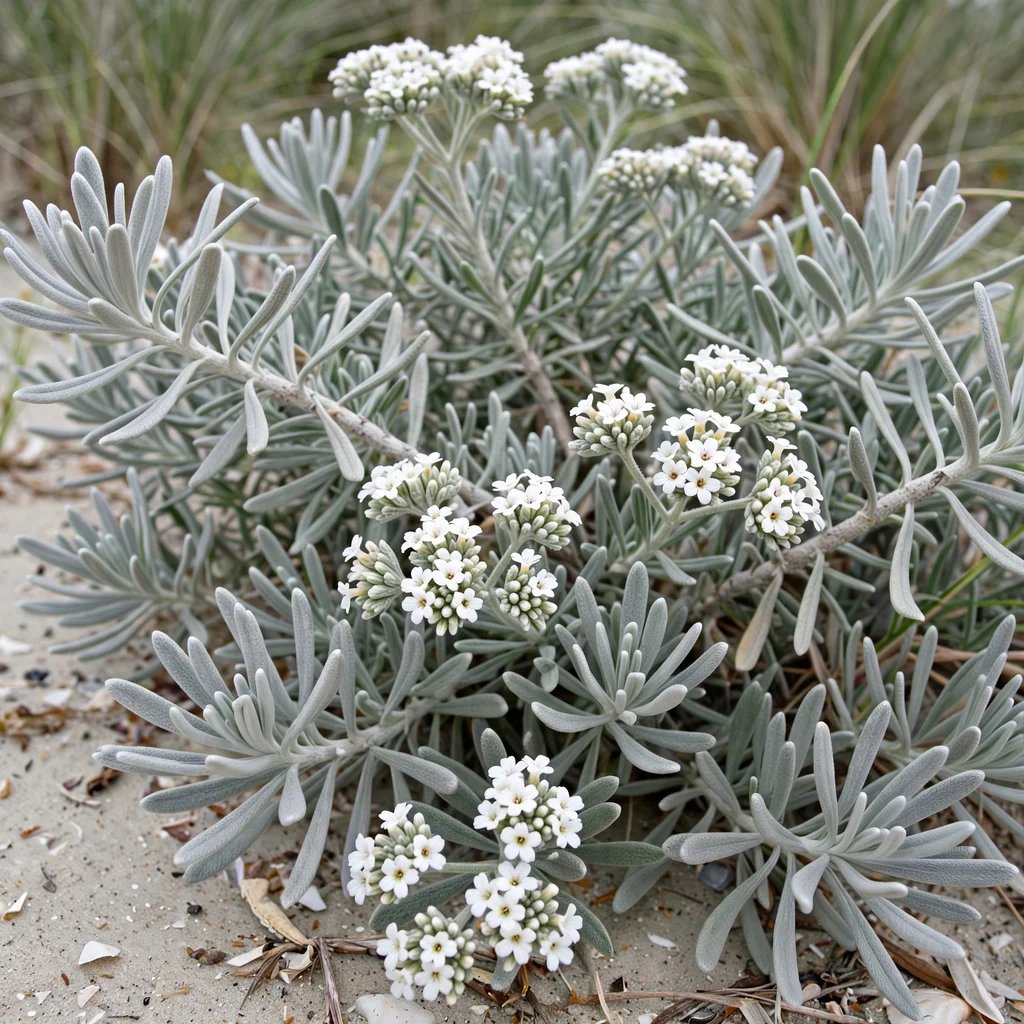
Argusia gnaphalodes, the sea lavender of Atlantic dunes, is an evergreen mounding shrub to five feet tall that spreads into broad sand-rooting colonies. The stems end in tufts of narrow fleshy gray leaves coated in silky hairs, with new growth gray-hairy and old dead leaves persisting below the tips.
The small white tubes with a greenish-yellow to pink throat open on one-sided coiled clusters with a mild sweet scent, followed by corky black drupes that float for ocean dispersal. The lavender look comes from gray foliage form alone; the leaves have no lavender scent and the low branches root in sand to hold dunes.
Uses & Benefits:
Essentials
At a Glance
Plant Type
Shrub
Height
59"
Width
236"
Light
Full Sun, Partial Sun
Zones
9, 10
Water
Low
Humidity
Tolerant of humid coastal air
Lifespan
Long-lived shrub
Native To
Coastal southeast Florida, Caribbean, tropical Americas
Toxicity
Non-toxic
Bloom period
Autumn – Winter
In flower about 6 months of the year
Planting
How to Grow
- Plant in full sun in deep, free-draining beach sand with alkaline to slightly acid pH.
- Set the rootball 1 to 2 inches deeper than it grew, or bury half the shoot on loose dunes, spacing 4 to 6 feet apart.
- Water to settle sand, then water only until new growth shows; established colonies need water only in extreme drought.
- Skip fertilizer and mulch; prune only to remove dead wood or shape.
Pro Tip
Set container plants 1 to 2 inches deeper than they grew in the pot in pure sand, then withhold water once rooted — steady irrigation in rich soil rots the crown.
Keep It Thriving
Care Guide
Do
- Grow in full sun with open airflow
- Plant deep in pure sand
- Buy nursery-propagated stock
Don't
- Do not irrigate regularly after establishment
- Do not plant in clay or organic-enriched soil or fertilize
- Do not collect from the wild
Seasonal Care Calendar
| Task | Jan | Feb | Mar | Apr | May | Jun | Jul | Aug | Sep | Oct | Nov | Dec |
|---|---|---|---|---|---|---|---|---|---|---|---|---|
| Fertilize | ||||||||||||
| Pest Check | ||||||||||||
| Plant | ||||||||||||
| Propagate | ||||||||||||
| Prune |
Watch Out For
Pests & Diseases
Common Pests
Common Diseases
In the Garden
Landscape Uses & Companions
Landscape Uses
Multiply
Propagation Methods
Good to Know
Common Questions
Sea Lavender questions
What zones can Sea Lavender grow in?
Sea Lavender is hardy in USDA Zones 9–10: in that range it survives winter in the ground. Colder than Zone 9, grow it in a container you can move to shelter for the winter.
When does Sea Lavender bloom?
Sea Lavender typically blooms from fall to winter. Exact timing shifts a week or two with your zone — Sow's bloom calendar maps it to your garden.
Does Sea Lavender need full sun?
Sea Lavender does best in full sun to part shade. In hot climates, afternoon shade keeps blooms fresher longer.
Is Sea Lavender drought tolerant?
Yes — once established (usually after the first full season), Sea Lavender handles dry spells with minimal watering. Water deeply its first year to build the root system that makes that possible.
Keep exploring
Explore the genus
Hardy in your zone?
Grow Sea Lavender with confidence
See it in a design of your actual yard, get zone-matched care reminders, and track it season by season in your garden journal.