The Story
Plant Bio
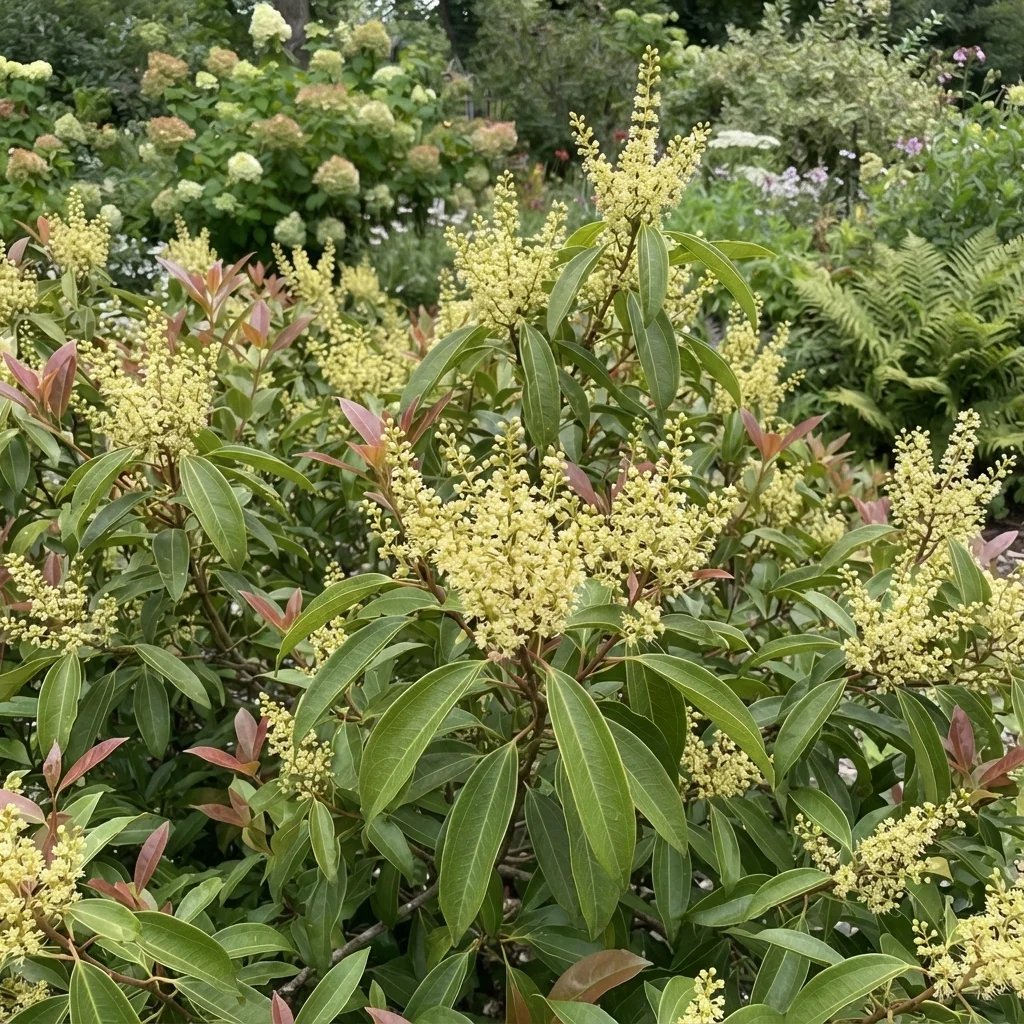
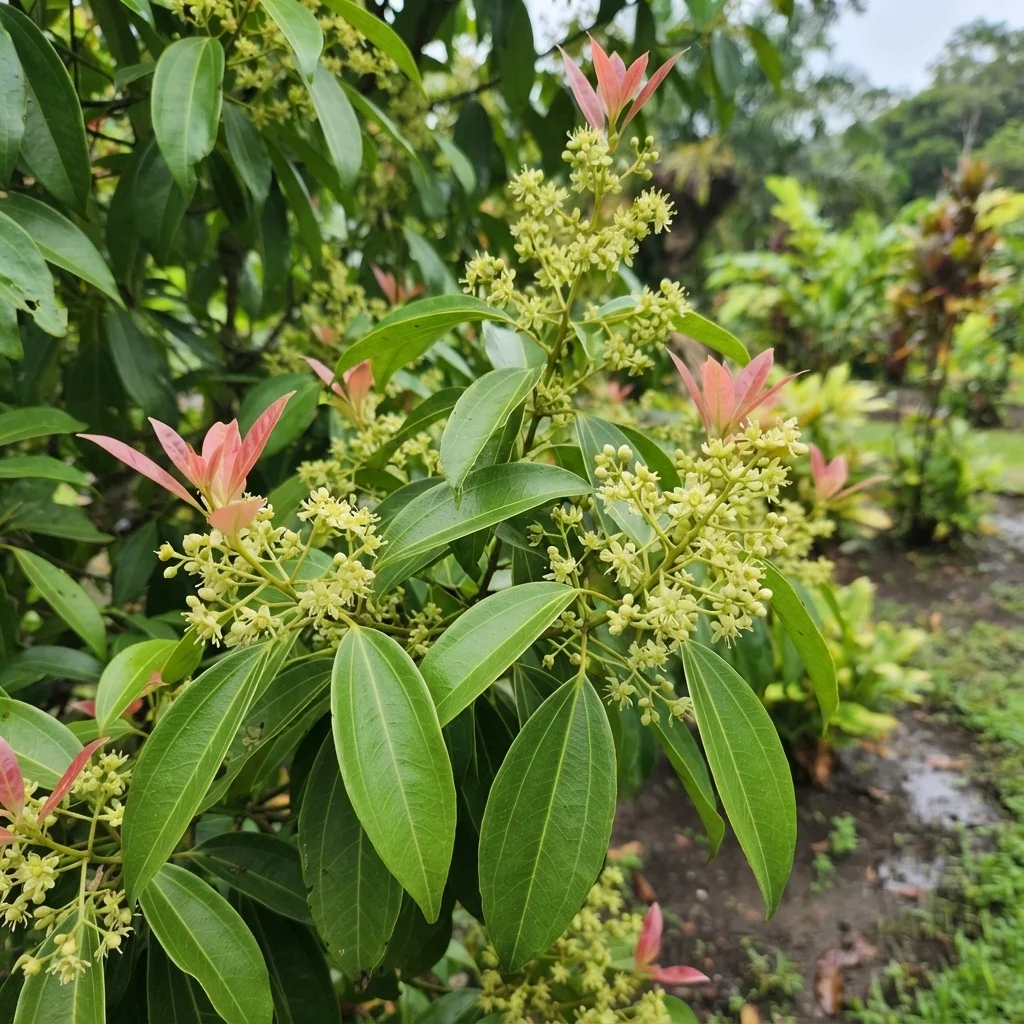
Cinnamomum aromaticum is an evergreen tree from southeast China to Vietnam, reaching 33 to 50 feet in cultivation with greyish bark and a dense canopy. The hard, elongated leaves are 4 to 6 inches long, reddish on new growth and green when mature.
It is the cassia bark tree; its thick bark supplies most of the spice sold as cinnamon in North America, stronger in flavor but very high in coumarin. Pale yellow flowers in clustered panicles longer than the leaves bloom in summer, followed by small pointed black drupes.
Uses & Benefits:
Essentials
At a Glance
Plant Type
Tree
Height
600"
Width
420"
Light
Full Sun, Partial Sun
Zones
9, 10
Water
Unknown
Humidity
Unknown
Lifespan
Long-lived tree
Native To
Southeast China to Vietnam
Toxicity
Bark high in coumarin - liver risk in large doses
Bloom period
Summer
In flower about 3 months of the year
Planting
How to Grow
- Plant in spring after last frost in zone 9b-11 where winter lows stay above 25F.
- Allow room for a 35-foot canopy; this becomes a small to medium evergreen tree.
- Water to establish the first season, then maintain even moisture.
- Protect from hard freeze with covering and a sheltered placement.
Pro Tip
Confirm the label reads Cinnamomum aromaticum, often still sold as Cinnamomum cassia, and do not confuse young stock with camphor laurel.
Keep It Thriving
Care Guide
Do
- Give it room to form a full dense canopy.
- Protect from temperatures below the upper 20s F.
- Label it as cassia to avoid confusion with true cinnamon and camphor laurel.
Don't
- Do not plant where hard freezes below 25F are routine.
- Do not use bark regularly as food without understanding coumarin and blood-thinner risk.
- Do not confuse it with camphor laurel, a separate invasive species in Florida.
Seasonal Care Calendar
| Task | Jan | Feb | Mar | Apr | May | Jun | Jul | Aug | Sep | Oct | Nov | Dec |
|---|---|---|---|---|---|---|---|---|---|---|---|---|
| Mulch | ||||||||||||
| Pest Check | ||||||||||||
| Plant | ||||||||||||
| Winter Prep |
Watch Out For
Pests & Diseases
Common Pests
In the Garden
Landscape Uses & Companions
Landscape Uses
Companion Plants
Multiply
Propagation Methods
Good to Know
Common Questions
Chinese Cinnamon questions
What zones can Chinese Cinnamon grow in?
Chinese Cinnamon is hardy in USDA Zones 9–10: in that range it survives winter in the ground. Colder than Zone 9, winters are too cold for it to survive outdoors.
When does Chinese Cinnamon bloom?
Chinese Cinnamon typically blooms in summer. Exact timing shifts a week or two with your zone — Sow's bloom calendar maps it to your garden.
Does Chinese Cinnamon need full sun?
Chinese Cinnamon does best in full sun to part shade. In hot climates, afternoon shade keeps blooms fresher longer.
More Cinnamomum to compare
Keep exploring
Explore the genus
Hardy in your zone?
Grow Chinese Cinnamon with confidence
See it in a design of your actual yard, get zone-matched care reminders, and track it season by season in your garden journal.