The Story
Plant Bio
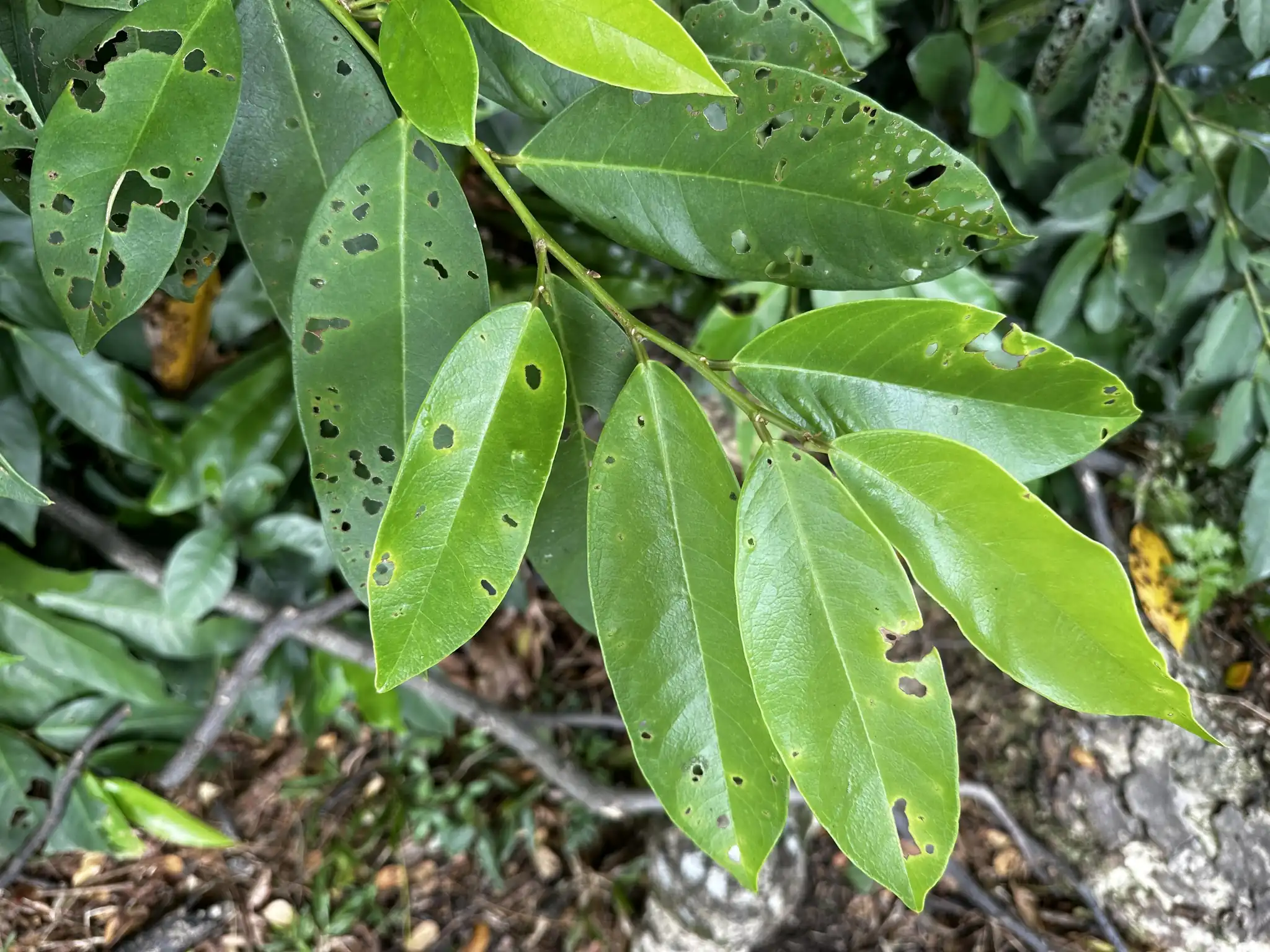
Antidesma bunius is an evergreen small to medium tree reaching 10 to 33 feet in gardens, with a straight often fluted trunk and a wide-spreading dense rounded crown. Leaves are alternate, oblong and pointed, dark green, glossy and leathery, 2 to 8 inches long on very short stalks and held to form a thick canopy.
Plants are dioecious, with tiny 2 mm reddish male flowers in axillary bunches with a fishy odor and female flowers in terminal racemes 3 to 8 inches long. Female trees bear clustered berries that ripen unevenly from green to red to black on the same strand, very acid when unripe.
Uses & Benefits:
Essentials
At a Glance
Plant Type
Tree
Height
394"
Width
394"
Light
Full Sun, Partial Sun
Zones
10
Water
Moderate
Humidity
High
Lifespan
Long-lived tree
Native To
Sri Lanka and Himalayan India through Southeast Asia to Papua New Guinea and northern Australia
Toxicity
Roots and bark toxic; unripe fruit acidic
Bloom period
Summer – Winter
In flower about 9 months of the year
Planting
How to Grow
- Plant in full sun to part shade in well-drained clay loam enriched with mulch, allowing 35 to 40 feet for the wide crown.
- Water deeply at planting and weekly through fruit development; established trees tolerate short drought but crop better with steady moisture.
- Fertilize 2 to 3 times in warm months with a general-purpose fertilizer; correct alkaline-induced deficiencies with foliar nutritional sprays.
- Prune in spring to shape and to hold the tree shrubby where space is limited; remove dead and crossing limbs.
- Protect young trees from frost and drying winds below 27 F; site in the warmest microclimate in central and south Florida.
Pro Tip
Plant one male for every 10 to 12 females for a full crop; a lone female sets only a light crop from occasional perfect flowers.
Keep It Thriving
Care Guide
Do
- Mulch to hold moisture while keeping drainage open
- Water weekly while fruit is sizing
- Plant a male pollinator near female fruiting trees
Don't
- Do not eat roots or bark; roots are poisonous and bark contains a toxic alkaloid
- Do not strip whole clusters; berries ripen unevenly and unripe fruit is very acid
- Do not plant in cold windy frost pockets
Seasonal Care Calendar
| Task | Jan | Feb | Mar | Apr | May | Jun | Jul | Aug | Sep | Oct | Nov | Dec |
|---|---|---|---|---|---|---|---|---|---|---|---|---|
| Fertilize | ||||||||||||
| Harvest | ||||||||||||
| Pest Check | ||||||||||||
| Plant | ||||||||||||
| Prune |
Watch Out For
Pests & Diseases
Common Pests
Common Diseases
In the Garden
Landscape Uses & Companions
Landscape Uses
Companion Plants
Multiply
Propagation Methods
Good to Know
Common Questions
Bignay questions
What zones can Bignay grow in?
Bignay is hardy in USDA Zone 10: in that range it survives winter in the ground. Colder than Zone 10, winters are too cold for it to survive outdoors.
When does Bignay bloom?
Bignay typically blooms from summer to winter. Exact timing shifts a week or two with your zone — Sow's bloom calendar maps it to your garden.
Does Bignay need full sun?
Bignay does best in full sun to part shade. In hot climates, afternoon shade keeps blooms fresher longer.
Is Bignay drought tolerant?
Yes — once established (usually after the first full season), Bignay handles dry spells with minimal watering. Water deeply its first year to build the root system that makes that possible.
Keep exploring
Explore the genus
Hardy in your zone?
Grow Bignay with confidence
See it in a design of your actual yard, get zone-matched care reminders, and track it season by season in your garden journal.