The Story
Plant Bio
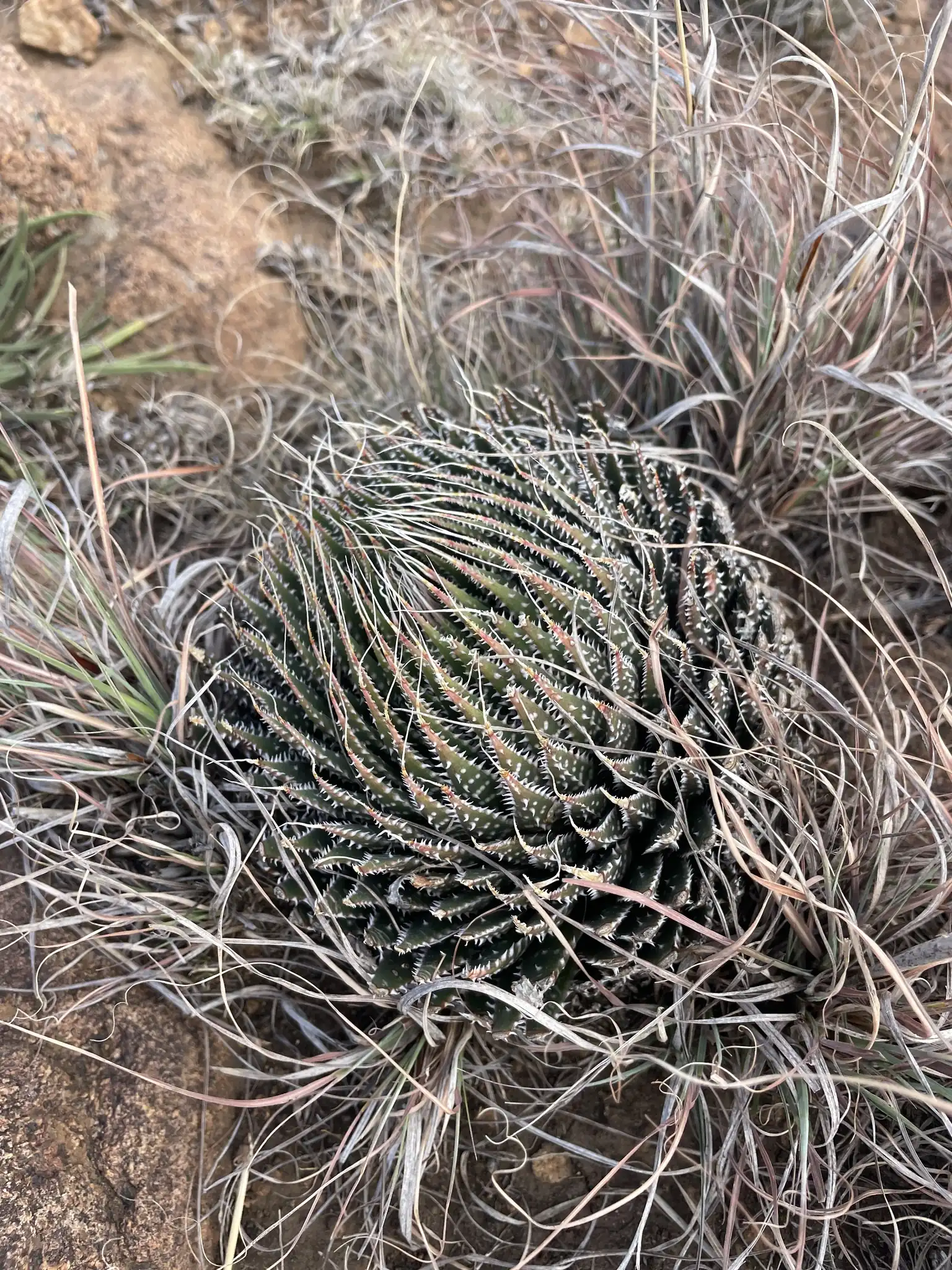
Aristaloe aristata is a stemless evergreen succulent from South Africa and Lesotho, forming a tight rosette of dark grey-green triangular leaves to about nine inches across. Each leaf carries raised white tubercles and a fringe of fine white bristles along the margins ending in a single bristle at the tip.
Plants offset freely to build a low mound of eight to ten or more rosettes, and mature rosettes send up a branched stalk to twenty inches carrying pendulous coral-orange tubular flowers in summer. Unlike Aloe vera it is hardy to about 14°F and it is grown for ornament only, as the foliage and sap cause vomiting and stomach upset if ingested.
Uses & Benefits:
Essentials
At a Glance
Plant Type
Cactus Succulent
Height
9"
Width
18"
Light
Full Sun, Partial Sun
Zones
7, 8, 9, 10
Water
Low
Humidity
Low
Lifespan
Long-lived perennial
Native To
South Africa and Lesotho
Toxicity
Toxic if ingested
Bloom period
Summer
In flower about 3 months of the year
Planting
How to Grow
- Plant in spring after frost in a shallow pot with drainage holes, using cactus mix cut with coarse sand or perlite.
- Set the crown at soil level in full sun to part shade, with light afternoon shade in hot-summer areas.
- Water deeply, then let the mix dry completely before watering again; cut back sharply in winter.
- Feed lightly once in spring with diluted cactus fertilizer, if at all.
- Remove spent flower stalks at the base and leave offsets to form a clump or detach to replant.
Pro Tip
Pot in very gritty, sharply drained mix and water deeply only after it dries completely; rich soil that stays moist rots the crown.
Keep It Thriving
Care Guide
Do
- Give maximum bright light indoors or full sun outdoors with afternoon shade in heat
- Use a shallow container with drainage and very gritty fast-draining mix
- Let soil dry completely between waterings and keep winter nearly dry
Don't
- Do not overwater or leave the pot standing in a saucer of water
- Do not plant in heavy clay or rich moisture-holding soil or mulch
- Do not ingest or use as a medicinal aloe like Aloe vera
Seasonal Care Calendar
| Task | Jan | Feb | Mar | Apr | May | Jun | Jul | Aug | Sep | Oct | Nov | Dec |
|---|---|---|---|---|---|---|---|---|---|---|---|---|
| Deadhead | ||||||||||||
| Pest Check | ||||||||||||
| Plant | ||||||||||||
| Propagate | ||||||||||||
| Winter Prep |
Watch Out For
Pests & Diseases
Common Pests
Common Diseases
In the Garden
Landscape Uses & Companions
Landscape Uses
Multiply
Propagation Methods
Good to Know
Common Questions
Lace Aloe questions
What zones can Lace Aloe grow in?
Lace Aloe is hardy in USDA Zones 7–10: in that range it survives winter in the ground. Colder than Zone 7, grow it in a container you can move to shelter for the winter, or as an annual.
When does Lace Aloe bloom?
Lace Aloe typically blooms in summer. Exact timing shifts a week or two with your zone — Sow's bloom calendar maps it to your garden.
Does Lace Aloe need full sun?
Lace Aloe does best in full sun to part shade. In hot climates, afternoon shade keeps blooms fresher longer.
Is Lace Aloe drought tolerant?
Yes — once established (usually after the first full season), Lace Aloe handles dry spells with minimal watering. Water deeply its first year to build the root system that makes that possible.
Keep exploring
Explore the genus
Hardy in your zone?
Grow Lace Aloe with confidence
See it in a design of your actual yard, get zone-matched care reminders, and track it season by season in your garden journal.