The Story
Plant Bio
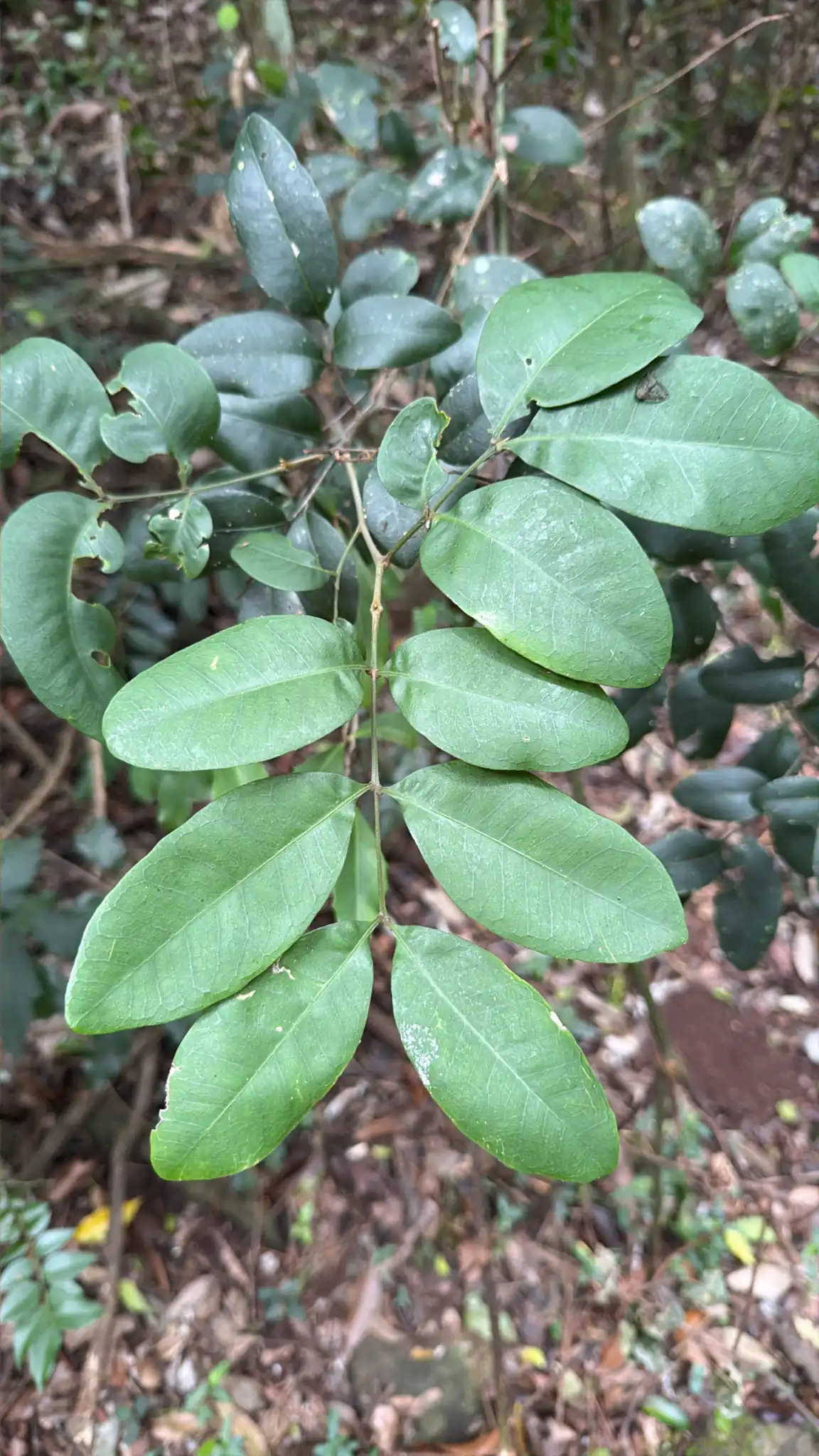
Guioa semiglauca is an evergreen tree featuring a dense rounded canopy and a smooth grey trunk that becomes fluted at the base with maturity. The pinnate compound foliage consists of dark green upper surfaces and distinctly glaucous grey-green undersides that catch the wind.
The leaf undersides are finely hairy and gland-dotted, contrasting with reddish new foliage in spring. Small pale green or cream flowers bloom in dense axillary panicles, followed by woody capsules opening to expose seeds wrapped in fleshy orange arils.
Uses & Benefits:
Essentials
At a Glance
Plant Type
Tree
Height
236"
Width
157"
Light
Full Sun, Partial Sun
Zones
10
Water
Moderate
Humidity
Moderate to high
Lifespan
Perennial
Native To
Eastern Australia
Toxicity
Toxic if ingested
Bloom period
Spring
In flower about 3 months of the year
Planting
How to Grow
- Select a planting site in full sun or partial shade with well-drained loamy or sandy soil.
- Dig a hole twice the width of the root ball and install the tree at its original container depth.
- Water thoroughly after planting and apply a organic mulch layer to retain soil moisture.
- Provide regular moisture during the first establishment season until roots extend into surrounding soil.
Pro Tip
Avoid heavy structural pruning into old leafless wood, as regrowth from mature stems is slow and patchy.
Keep It Thriving
Care Guide
Do
- Protect young plants from freezing temperatures and cold drafts.
- Maintain consistent soil moisture during extended hot, dry spells.
- Apply a balanced low-stress fertilizer during active spring growth if soils are low in nutrients.
Don't
- Do not plant in waterlogged or heavy, poorly drained clay soils.
- Do not cut back into old bare wood when shaping the canopy.
- Do not allow young trees to experience severe frosts while establishing.
Seasonal Care Calendar
| Task | Jan | Feb | Mar | Apr | May | Jun | Jul | Aug | Sep | Oct | Nov | Dec |
|---|---|---|---|---|---|---|---|---|---|---|---|---|
| Fertilize | ||||||||||||
| Mulch | ||||||||||||
| Pest Check | ||||||||||||
| Prune | ||||||||||||
| Winter Prep |
Watch Out For
Pests & Diseases
Common Pests
Common Diseases
In the Garden
Landscape Uses & Companions
Landscape Uses
Companion Plants
Multiply
Propagation Methods
Good to Know
Common Questions
Wild Quince questions
What zones can Wild Quince grow in?
Wild Quince is hardy in USDA Zone 10: in that range it survives winter in the ground. Colder than Zone 10, winters are too cold for it to survive outdoors.
When does Wild Quince bloom?
Wild Quince typically blooms in spring. Exact timing shifts a week or two with your zone — Sow's bloom calendar maps it to your garden.
Does Wild Quince need full sun?
Wild Quince does best in full sun to part shade. In hot climates, afternoon shade keeps blooms fresher longer.
Is Wild Quince drought tolerant?
Yes — once established (usually after the first full season), Wild Quince handles dry spells with minimal watering. Water deeply its first year to build the root system that makes that possible.
Keep exploring
Explore the genus
Hardy in your zone?
Grow Wild Quince with confidence
See it in a design of your actual yard, get zone-matched care reminders, and track it season by season in your garden journal.