The Story
Plant Bio
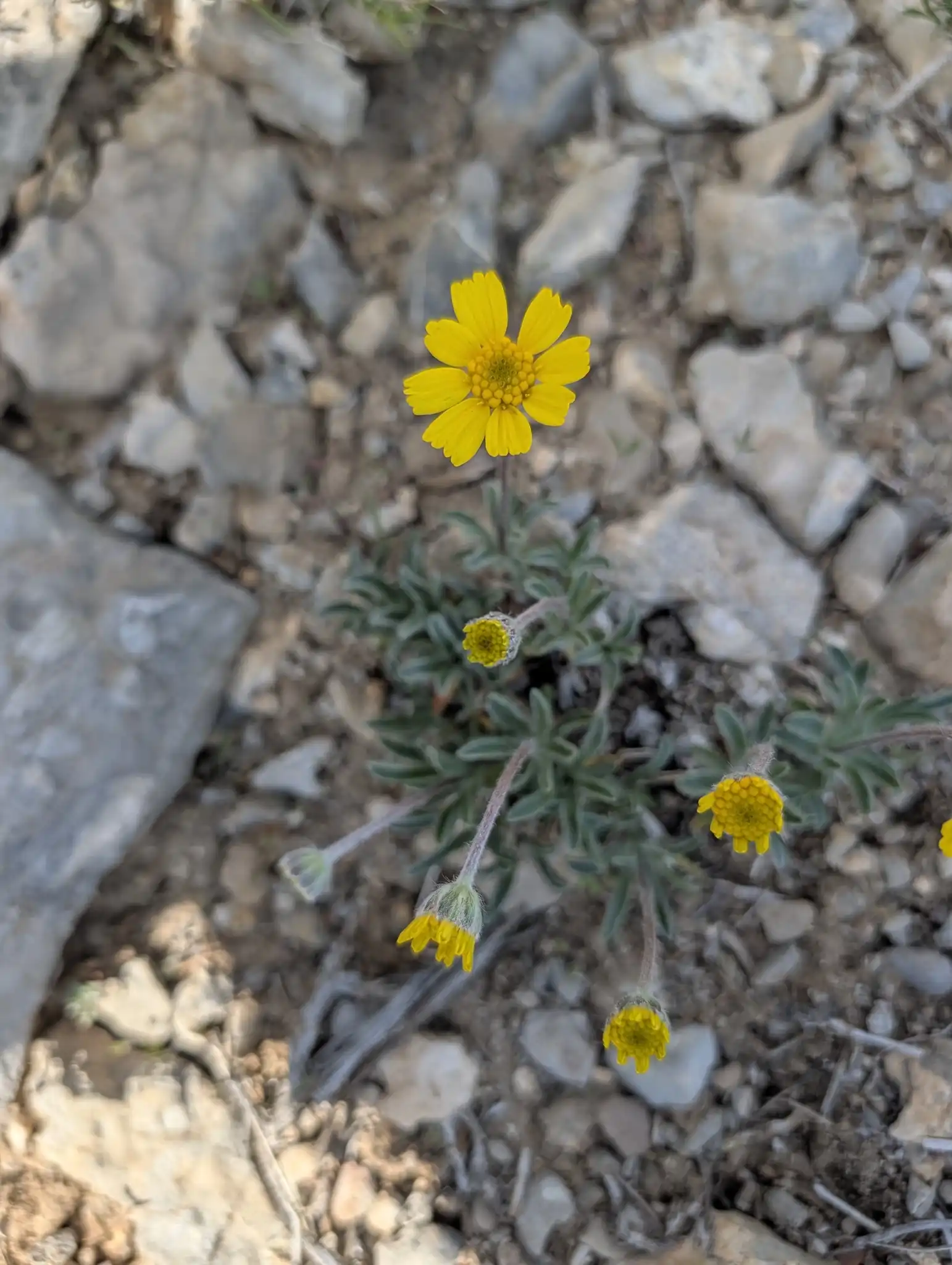
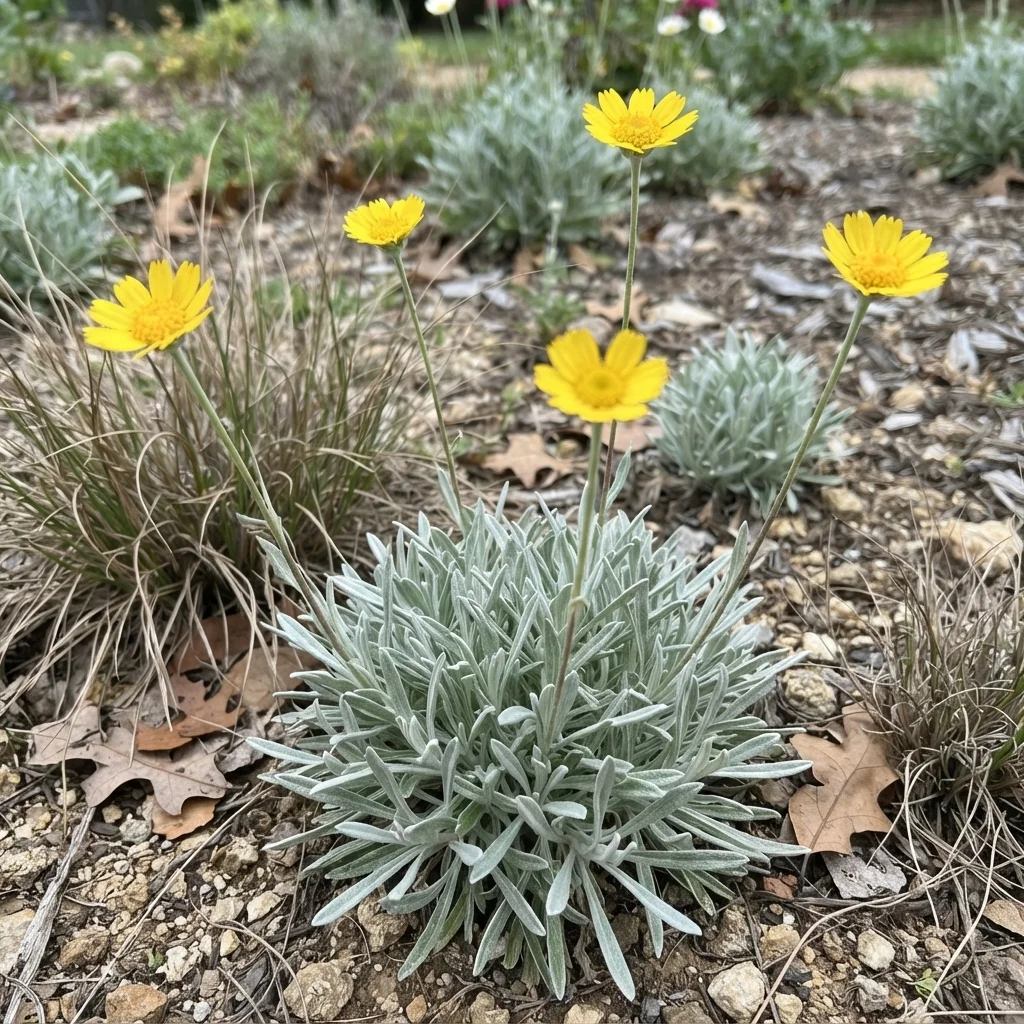
Tetraneuris acaulis is a stemless, tufted evergreen perennial forming a low basal rosette of narrow silvery-green leaves. The foliage is spatulate to linear and coated in short appressed hairs, and the plant holds its display on leafless stalks above the mound.
All leaves remain basal with no leafy stem, and each 4- to 6-inch leafless scape carries a single 1-inch yellow daisy head, with an established clump carrying 30 to 40 heads at once. It grows from dry limestone gravel and rocky slopes at 4000 to 8500 feet and persists where drainage is sharp, failing from crown rot in wet ground rather than from cold or heat.
Uses & Benefits:
Essentials
At a Glance
Plant Type
Perennial
Height
12"
Width
12"
Light
Full Sun
Zones
5, 6, 7, 8, 9, 10
Water
Low
Humidity
Low - prefers dry air
Lifespan
Perennial
Native To
West-central North America
Toxicity
Unknown
Bloom period
Spring – Summer
In flower about 6 months of the year
Planting
How to Grow
- Plant in full sun in sharply drained sand, loam, or rocky limestone gravel with the crown at or slightly above soil level.
- Water in once, then water sparingly until rooted and only during prolonged dry spells once established.
- Surround with gravel rather than bark or compost to keep the rosette dry.
- Remove spent flower stalks as they finish to extend bloom and keep the mound tidy.
Pro Tip
Plant high in gravelly soil and leave the crown exposed; losses come from wet soil and organic mulch, not from cold.
Keep It Thriving
Care Guide
Do
- Give full sun and open air with sharp drainage.
- Use mineral gravel around the crown.
- Deadhead individual stalks to prolong flowering.
Don't
- Do not plant in low ground that holds water.
- Do not cover the crown with bark or rich compost.
- Do not divide or disturb the taprooted clump often.
Seasonal Care Calendar
| Task | Jan | Feb | Mar | Apr | May | Jun | Jul | Aug | Sep | Oct | Nov | Dec |
|---|---|---|---|---|---|---|---|---|---|---|---|---|
| Deadhead | ||||||||||||
| Pest Check | ||||||||||||
| Plant | ||||||||||||
| Propagate | ||||||||||||
| Spring Cleanup |
Watch Out For
Pests & Diseases
Common Pests
Common Diseases
In the Garden
Landscape Uses & Companions
Landscape Uses
Multiply
Propagation Methods
Good to Know
Common Questions
Angelita Daisy questions
What zones can Angelita Daisy grow in?
Angelita Daisy is hardy in USDA Zones 5–10: in that range it survives winter in the ground. Colder than Zone 5, grow it in a container you can move to shelter for the winter, or as an annual.
When does Angelita Daisy bloom?
Angelita Daisy typically blooms from spring to summer. Exact timing shifts a week or two with your zone — Sow's bloom calendar maps it to your garden.
Does Angelita Daisy need full sun?
Angelita Daisy does best in full sun (6+ hours).
Is Angelita Daisy drought tolerant?
Yes — once established (usually after the first full season), Angelita Daisy handles dry spells with minimal watering. Water deeply its first year to build the root system that makes that possible.
More Tetraneuris to compare
Keep exploring
Explore the genus
Grow Angelita Daisy with confidence
See it in a design of your actual yard, get zone-matched care reminders, and track it season by season in your garden journal.