The Story
Plant Bio
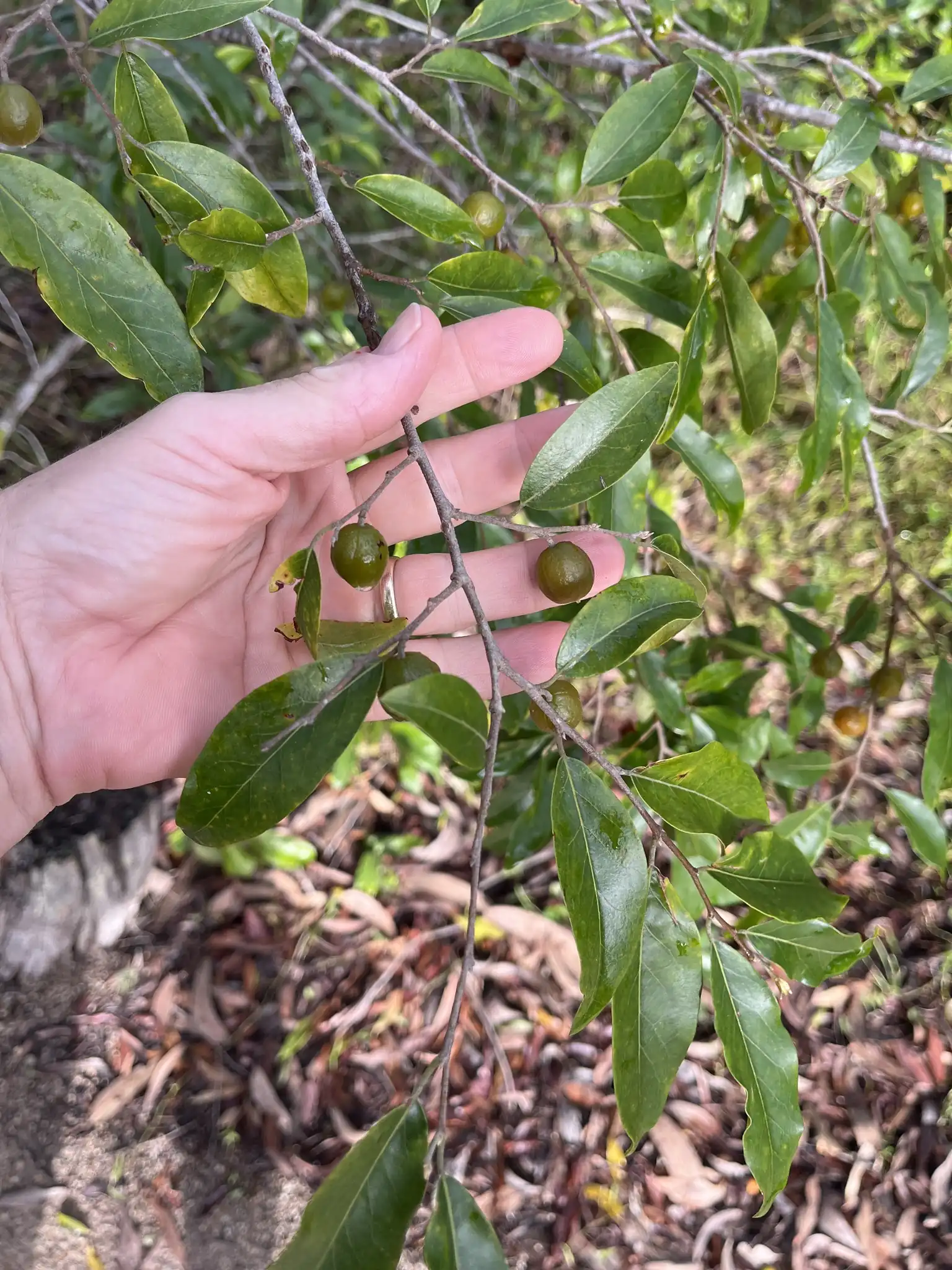
Petalostigma triloculare is a spreading shrub or small tree native to eastern Australia, developing dark grey bark with vertical fissures and silky brown young branches. Its alternate, narrow-elliptic leaves feature glossy dark green upper surfaces and dull greyish, finely hairy undersides.
Small, scented green to creamy-fawn flowers bloom in spring and summer, with female trees producing distinct orange-brown to reddish-orange three-celled capsules. The inner bark contains bitter alkaloids, which historically earned the species its common name of bitter bark.
Uses & Benefits:
Essentials
At a Glance
Plant Type
Tree
Height
591"
Width
236"
Light
Full Sun, Partial Sun
Zones
10
Water
Low
Humidity
High
Lifespan
Perennial
Native To
Australia
Toxicity
Toxic if ingested
Bloom period
Spring – Summer
In flower about 6 months of the year
Planting
How to Grow
- Select a planting site in full sun or light partial shade with sandy or gravelly, well-draining soil.
- Dig a hole twice as wide as the root ball but equal in depth, avoiding soil compaction around the planting site.
- Position the plant so the trunk base sits level with the surrounding soil grade.
- Water thoroughly upon planting, then allow the upper soil layer to dry out completely between subsequent waterings.
Pro Tip
Plant strictly in sharply draining sandy substrates; heavy soils that retain moisture quickly cause fatal root rot.
Keep It Thriving
Care Guide
Do
- Provide full sun to maximize dense growth and foliage development.
- Ensure soil drainage is fast and water never pools around the root zone.
Don't
- Do not plant in heavy clay soils or poorly drained low spots.
- Avoid heavy structural pruning back into old wood that lacks leaves.
Seasonal Care Calendar
| Task | Jan | Feb | Mar | Apr | May | Jun | Jul | Aug | Sep | Oct | Nov | Dec |
|---|---|---|---|---|---|---|---|---|---|---|---|---|
| Fertilize | ||||||||||||
| Mulch | ||||||||||||
| Pest Check | ||||||||||||
| Prune |
Watch Out For
Pests & Diseases
Common Pests
Common Diseases
In the Garden
Landscape Uses & Companions
Landscape Uses
Companion Plants
Multiply
Propagation Methods
Good to Know
Common Questions
Long-Leaved Bitter Bark questions
What zones can Long-Leaved Bitter Bark grow in?
Long-Leaved Bitter Bark is hardy in USDA Zone 10: in that range it survives winter in the ground. Colder than Zone 10, winters are too cold for it to survive outdoors.
When does Long-Leaved Bitter Bark bloom?
Long-Leaved Bitter Bark typically blooms from spring to summer. Exact timing shifts a week or two with your zone — Sow's bloom calendar maps it to your garden.
Does Long-Leaved Bitter Bark need full sun?
Long-Leaved Bitter Bark does best in full sun to part shade. In hot climates, afternoon shade keeps blooms fresher longer.
Is Long-Leaved Bitter Bark drought tolerant?
Yes — once established (usually after the first full season), Long-Leaved Bitter Bark handles dry spells with minimal watering. Water deeply its first year to build the root system that makes that possible.
Keep exploring
Explore the genus
Hardy in your zone?
Grow Long-Leaved Bitter Bark with confidence
See it in a design of your actual yard, get zone-matched care reminders, and track it season by season in your garden journal.