The Story
Plant Bio
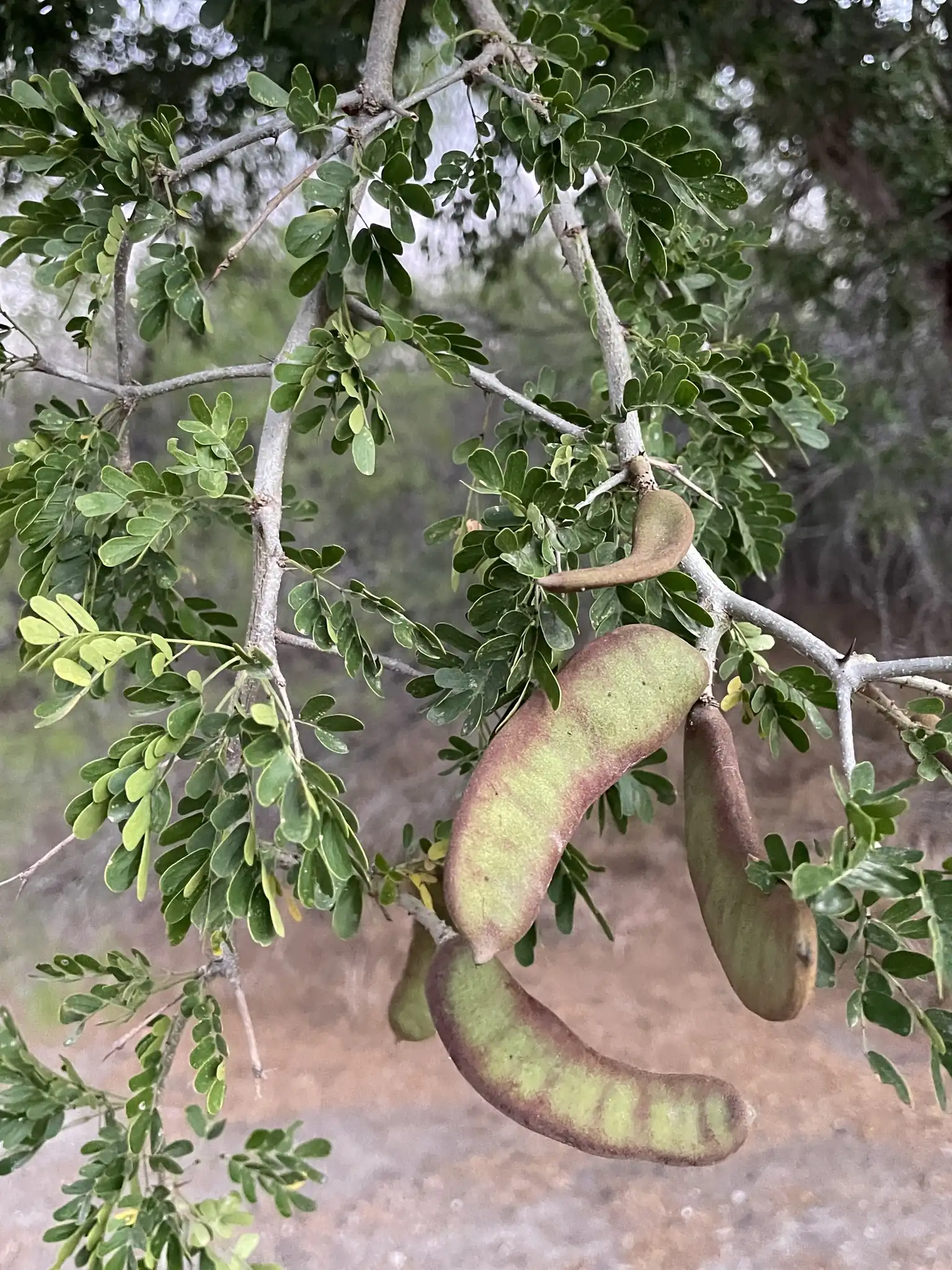
Ebenopsis ebano is a slow-growing evergreen tree of the pea family, forming a dense rounded crown 20 to 30 feet tall and wide on stiff flexuous branches armed with spinescent stipules. The twice-divided leaves carry small rounded deep green leaflets with pinnate venation, and the roots fix nitrogen through bacterial nodules in the soil.
In spring to summer it flowers in dense brush-like heads of creamy white highly fragrant blooms borne on short scaly spurs, followed by thick woody pods filled with sweet pulp around hard black seeds. The heartwood is very hard, heavy and dark, and established trees withstand drought, heat and reflected heat in alkaline well-drained caliche or gritty clay.
Uses & Benefits:
Essentials
At a Glance
Plant Type
Tree
Height
360"
Width
300"
Light
Full Sun, Partial Sun
Zones
8, 9, 10
Water
Low
Humidity
Low
Lifespan
Long-lived
Native To
South Texas and eastern Mexico
Toxicity
Thorns injure; pollen may irritate
Bloom period
Spring – Summer
In flower about 6 months of the year
Planting
How to Grow
- Plant in full sun in alkaline, well-drained caliche, loam or sandy clay after last frost.
- Dig the hole no deeper than the rootball, backfill with native soil and water in deeply.
- Mulch with gravel or coarse bark kept clear of the trunk to keep the crown dry.
- Water deeply every 1-2 weeks the first summer, then taper to occasional deep soakings once established.
- Train young trees to a single trunk or hedge frame with light cuts and leave mature trees alone.
Pro Tip
Site it in full sun in alkaline, sharply drained soil well clear of paths, then water deeply but infrequently and skip fertilizer; extra water speeds young growth a little, but constant moisture and rich soil shorten its life.
Keep It Thriving
Care Guide
Do
- Do plant in full sun with sharp drainage and alkaline pH.
- Do water deeply but infrequently to build deep roots.
- Do wear gloves and eye protection when pruning thorny branches.
Don't
- Do not plant beside walkways, play areas or pet runs where thorns injure.
- Do not overwater or fertilize; it thrives on little water and fixes its own nitrogen.
- Do not shear mature trees hard or cut back into old leafless wood.
Seasonal Care Calendar
| Task | Jan | Feb | Mar | Apr | May | Jun | Jul | Aug | Sep | Oct | Nov | Dec |
|---|---|---|---|---|---|---|---|---|---|---|---|---|
| Mulch | ||||||||||||
| Pest Check | ||||||||||||
| Plant | ||||||||||||
| Prune |
Watch Out For
Pests & Diseases
Common Pests
Common Diseases
In the Garden
Landscape Uses & Companions
Landscape Uses
Multiply
Propagation Methods
Good to Know
Common Questions
Texas Ebony questions
What zones can Texas Ebony grow in?
Texas Ebony is hardy in USDA Zones 8–10: in that range it survives winter in the ground. Colder than Zone 8, winters are too cold for it to survive outdoors.
When does Texas Ebony bloom?
Texas Ebony typically blooms from spring to summer. Exact timing shifts a week or two with your zone — Sow's bloom calendar maps it to your garden.
Does Texas Ebony need full sun?
Texas Ebony does best in full sun to part shade. In hot climates, afternoon shade keeps blooms fresher longer.
Is Texas Ebony drought tolerant?
Yes — once established (usually after the first full season), Texas Ebony handles dry spells with minimal watering. Water deeply its first year to build the root system that makes that possible.
Keep exploring
Explore the genus
Hardy in your zone?
Grow Texas Ebony with confidence
See it in a design of your actual yard, get zone-matched care reminders, and track it season by season in your garden journal.