The Story
Plant Bio
Kigelia africana, sold as Kigelia pinnata, is a medium-large spreading tree of tropical African savanna, riverbanks and floodplains, reaching fifty to sixty feet in cultivation with a broad crown to thirty feet and gray-brown bark that flakes with age. It carries glossy pinnate leathery leaves that stay evergreen where moisture is constant and drop in a dry season, with an aggressive root system that needs a large space.
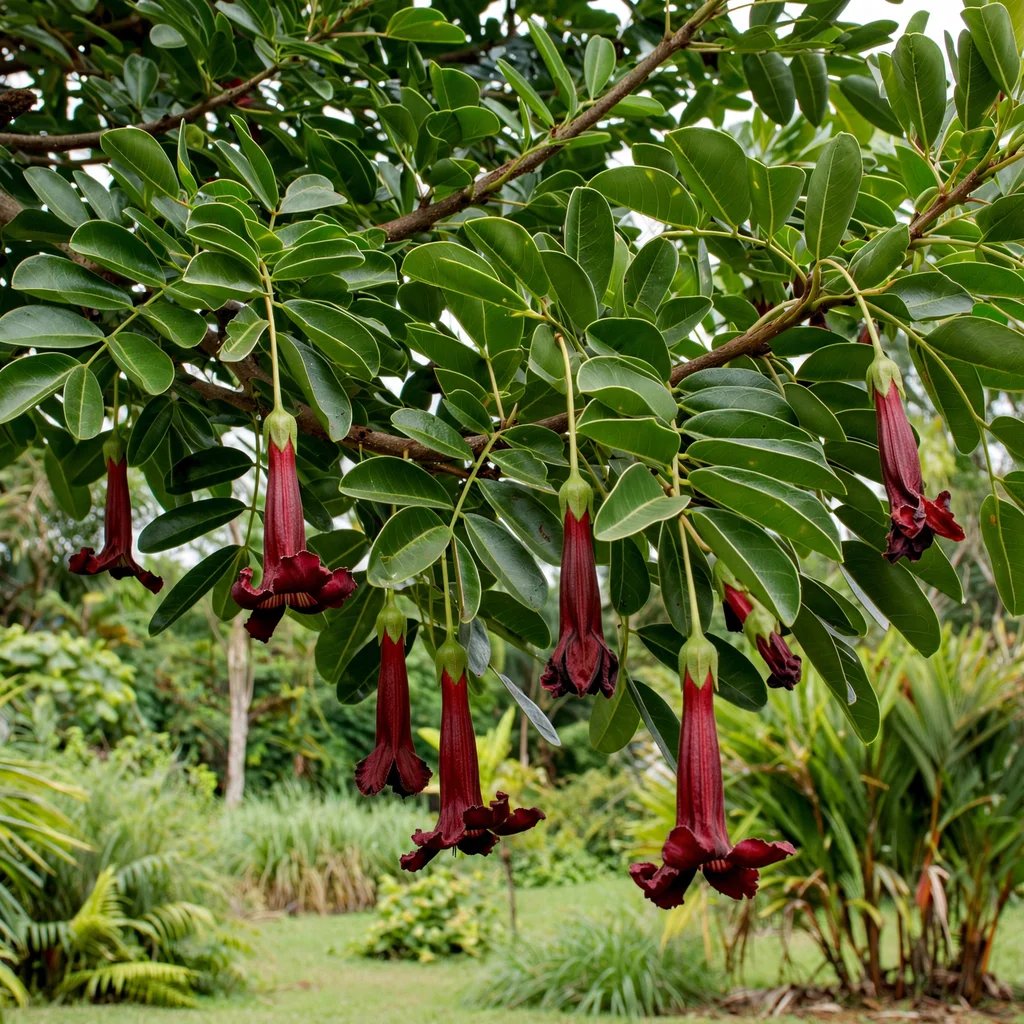
What sets it apart is the fruit, a hard sausage-shaped pod to three feet long weighing seven to twelve kilograms, hanging on rope-like stalks and falling when ripe. The flowers are borne in pendant panicles three to six feet long, opening one at a time at night as wrinkled maroon-claret bells veined yellow and falling the next day.
Uses & Benefits:
Essentials
At a Glance
Plant Type
Tree
Height
720"
Width
315"
Light
Full Sun, Partial Sun
Zones
10
Water
Medium
Humidity
High
Lifespan
Long-lived tree
Native To
Tropical Africa
Toxicity
Toxic to humans
Bloom period
Summer
In flower about 3 months of the year
Planting
How to Grow
- Plant in full sun with at least six hours of direct sun after all frost danger has passed, in moist well-drained clay, loam or sand.
- Dig the hole twice the width of the container, set at the same depth, backfill and water deeply to settle.
- Mulch two to three inches deep in a wide ring, kept clear of the trunk.
- Irrigate regularly through the first two dry seasons, then reduce once established.
- Give it thirty feet or more clear of paths, structures and parking for crown, roots and falling fruit.
Pro Tip
Site it well away from paths, parking and buildings for falling twelve-kilogram fruit and aggressive roots, and expect a night-blooming bat flower, not a day hummingbird flower.
Keep It Thriving
Care Guide
Do
- Plant away from foot traffic, cars and roofs because of heavy falling fruit
- Water deeply while young in heat and dry spells
- Monitor new growth for sucking insects and encourage ladybugs
Don't
- Do not plant where frost occurs without protection
- Do not eat raw fruit; it blisters mouth and skin and acts as an emetic and purgative
- Do not use broad insecticides that kill pollinating bats and beneficial insects
Seasonal Care Calendar
| Task | Jan | Feb | Mar | Apr | May | Jun | Jul | Aug | Sep | Oct | Nov | Dec |
|---|---|---|---|---|---|---|---|---|---|---|---|---|
| Mulch | ||||||||||||
| Pest Check | ||||||||||||
| Plant | ||||||||||||
| Prune | ||||||||||||
| Winter Prep |
Watch Out For
Pests & Diseases
Common Pests
In the Garden
Landscape Uses & Companions
Landscape Uses
Companion Plants
Multiply
Propagation Methods
Good to Know
Common Questions
Sausage Tree questions
What zones can Sausage Tree grow in?
Sausage Tree is hardy in USDA Zone 10: in that range it survives winter in the ground. Colder than Zone 10, winters are too cold for it to survive outdoors.
When does Sausage Tree bloom?
Sausage Tree typically blooms in summer. Exact timing shifts a week or two with your zone — Sow's bloom calendar maps it to your garden.
Does Sausage Tree need full sun?
Sausage Tree does best in full sun to part shade. In hot climates, afternoon shade keeps blooms fresher longer.
Is Sausage Tree drought tolerant?
Yes — once established (usually after the first full season), Sausage Tree handles dry spells with minimal watering. Water deeply its first year to build the root system that makes that possible.
Keep exploring
Explore the genus
Hardy in your zone?
Grow Sausage Tree with confidence
See it in a design of your actual yard, get zone-matched care reminders, and track it season by season in your garden journal.