The Story
Plant Bio
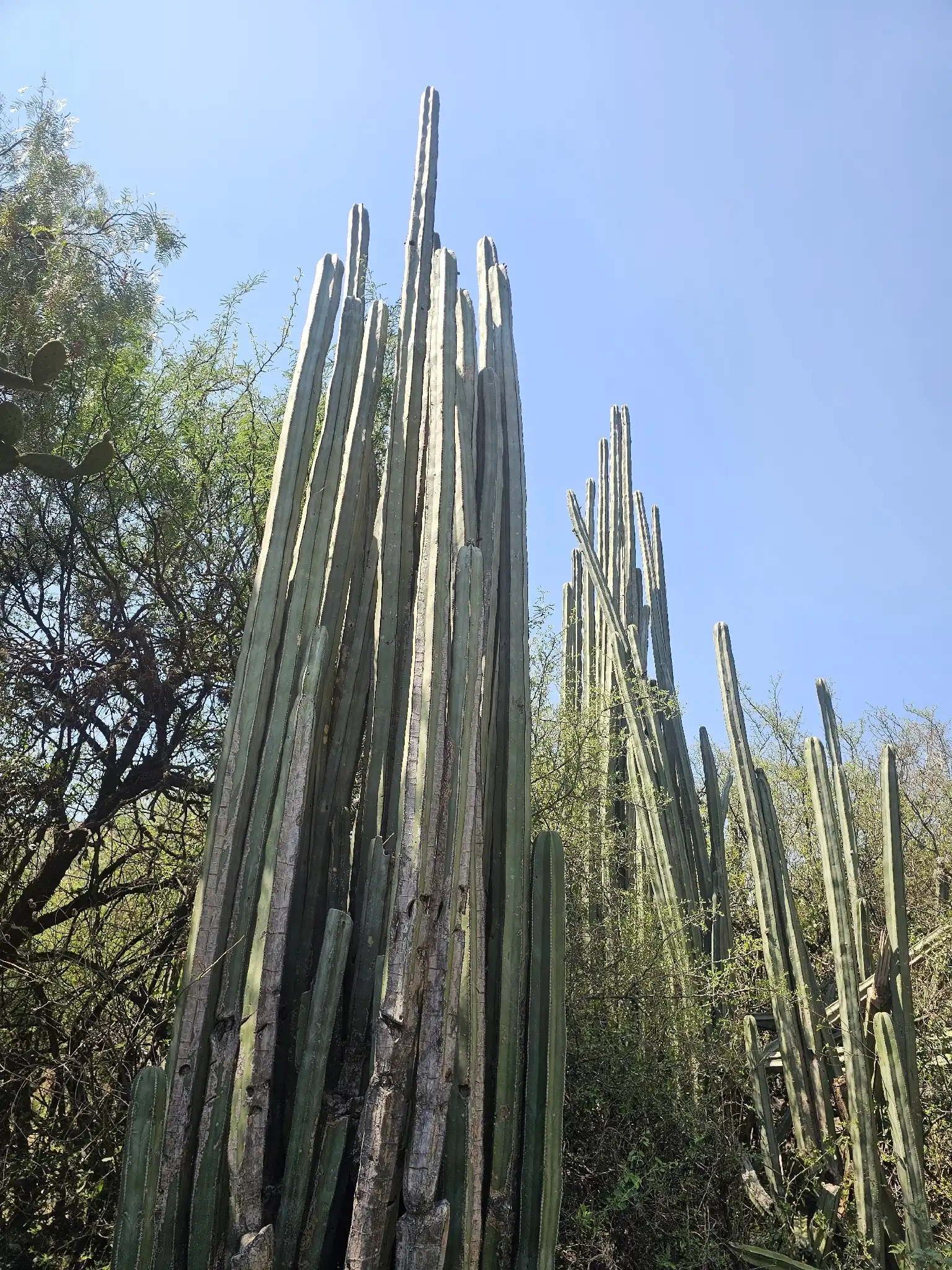
Lophocereus marginatus is a leafless columnar cactus from central-southern Mexico that branches from the base to form upright clusters of ribbed stems. Each stem carries five to seven ribs lined with areoles bearing short golden to tan spines, and reaches twelve to twenty feet in gardens with sharp drainage and full sun.
What sets it apart is the fencepost habit: stems stay strongly vertical and closely parallel, forming a living wall without routine pruning. Pink to red-pink funnelform flowers open at night in spring, followed by spiny yellowish-red fruits with red flesh.
Uses & Benefits:
Essentials
At a Glance
Plant Type
Cactus Succulent
Height
240"
Width
36"
Light
Full Sun, Partial Sun
Zones
9, 10
Water
Low
Humidity
Low - needs dry air
Lifespan
Long-lived perennial
Native To
Central-southern Mexico
Toxicity
Non-toxic to humans and pets - spines injure
Bloom period
Spring
In flower about 3 months of the year
Planting
How to Grow
- Plant in full sun with 6-8 hours of direct light in loose, gritty cactus mix with 50-70% sand, pumice, or perlite.
- Set the stem base at soil level in a site or pot that drains instantly and never ponds.
- Soak deeply only after the soil dries fully, then withhold water in winter once established.
- Protect stem tips when temperatures near 25F and keep crowns dry during cold rain.
- Feed sparingly if at all in the growing season and remove only damaged or rotted stems.
Pro Tip
Give it sharp drainage, full sun, and a dry winter; overwater and frost kill it long before drought does.
Keep It Thriving
Care Guide
Do
- Plant in sharp drainage and full sun with winter-dry conditions.
- Let soil dry completely between soakings.
- Protect tops from frost in zone 9 and move pots under cover in wet cold.
Don't
- Do not plant in clay or low spots that stay wet.
- Do not water on a schedule or keep soil moist in winter.
- Do not shear for shape; cut only damaged or rotted stems.
Seasonal Care Calendar
| Task | Jan | Feb | Mar | Apr | May | Jun | Jul | Aug | Sep | Oct | Nov | Dec |
|---|---|---|---|---|---|---|---|---|---|---|---|---|
| Pest Check | ||||||||||||
| Plant | ||||||||||||
| Propagate | ||||||||||||
| Prune | ||||||||||||
| Winter Prep |
Watch Out For
Pests & Diseases
Common Pests
Common Diseases
In the Garden
Landscape Uses & Companions
Landscape Uses
Multiply
Propagation Methods
Good to Know
Common Questions
Mexican Fencepost Cactus questions
What zones can Mexican Fencepost Cactus grow in?
Mexican Fencepost Cactus is hardy in USDA Zones 9–10: in that range it survives winter in the ground. Colder than Zone 9, grow it in a container you can move to shelter for the winter, or as an annual.
When does Mexican Fencepost Cactus bloom?
Mexican Fencepost Cactus typically blooms in spring. Exact timing shifts a week or two with your zone — Sow's bloom calendar maps it to your garden.
Does Mexican Fencepost Cactus need full sun?
Mexican Fencepost Cactus does best in full sun to part shade. In hot climates, afternoon shade keeps blooms fresher longer.
Is Mexican Fencepost Cactus drought tolerant?
Yes — once established (usually after the first full season), Mexican Fencepost Cactus handles dry spells with minimal watering. Water deeply its first year to build the root system that makes that possible.
Keep exploring
Explore the genus
Hardy in your zone?
Grow Mexican Fencepost Cactus with confidence
See it in a design of your actual yard, get zone-matched care reminders, and track it season by season in your garden journal.