The Story
Plant Bio
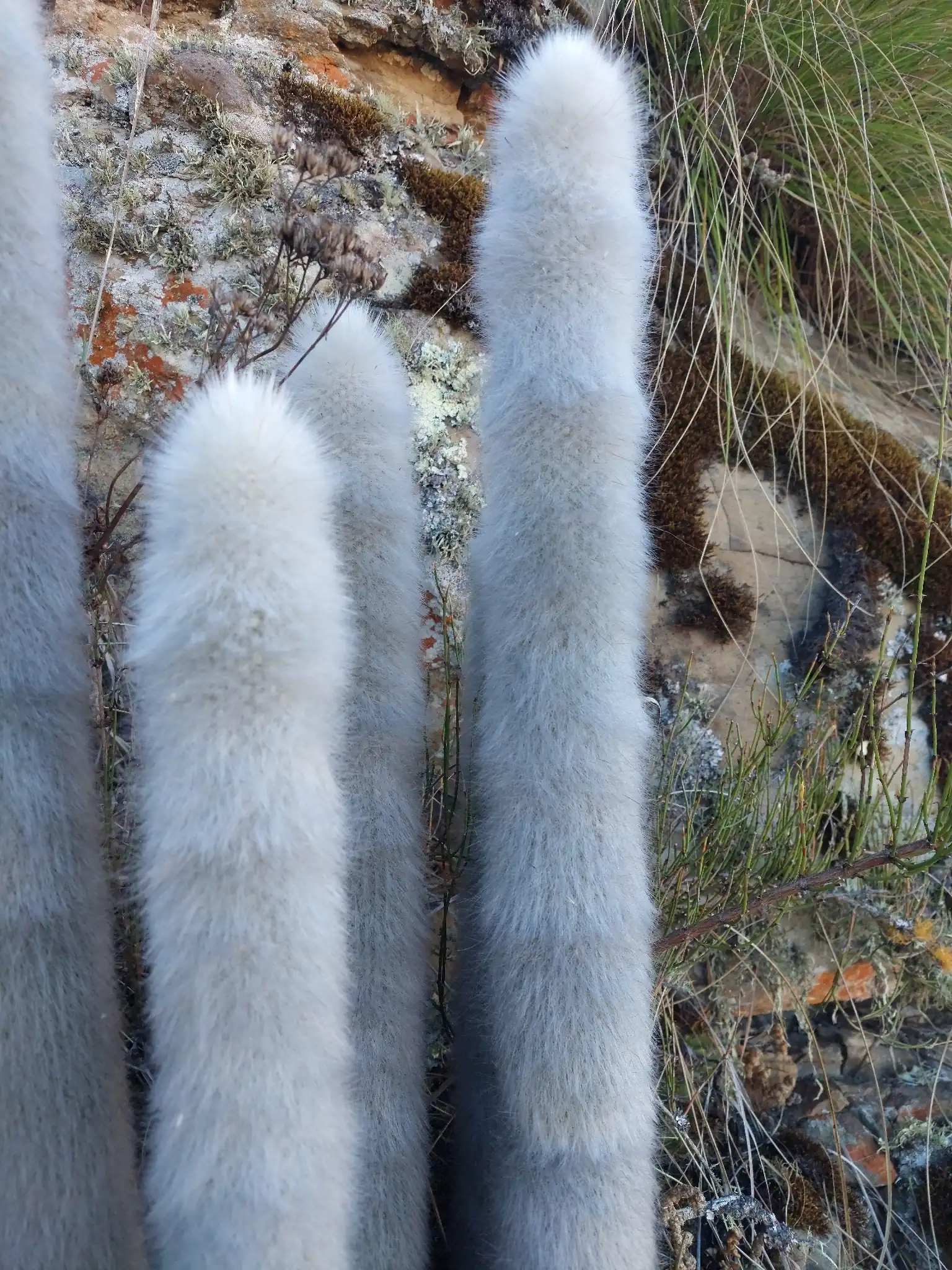
Cleistocactus strausii is a fast-growing columnar cactus from the mountains of Tarija, Bolivia, forming clumps of slender erect stems to ten feet tall and six feet wide. It has no leaves; the green stems with about twenty-five ribs are almost hidden by dense short white spines and wool.
Each stem to three inches thick carries about thirty fine white radials with four stouter pale-yellow centrals, over longer white and brown-black spines that pierce skin on contact. On stems over eighteen inches tall and ten to fifteen years old, deep carmine-red tubular flowers to three inches long are borne horizontally along the sides in spring to summer, opening only at the tip for four to five days.
Uses & Benefits:
Essentials
At a Glance
Plant Type
Cactus Succulent
Height
118"
Width
71"
Light
Full Sun, Partial Sun
Zones
9, 10
Water
Low
Humidity
Low - prefers dry air
Lifespan
Long-lived perennial
Native To
Bolivia
Toxicity
Spiny irritant - not edible
Bloom period
Spring – Summer
In flower about 6 months of the year
Planting
How to Grow
- Give 5 to 8 hours of direct sun; indoors use a south or west window, outdoors plant only in zones 9-10.
- Pot in gritty, sharply draining cactus mix with sand and pumice to 50%; never let the pot stand in water.
- Water deeply in spring and summer only when the top inch is dry, then let it dry out; keep almost completely dry in fall and winter.
- Feed with dilute low-nitrogen cactus fertilizer every two weeks from late spring through summer only.
- Wear heavy gloves to handle; repot in spring and remove only rotted stems, never cut healthy columns back.
Pro Tip
Give full sun and a cold, completely dry winter rest; plants under eighteen inches tall or kept warm and watered through winter will not flower, and winter wet rots the roots.
Keep It Thriving
Care Guide
Do
- Give full sun to initiate blooms on mature stems
- Use sharp drainage and let soil dry between waterings
- Keep cold, bright and dry in winter to trigger spring flowers
Don't
- Do not water in fall and winter or leave soil wet
- Do not grow in heavy clay or moisture-holding potting soil
- Do not handle without gloves or plant where children and pets brush against spines
Seasonal Care Calendar
| Task | Jan | Feb | Mar | Apr | May | Jun | Jul | Aug | Sep | Oct | Nov | Dec |
|---|---|---|---|---|---|---|---|---|---|---|---|---|
| Fertilize | ||||||||||||
| Pest Check | ||||||||||||
| Plant | ||||||||||||
| Propagate | ||||||||||||
| Winter Prep |
Watch Out For
Pests & Diseases
Common Pests
Common Diseases
In the Garden
Landscape Uses & Companions
Landscape Uses
Multiply
Propagation Methods
Good to Know
Common Questions
Silver Torch questions
What zones can Silver Torch grow in?
Silver Torch is hardy in USDA Zones 9–10: in that range it survives winter in the ground. Colder than Zone 9, grow it in a container you can move to shelter for the winter, or as an annual.
Is Silver Torch deer resistant?
Yes — Silver Torch is rated deer-resistant. Deer typically pass it over, though extreme hunger can override any plant's defenses.
When does Silver Torch bloom?
Silver Torch typically blooms from spring to summer. Exact timing shifts a week or two with your zone — Sow's bloom calendar maps it to your garden.
Does Silver Torch need full sun?
Silver Torch does best in full sun to part shade. In hot climates, afternoon shade keeps blooms fresher longer.
Is Silver Torch drought tolerant?
Yes — once established (usually after the first full season), Silver Torch handles dry spells with minimal watering. Water deeply its first year to build the root system that makes that possible.
Keep exploring
Explore the genus
Hardy in your zone?
Grow Silver Torch with confidence
See it in a design of your actual yard, get zone-matched care reminders, and track it season by season in your garden journal.