The Story
Plant Bio
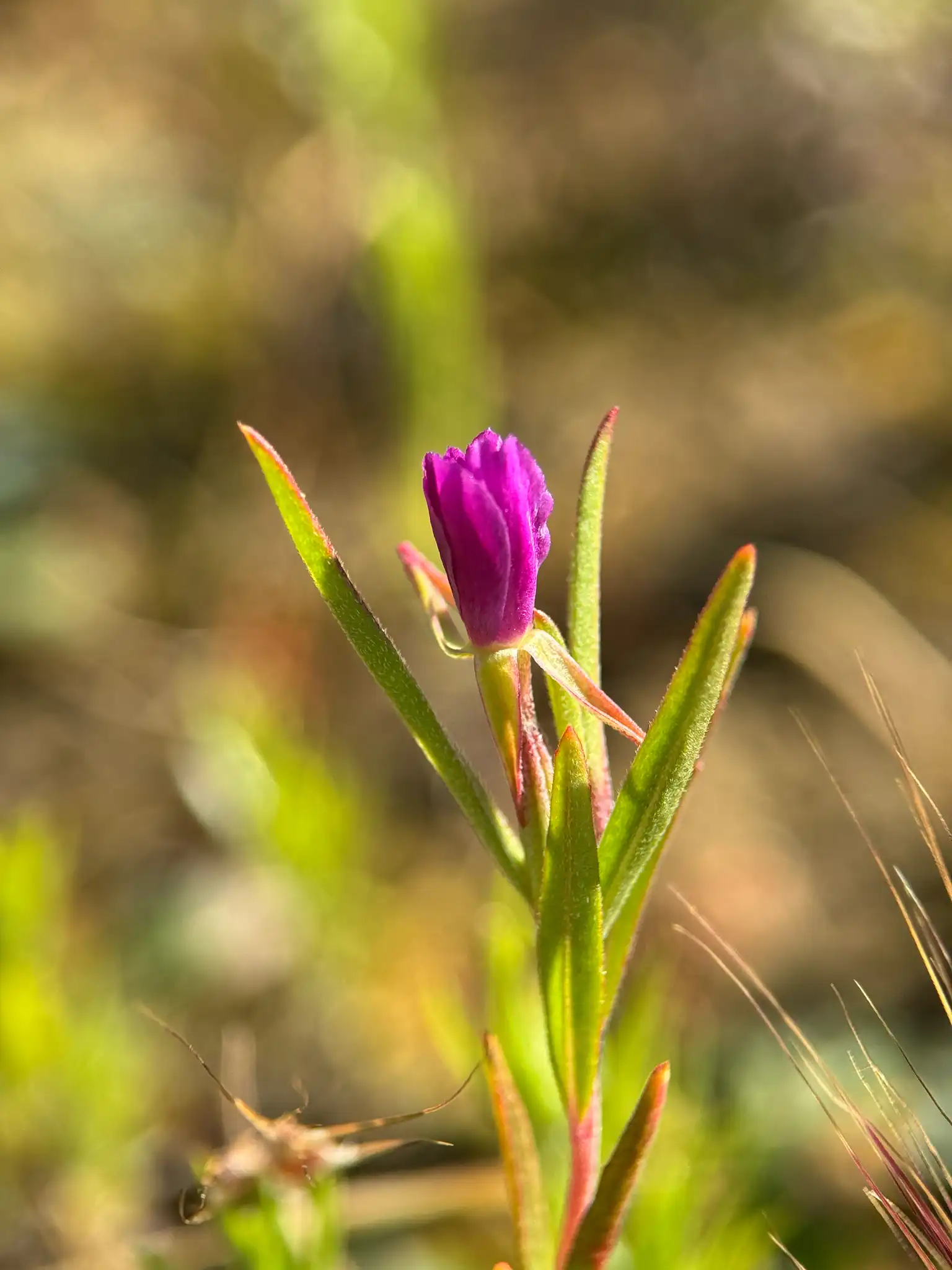
Clarkia purpurea, commonly known as winecup clarkia, is an erect winter-germinating annual native to western North America with slender branching stems and narrow gray-green leaves. It produces four-petaled, cup-shaped flowers ranging from lavender to deep reddish-purple, typically marked with a dark purple spot at the base of each petal.
This species is distinguished by its terminal racemes of dark-spotted blooms that close on overcast days and open in bright sunlight. Its deep taproot and low moisture requirements make it naturally suited to dry, sandy soils and summer drought conditions.
Uses & Benefits:
Essentials
At a Glance
Plant Type
Annual
Height
24"
Width
12"
Light
Full Sun, Partial Sun
Zones
5, 6, 7, 8, 9
Water
Low
Humidity
Low
Lifespan
Annual
Native To
Western North America
Toxicity
Non-toxic
Bloom period
Spring – Summer
In flower about 6 months of the year
Planting
How to Grow
- Sow seeds directly onto well-drained soil in autumn or early winter, pressing them lightly into the surface without covering deeply.
- Water sparingly during germination and establishment, relying primarily on winter rainfall once seedlings emerge.
- Thin seedlings to six to twelve inches apart to provide adequate air circulation and prevent stem crowding.
- Deadhead spent blooms regularly throughout spring and summer to prolong flowering, or let plants set seed to allow self-sowing.
Pro Tip
Sow seeds in fall or early winter so roots establish during cool weather; excessive fertilizer or summer watering causes weak, lodging stems and root decay.
Keep It Thriving
Care Guide
Do
- Plant in lean, sandy or gravely soil with rapid drainage.
- Deadhead spent flowers to extend the spring and summer bloom window.
Don't
- Do not over-fertilize, which creates weak, floppy stems prone to lodging.
- Do not overwater during summer heat, as wet roots cause collar rot and dieback.
Seasonal Care Calendar
| Task | Jan | Feb | Mar | Apr | May | Jun | Jul | Aug | Sep | Oct | Nov | Dec |
|---|---|---|---|---|---|---|---|---|---|---|---|---|
| Deadhead | ||||||||||||
| Pest Check | ||||||||||||
| Plant | ||||||||||||
| Spring Cleanup |
Watch Out For
Pests & Diseases
Common Pests
Common Diseases
In the Garden
Landscape Uses & Companions
Landscape Uses
Multiply
Propagation Methods
Good to Know
Common Questions
Winecup Clarkia questions
What zones can Winecup Clarkia grow in?
Winecup Clarkia is an annual: it grows, flowers and sets seed in one season, so winter cold doesn't limit where it grows. Gardeners in any zone can grow it by planting at the right time, usually after the last spring frost.
Is Winecup Clarkia deer resistant?
Not reliably. Deer may browse Winecup Clarkia, especially tender spring growth — plan on repellents or fencing where pressure is high.
When does Winecup Clarkia bloom?
Winecup Clarkia typically blooms from spring to summer. Exact timing shifts a week or two with your zone — Sow's bloom calendar maps it to your garden.
Does Winecup Clarkia need full sun?
Winecup Clarkia does best in full sun to part shade. In hot climates, afternoon shade keeps blooms fresher longer.
Is Winecup Clarkia drought tolerant?
Yes — once established (usually after the first full season), Winecup Clarkia handles dry spells with minimal watering. Water deeply its first year to build the root system that makes that possible.
More Clarkia to compare
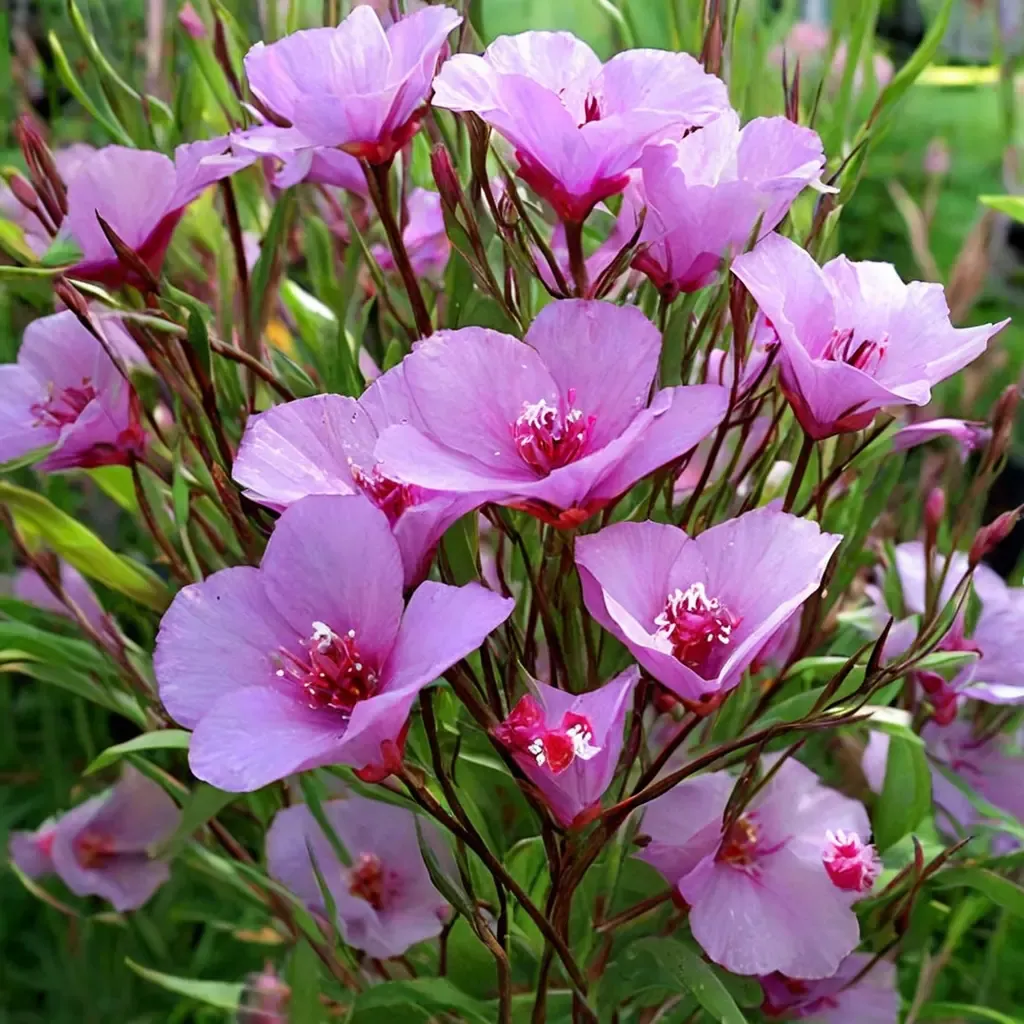
Blasdale's Clarkia
Clarkia rubicunda 'blasdalei'
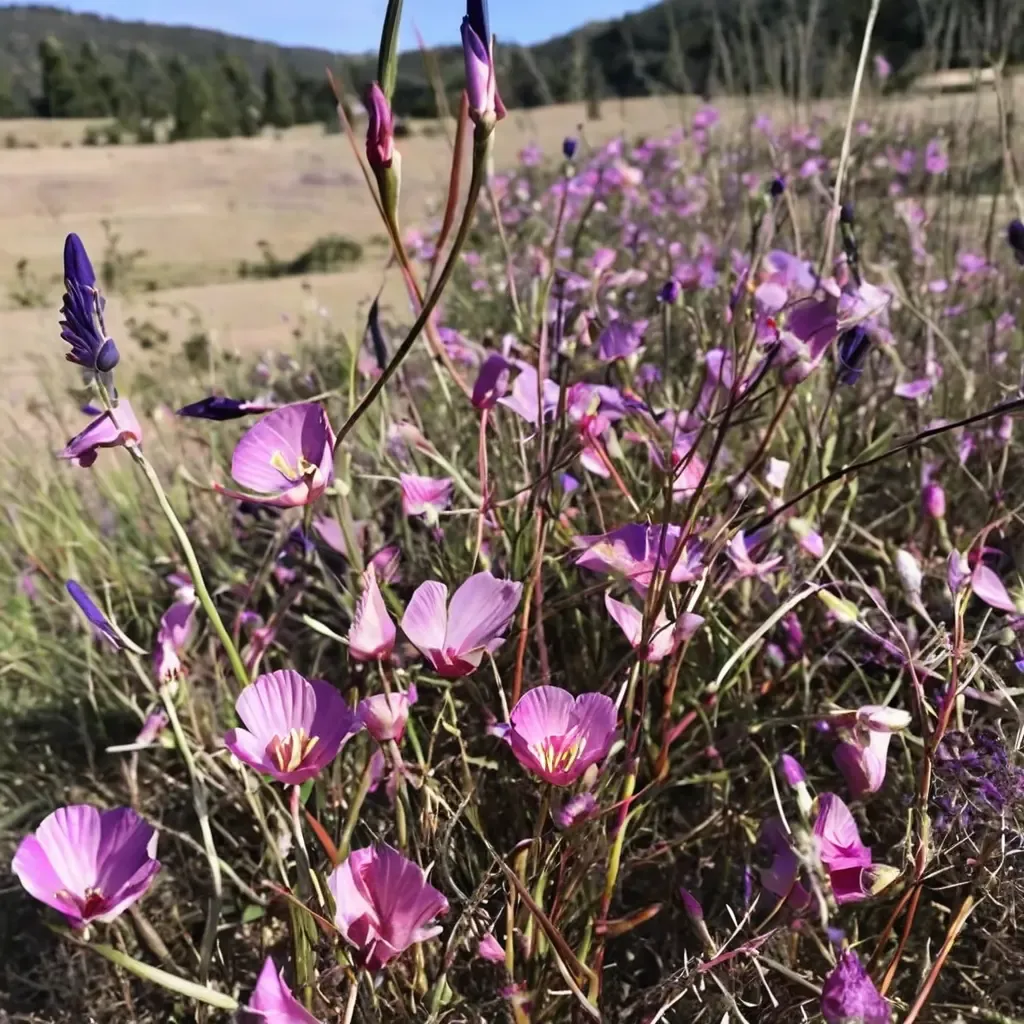
Tracy's clarkia
Clarkia gracilis 'ssp tracyi'
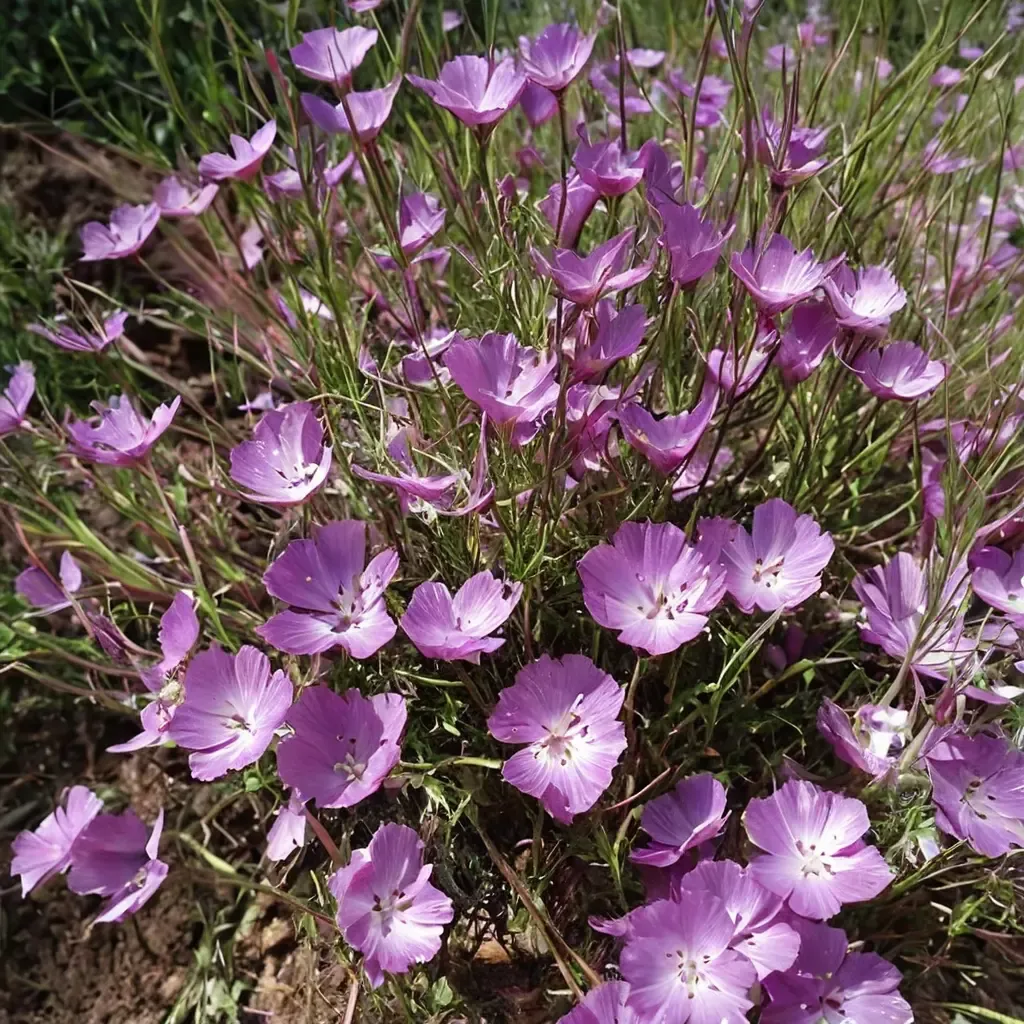
Punch Bowl Clarkia
Clarkia bottae 'Punch Bowl'
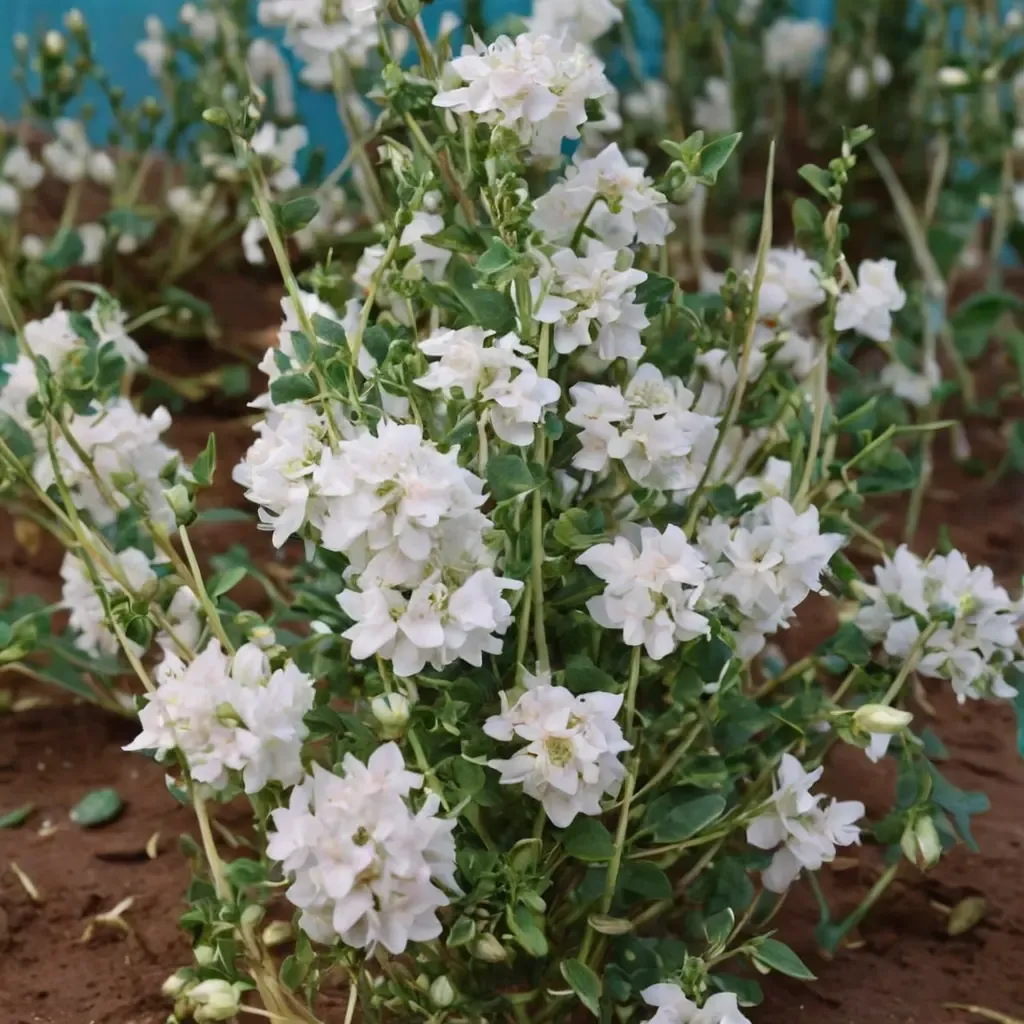
Mountain Garland White
Clarkia unguiculata 'Mountain Garland White'
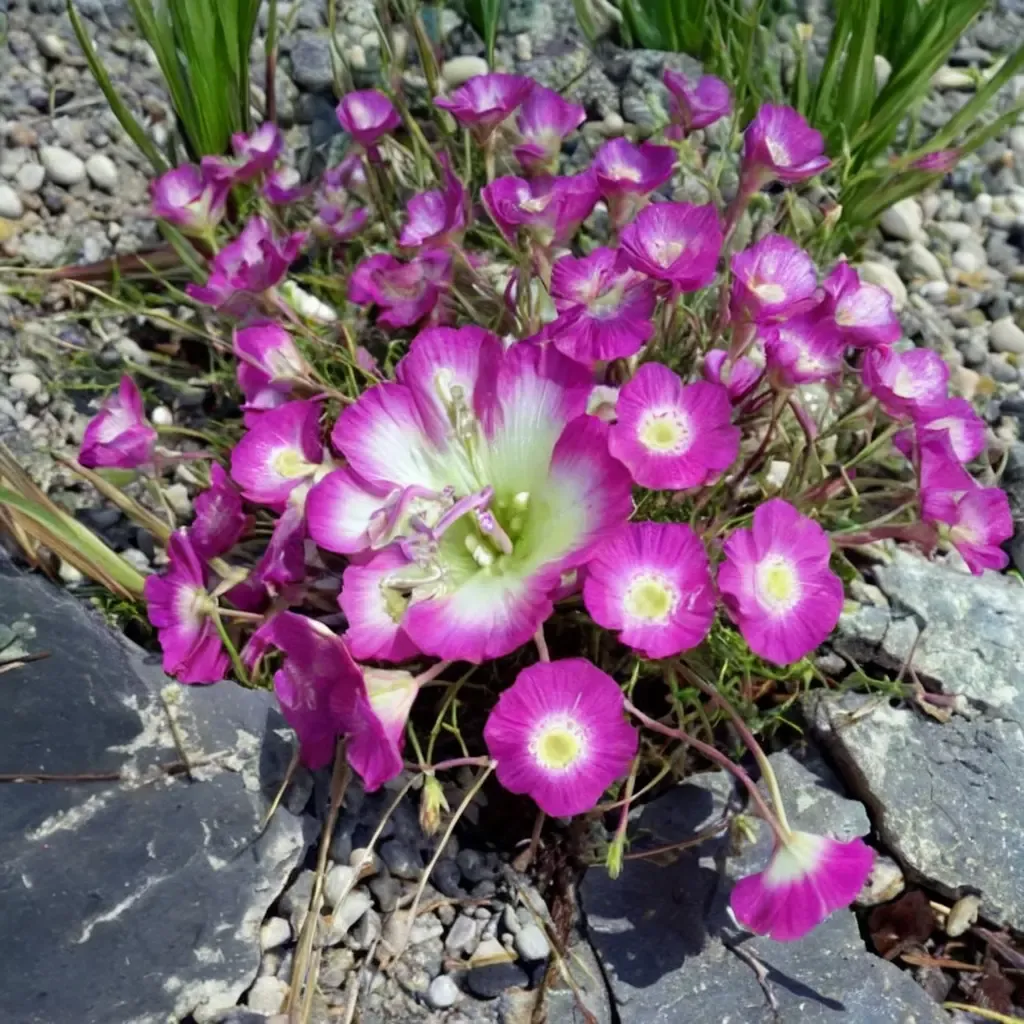
Elegant Clarkia
Clarkia speciosa 'immaculata'
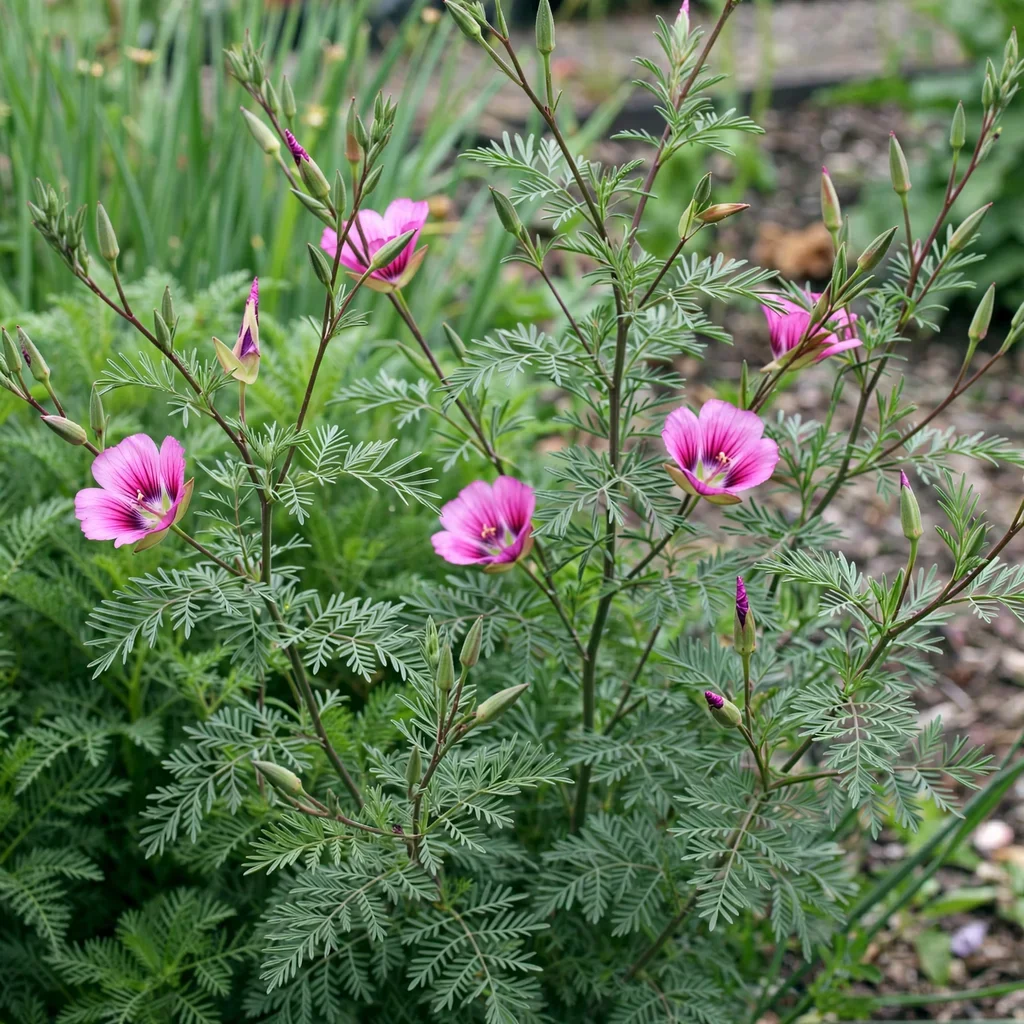
Shamini Clarkia Shamini Godetia
Clarkia rubicunda 'Shamini'
Keep exploring
Explore the genus
Hardy in your zone?
Grow Winecup Clarkia with confidence
See it in a design of your actual yard, get zone-matched care reminders, and track it season by season in your garden journal.