The Story
Plant Bio
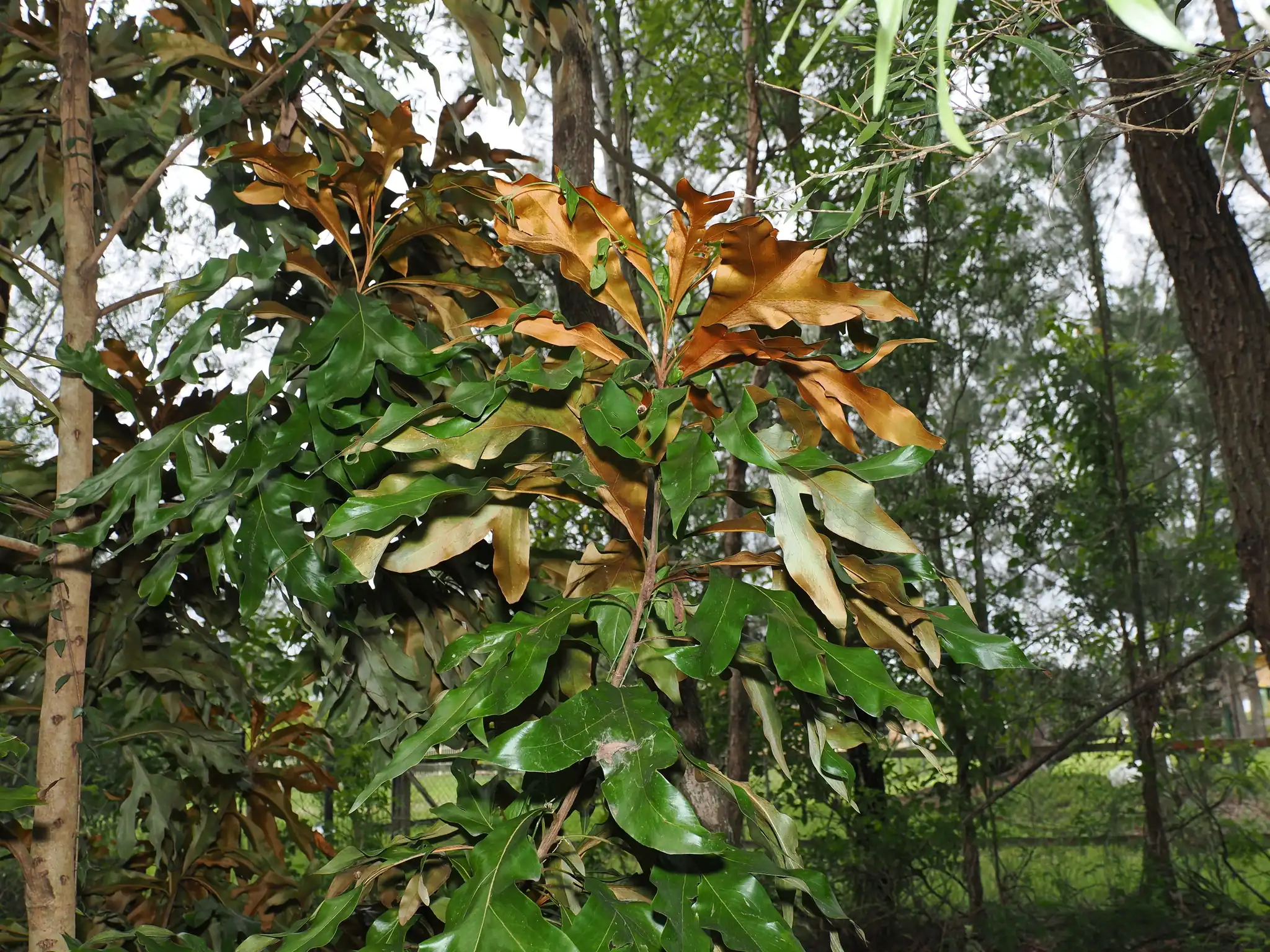
Grevillea baileyana is an evergreen rainforest tree native to northeastern Australia and southern Papua New Guinea, reaching 15 to 30 feet tall in landscape plantings. Its glossy adult foliage features a distinct, finely silky rusty-bronze backing, complemented in late spring and summer by honey-scented, cream-colored cylindrical flowers.
Juvenile leaves emerge with five to nine broad lobes before transitioning into smooth, lanceolate forms that create high visual contrast against the dark canopy. The nectar-filled floral spikes draw hummingbirds, bees, and butterflies into warm, frost-free gardens.
Uses & Benefits:
Essentials
At a Glance
Plant Type
Tree
Height
394"
Width
197"
Light
Full Sun, Partial Sun
Zones
9, 10
Water
Low to Moderate
Humidity
High
Lifespan
Perennial
Native To
Northeastern Australia, Papua New Guinea
Toxicity
Foliage and flowers cause contact dermatitis in sensitive individuals.
Bloom period
Late spring – Summer
In flower about 4 months of the year
Planting
How to Grow
- Choose a full sun to light partial shade location with deep, sharply draining sandy or loamy soil.
- Dig a planting hole twice as wide as the root ball and equal in depth, ensuring no rich compost or high-phosphorus soil amendments are added.
- Position the plant so the root collar sits flush with the natural soil surface, then backfill and tamp gently.
- Water thoroughly upon planting, and maintain moderate moisture while the root system establishes.
- Apply an organic mulch layer around the base to keep soil cool, keeping mulch several inches away from the trunk.
Pro Tip
Avoid applying standard fertilizers high in phosphorus, and never prune back into old, leafless wood where dormant buds fail to regenerate.
Keep It Thriving
Care Guide
Do
- Plant in light, well-draining soils with acidic to neutral pH.
- Use low-phosphorus fertilizers containing less than 3% phosphorus.
- Wear protective gloves when handling foliage to avoid contact dermatitis.
- Position clear of underground pipes to accommodate aggressive root structures.
Don't
- Do not apply standard high-phosphorus garden fertilizers.
- Do not plant in heavy, waterlogged clay soils.
- Do not cut severely into old, bare interior wood when shaping.
Seasonal Care Calendar
| Task | Jan | Feb | Mar | Apr | May | Jun | Jul | Aug | Sep | Oct | Nov | Dec |
|---|---|---|---|---|---|---|---|---|---|---|---|---|
| Fertilize | ||||||||||||
| Mulch | ||||||||||||
| Pest Check | ||||||||||||
| Prune |
Watch Out For
Pests & Diseases
Common Pests
Common Diseases
In the Garden
Landscape Uses & Companions
Landscape Uses
Multiply
Propagation Methods
Good to Know
Common Questions
Brown Silky Oak questions
What zones can Brown Silky Oak grow in?
Brown Silky Oak is hardy in USDA Zones 9–10: in that range it survives winter in the ground. Colder than Zone 9, winters are too cold for it to survive outdoors.
Is Brown Silky Oak deer resistant?
Not reliably. Deer may browse Brown Silky Oak, especially tender spring growth — plan on repellents or fencing where pressure is high.
When does Brown Silky Oak bloom?
Brown Silky Oak typically blooms from late spring to late summer. Exact timing shifts a week or two with your zone — Sow's bloom calendar maps it to your garden.
Does Brown Silky Oak need full sun?
Brown Silky Oak does best in full sun to part shade. In hot climates, afternoon shade keeps blooms fresher longer.
Is Brown Silky Oak drought tolerant?
Yes — once established (usually after the first full season), Brown Silky Oak handles dry spells with minimal watering. Water deeply its first year to build the root system that makes that possible.
More Grevillea to compare
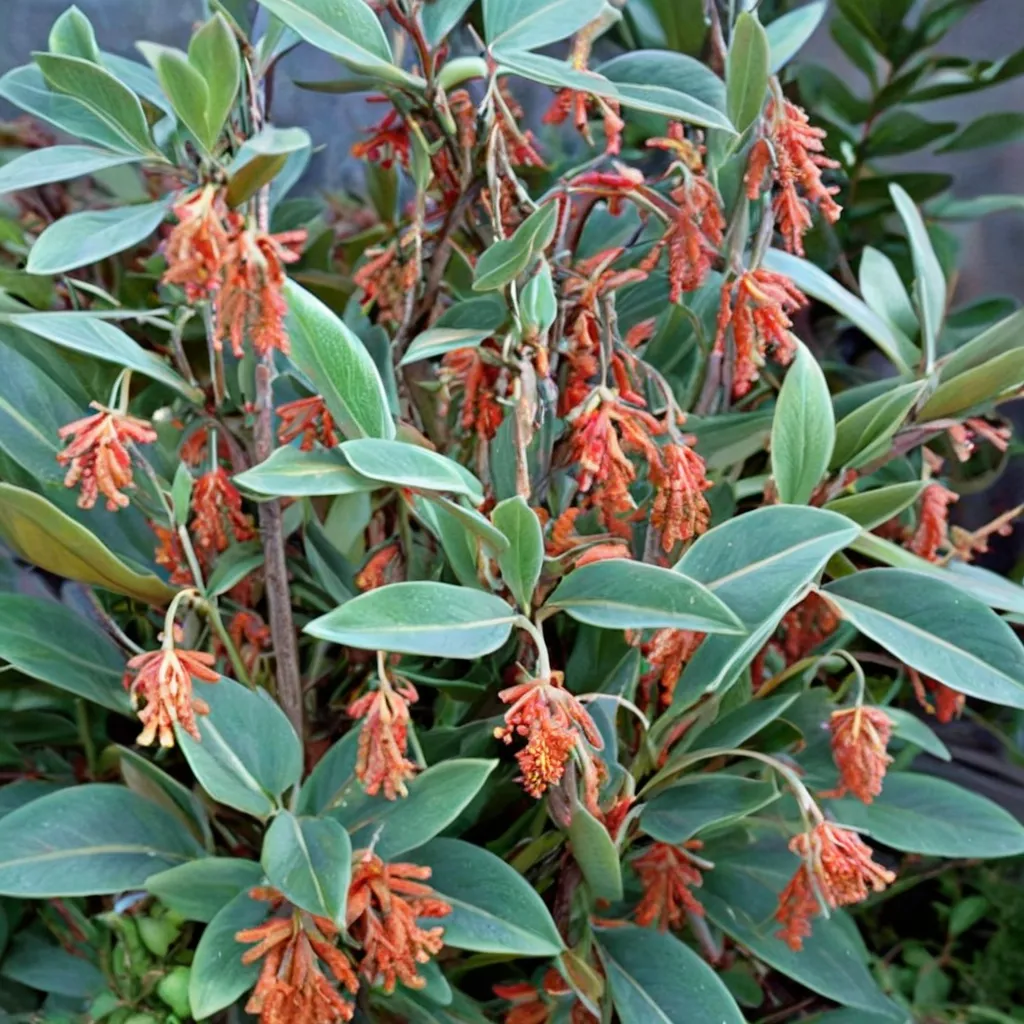
Murray Queen Grevillea
Grevillea victoriae 'Murray Queen'
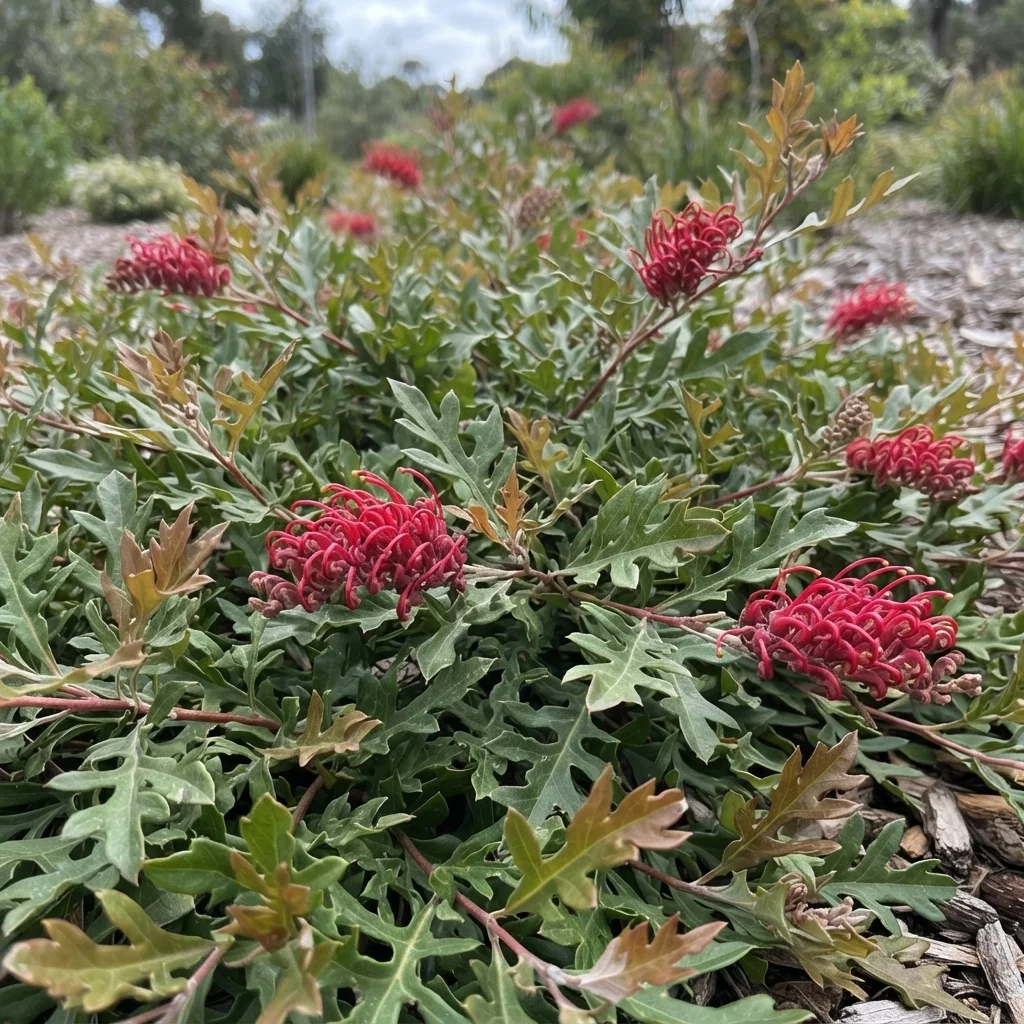
Prostrate Grevillea
Grevillea × gaudichaudii 'Gaudi Chaudi'
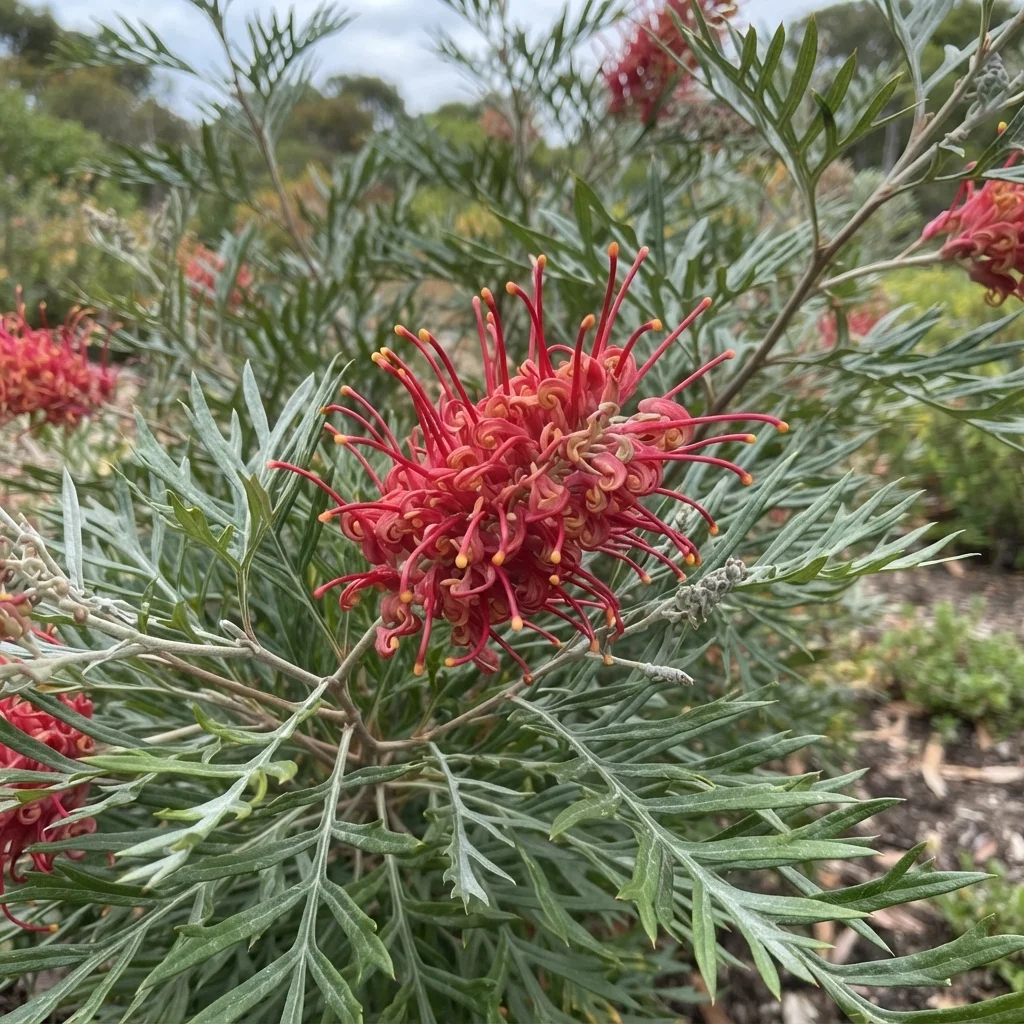
Superb Grevillea
Grevillea x hybrida 'Superb'
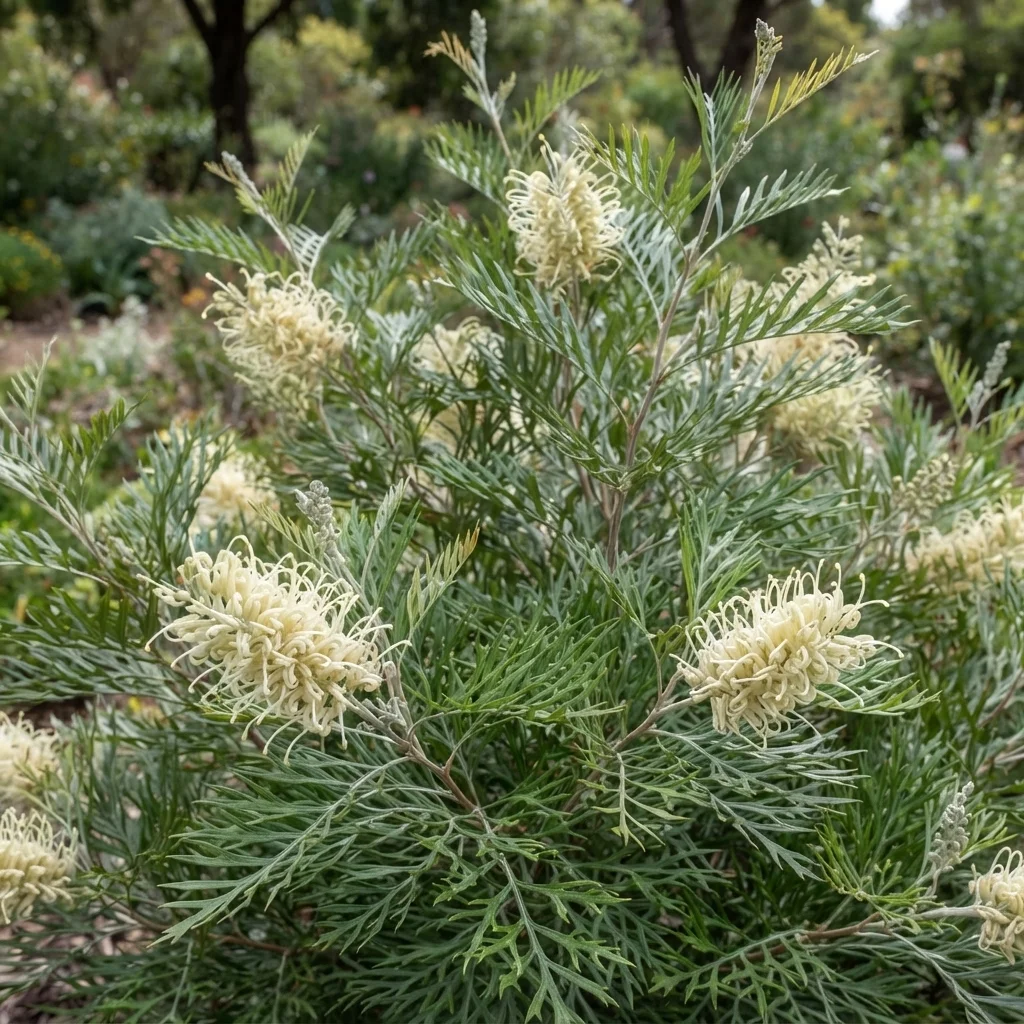
Moonlight Grevillea
Grevillea x hybrida 'Moonlight'
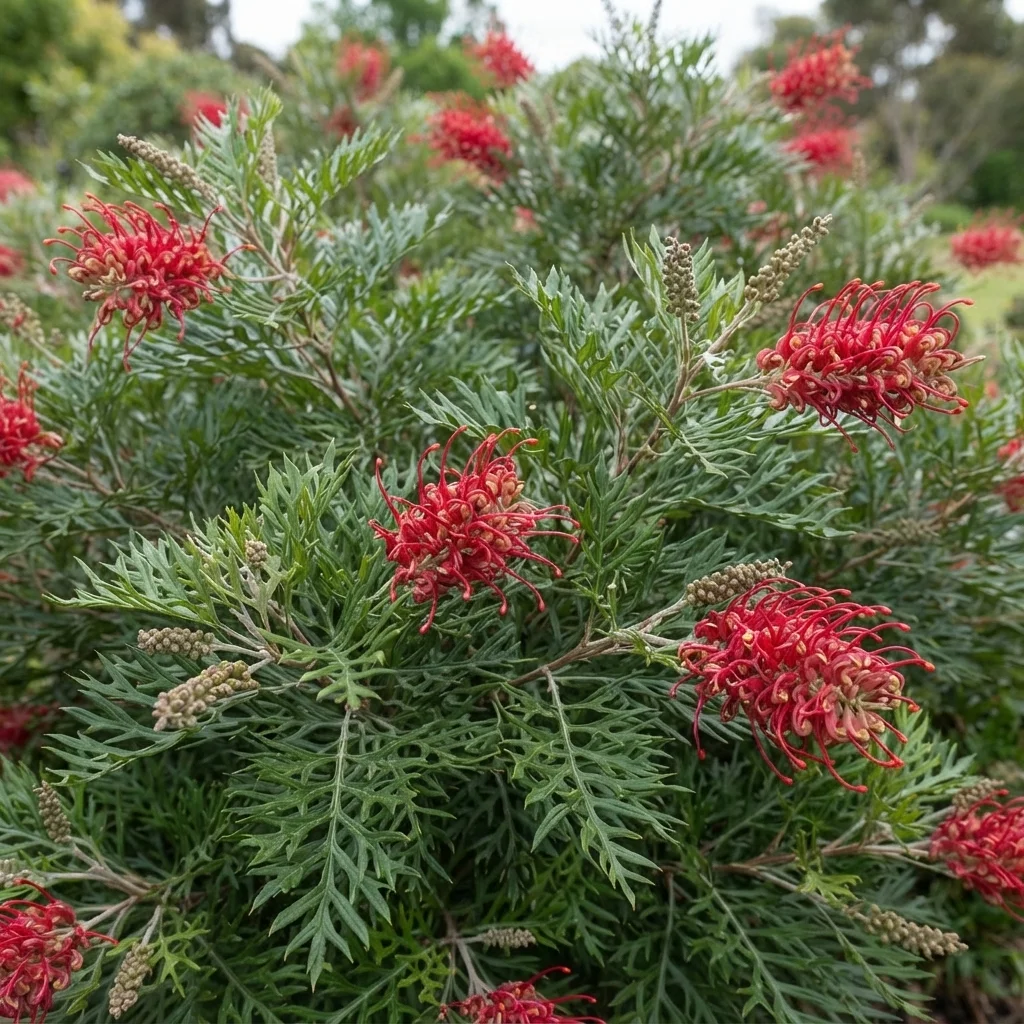
Robyn Gordon Grevillea
Grevillea x hybrida 'Robyn Gordon'
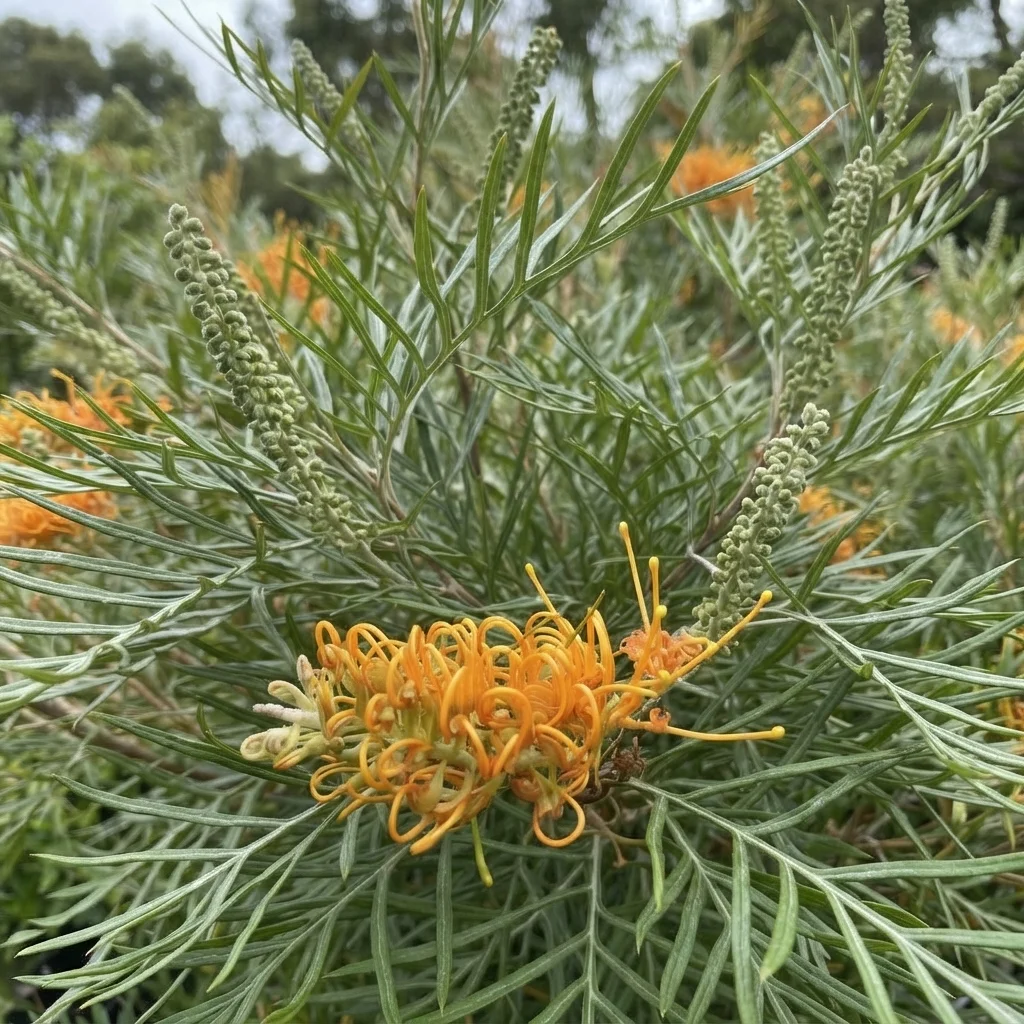
Honey Gem Grevillea
Grevillea x hybrida 'Honey Gem'
Keep exploring
Explore the genus
Hardy in your zone?
Grow Brown Silky Oak with confidence
See it in a design of your actual yard, get zone-matched care reminders, and track it season by season in your garden journal.