The Story
Plant Bio
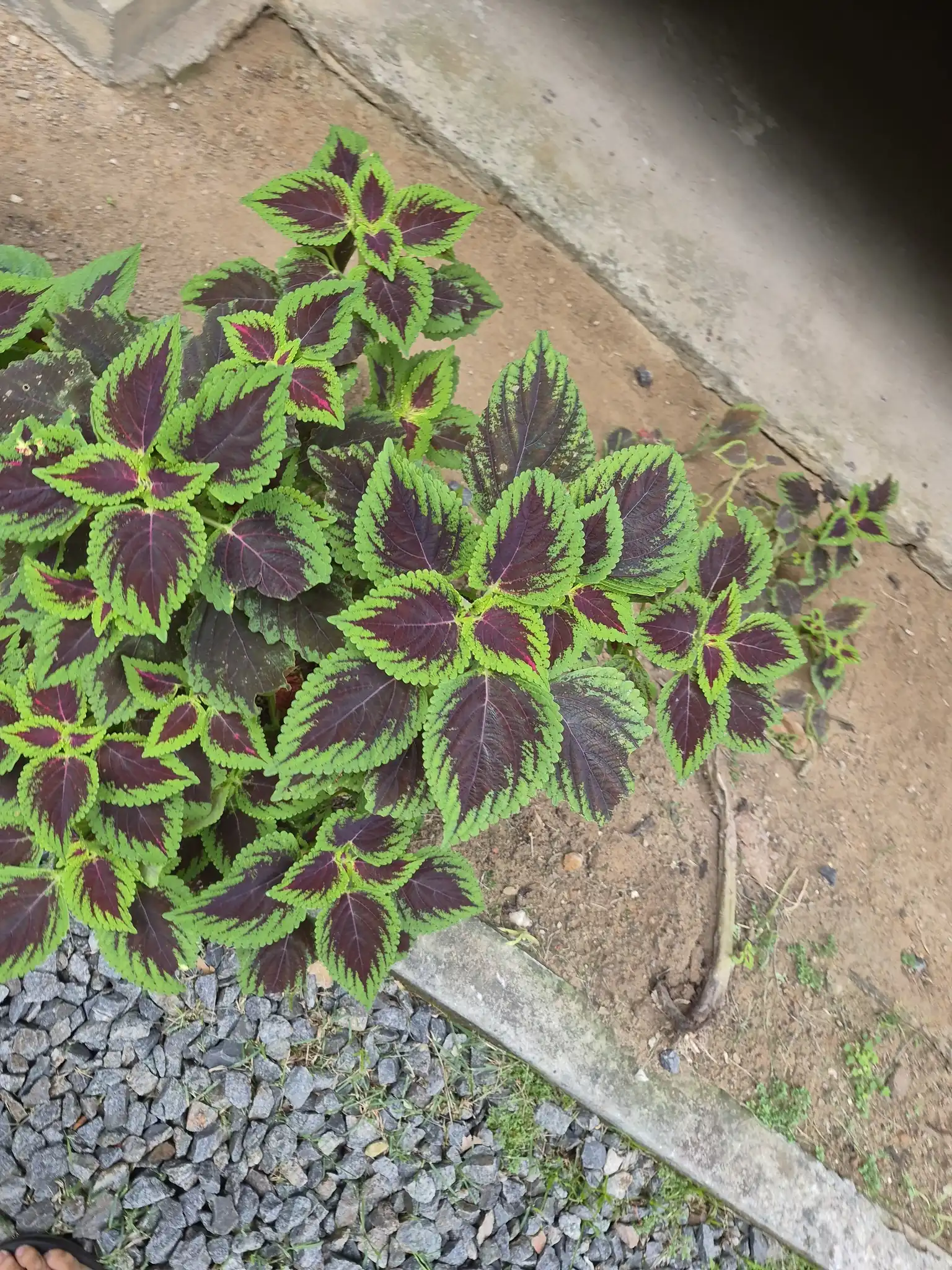
Coleus scutellarioides is an upright, mounding tender perennial or annual distinguished by its square-angled stems and succulent tendencies. It is grown primarily for its highly variable, opposite leaves that display intricate patterns of maroon, green, yellow, pink, copper, and purple.
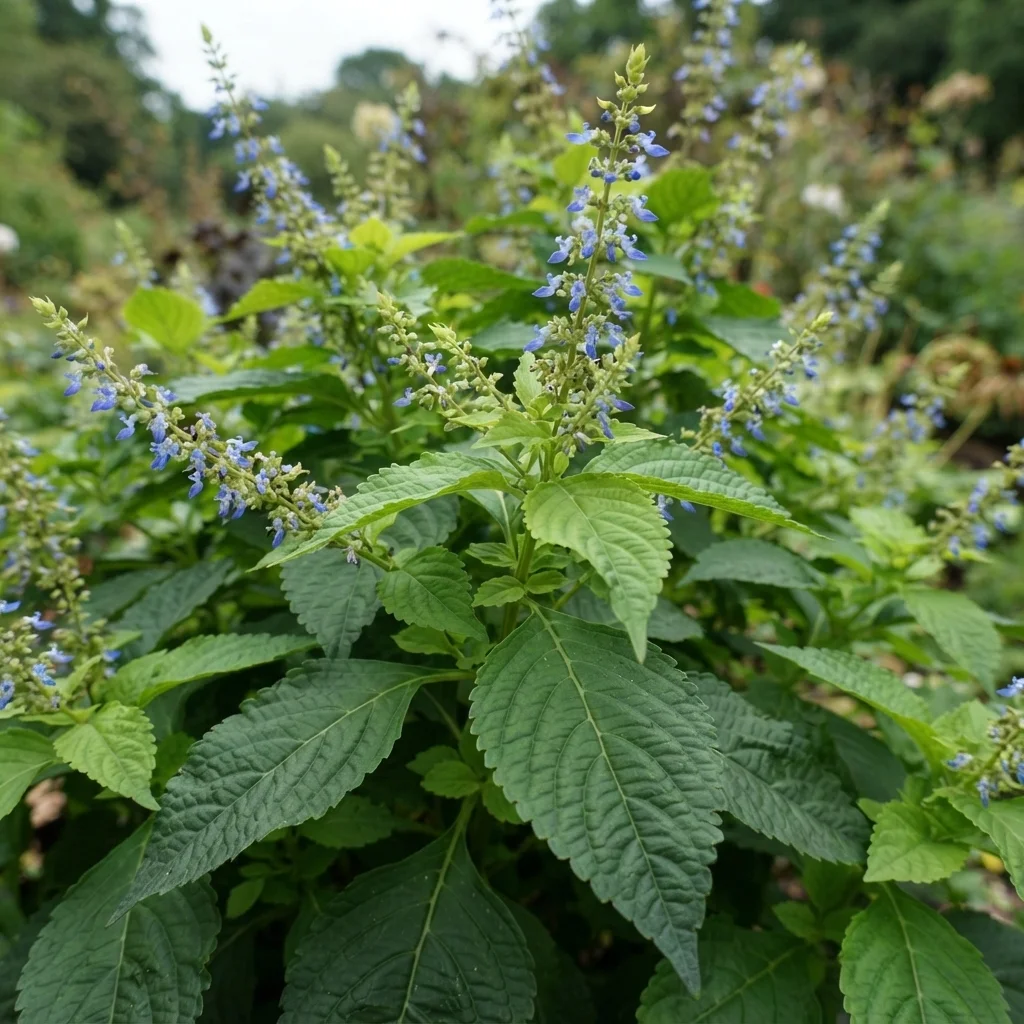
The species produces terminal, spike-like clusters of small, tubular blue, purple, or white flowers from summer into fall. While the foliage provides the primary ornamental value, these blooms attract hummingbirds and insect pollinators to the garden.
Uses & Benefits:
Essentials
At a Glance
Plant Type
Annual
Height
36"
Width
36"
Light
Partial Sun, Shade
Zones
10
Water
Medium
Humidity
Moderate to high
Lifespan
Tender perennial (grown as annual)
Native To
Asia and Oceania
Toxicity
Toxic to pets if ingested in large quantities
Bloom period
Summer – Fall
In flower about 6 months of the year
Planting
How to Grow
- Select a planting site with moist, rich, well-draining soil in part to full shade.
- Incorporate organic matter to improve soil structure and ensure a pH between 6.0 and 7.0.
- Space plants 12 to 18 inches apart, planting them at the same depth as their nursery containers.
- Water thoroughly after planting and apply a light layer of mulch to retain soil moisture.
Pro Tip
Allowing the plant to flower unchecked drains its energy and reduces foliage density. Pinch off terminal flower spikes as they emerge and tip-prune stems every few weeks to maintain a compact, bushy form.
Keep It Thriving
Care Guide
Do
- Pinch stem tips frequently during the active growing season to encourage branching.
- Keep the soil consistently moist, especially during hot summer spells.
- Apply a balanced, water-soluble fertilizer monthly to support vigorous foliage growth.
Don't
- Do not allow the soil to dry out completely, as the plant wilts rapidly under dry conditions.
- Avoid overhead watering to minimize the risk of powdery mildew on the foliage.
- Do not plant outdoors until all danger of frost has passed and soil temperatures have warmed.
Seasonal Care Calendar
| Task | Jan | Feb | Mar | Apr | May | Jun | Jul | Aug | Sep | Oct | Nov | Dec |
|---|---|---|---|---|---|---|---|---|---|---|---|---|
| Fertilize | ||||||||||||
| Pest Check | ||||||||||||
| Pinch | ||||||||||||
| Plant |
Watch Out For
Pests & Diseases
Common Pests
Common Diseases
In the Garden
Landscape Uses & Companions
Landscape Uses
Multiply
Propagation Methods
Good to Know
Common Questions
Coleus questions
What zones can Coleus grow in?
Coleus is hardy in USDA Zone 10. Inside that range it survives winter in the ground; outside it, grow it as an annual or a container plant you protect.
Is Coleus deer resistant?
Not reliably. Deer may browse Coleus, especially tender spring growth — plan on repellents or fencing where pressure is high.
When does Coleus bloom?
Coleus typically blooms in summer through fall. Exact timing shifts a week or two with your zone — Sow's bloom calendar maps it to your garden.
Does Coleus need full sun?
Coleus does best in part shade.
More Coleus to compare
Keep exploring
Explore the genus
Hardy in your zone?
Grow Coleus with confidence
See it in a design of your actual yard, get zone-matched care reminders, and track it season by season in your garden journal.