The Story
Plant Bio
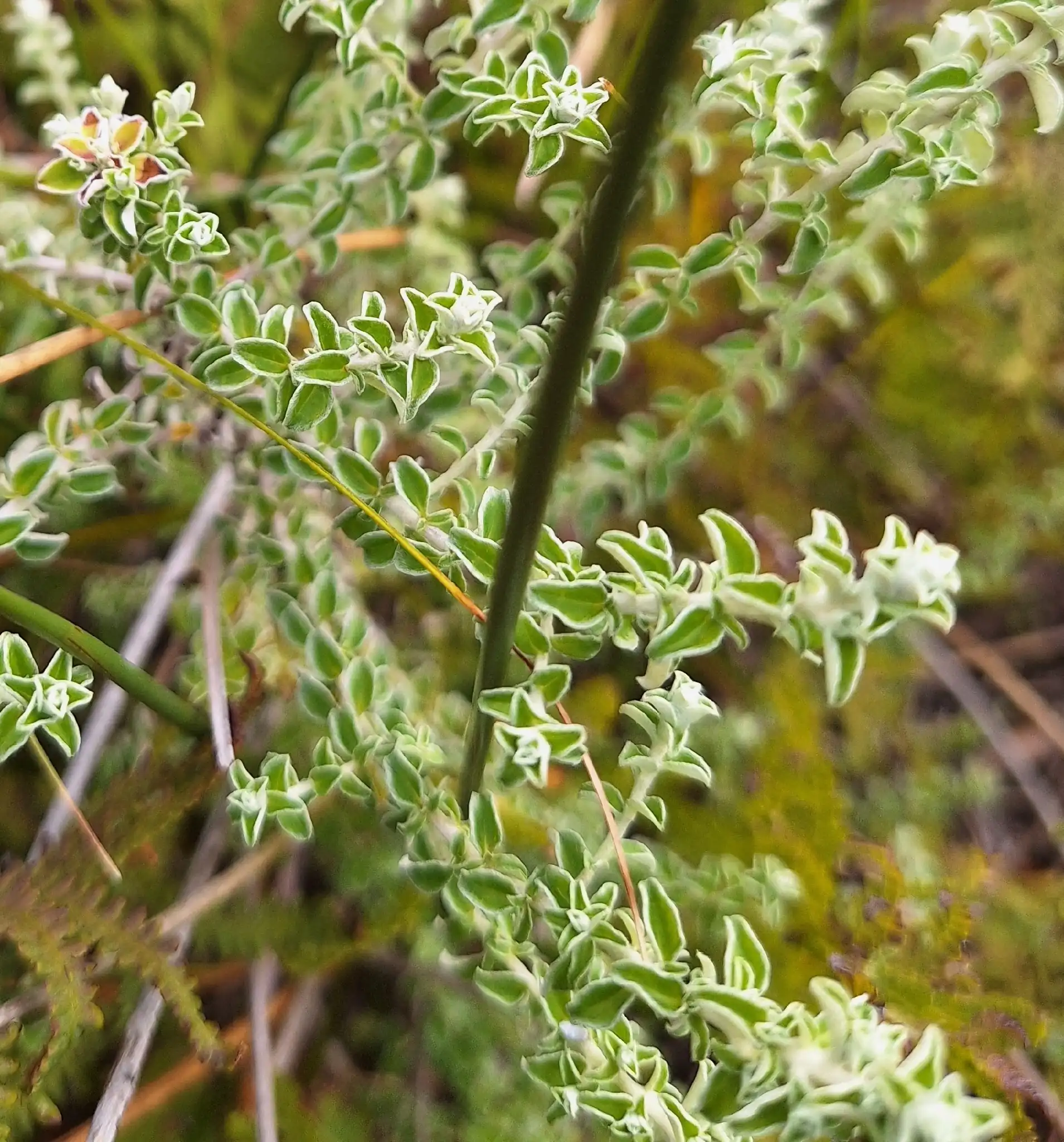
Plecostachys serpyllifolia is a much-branched evergreen perennial from coastal South Africa, forming a dense sprawling mat about two feet tall and four to five feet wide. Stems and small oval leaves carry a tight white felt that reads silver-gray from a distance and smells of licorice when crushed.
The flower display is congested hemispherical clusters about one to one-and-a-half inches across of tiny yellow to brownish florets backed by milky-white papery bracts. It is still sold as Helichrysum microphyllum, but true plants show downcurved wavy-margined leaves gray-felted above and white-woolly beneath on white-felted stems.
Uses & Benefits:
Essentials
At a Glance
Plant Type
Groundcover
Height
30"
Width
54"
Light
Full Sun, Partial Sun
Zones
9, 10
Water
Low once established
Humidity
Unknown
Lifespan
Evergreen perennial
Native To
South Africa - Western Cape to KwaZulu-Natal
Toxicity
Unknown
Bloom period
Summer – Fall
In flower about 6 months of the year
Planting
How to Grow
- Plant in full sun to light shade in sandy to gritty, free-draining soil; space 3 to 4 feet apart to allow sprawl.
- Water in well, then keep evenly moist until rooted; reduce to occasional deep water once established.
- Skip fertilizer and keep organic mulch back from the crown; a thin gravel mulch keeps stems dry.
- Tip back lightly in spring to shape; do not cut hard into old leafless wood.
- Give sharp drainage going into winter; plants handle about 20 to 25F when dry but fail in cold wet soil.
Pro Tip
Plant high in gritty free-draining sand and hold water back once rooted; saturated soil kills roots faster than drought checks top growth.
Keep It Thriving
Care Guide
Do
- Give full sun with good airflow and free-draining sandy or rocky soil
- Water deeply then let the top soil dry between waterings
- Prune lightly with clean sterile shears to remove dead stems
Don't
- Do not overwater or plant in heavy clay that stays wet
- Do not shear hard into old bare wood to make it narrower
- Do not plant next to coastal dunes or alkaline wetlands where seed can spread
Seasonal Care Calendar
| Task | Jan | Feb | Mar | Apr | May | Jun | Jul | Aug | Sep | Oct | Nov | Dec |
|---|---|---|---|---|---|---|---|---|---|---|---|---|
| Mulch | ||||||||||||
| Pest Check | ||||||||||||
| Plant | ||||||||||||
| Prune | ||||||||||||
| Winter Prep |
Watch Out For
Pests & Diseases
Common Pests
Common Diseases
In the Garden
Landscape Uses & Companions
Landscape Uses
Good to Know
Common Questions
Cobweb Bush questions
What zones can Cobweb Bush grow in?
Cobweb Bush is hardy in USDA Zones 9–10: in that range it survives winter in the ground. Colder than Zone 9, grow it in a container you can move to shelter for the winter, or as an annual.
When does Cobweb Bush bloom?
Cobweb Bush typically blooms from summer to fall. Exact timing shifts a week or two with your zone — Sow's bloom calendar maps it to your garden.
Does Cobweb Bush need full sun?
Cobweb Bush does best in full sun to part shade. In hot climates, afternoon shade keeps blooms fresher longer.
Is Cobweb Bush drought tolerant?
Yes — once established (usually after the first full season), Cobweb Bush handles dry spells with minimal watering. Water deeply its first year to build the root system that makes that possible.
Keep exploring
Explore the genus
Hardy in your zone?
Grow Cobweb Bush with confidence
See it in a design of your actual yard, get zone-matched care reminders, and track it season by season in your garden journal.