The Story
Plant Bio
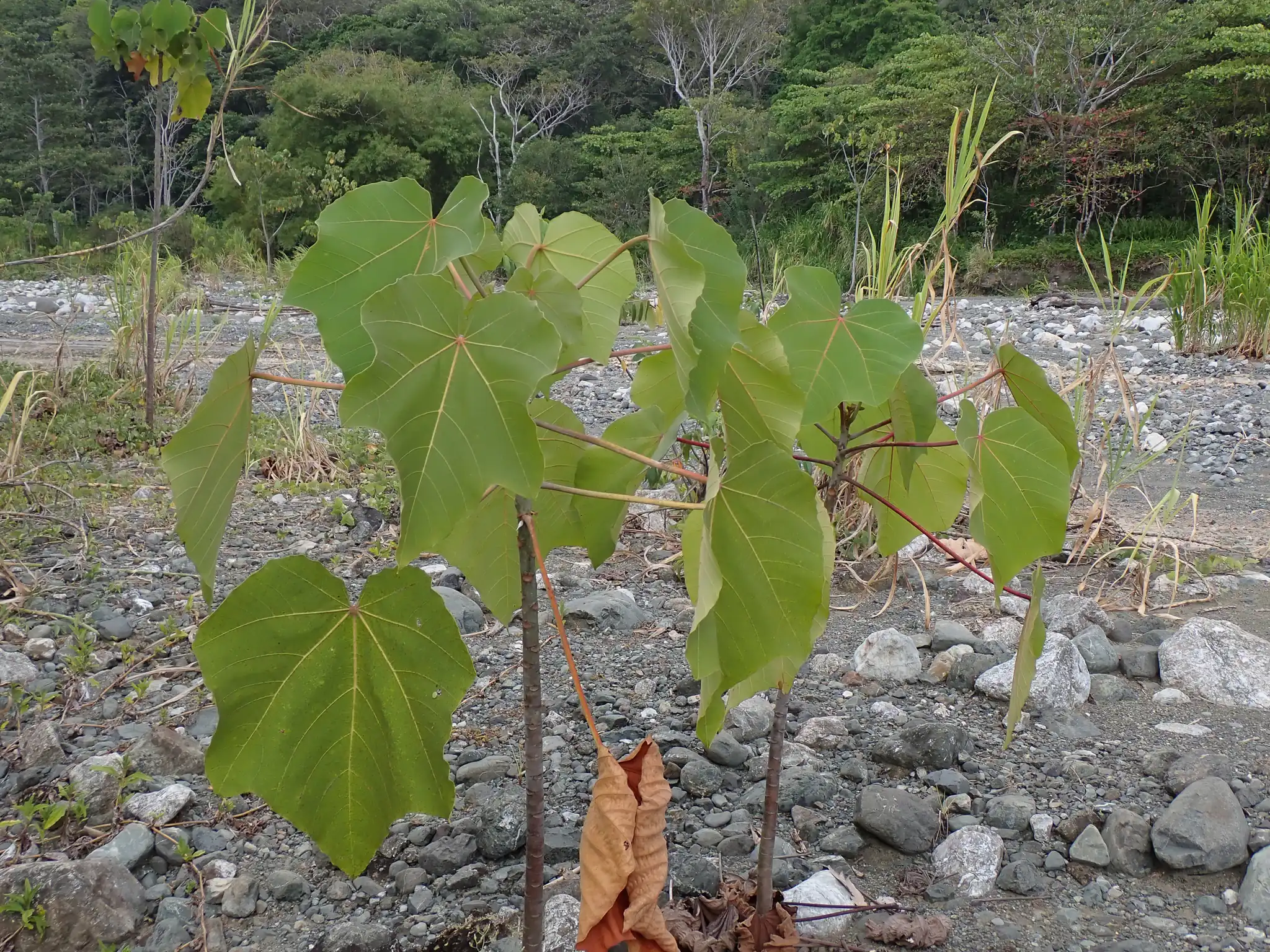
Ochroma pyramidale is a fast-growing pioneer tree of tropical American lowlands and valleys, over 20 feet in gardens and to 60 to 90 feet or more in the wild, with smooth grey-white bark and a broad open crown. The leaves are large heart-shaped and lightly lobed to 18 inches long, glossy deep green above and whitish-hairy below with prominent veins, falling in the dry season.
It is the single species in Ochroma, grown for lightweight balsa timber rather than as a garden ornamental, and first flowers from about its third year. The flowers are large solitary white funnels to 5 inches long with thick recurved petals that open in late afternoon and last overnight for bat pollination.
Uses & Benefits:
Essentials
At a Glance
Plant Type
Tree
Height
236"
Width
180"
Light
Full Sun
Zones
9, 10
Water
Medium
Humidity
High
Lifespan
Woody tree
Native To
Southern Mexico to South America and Caribbean
Toxicity
Non-toxic
Bloom period
Autumn – Winter
In flower about 6 months of the year
Planting
How to Grow
- Choose a frost-free spot in full sun with room for a 20-foot-plus tree well away from buildings.
- Plant a potted seedling into free-draining loam at the same depth it grew in the pot.
- Water deeply after planting and through the first dry spell, without leaving the ground waterlogged.
- Mulch widely and protect young plants from any frost for the first two winters.
Pro Tip
Plant only where a 60-foot frost-free tree can mature; it needs full sun, free-draining soil that never stays waterlogged, and room to shed very large leaves.
Keep It Thriving
Care Guide
Do
- Give full sun and shelter from frost.
- Provide deep but free-draining soil.
- Allow space for fast upright growth and large leaf fall.
Don't
- Do not plant in a small yard or where frost is regular.
- Do not overwater or leave pots standing in water.
- Do not expect hummingbird flowers; blooms open at night.
Seasonal Care Calendar
| Task | Jan | Feb | Mar | Apr | May | Jun | Jul | Aug | Sep | Oct | Nov | Dec |
|---|---|---|---|---|---|---|---|---|---|---|---|---|
| Mulch | ||||||||||||
| Pest Check | ||||||||||||
| Plant | ||||||||||||
| Prune | ||||||||||||
| Winter Prep |
Watch Out For
Pests & Diseases
Common Pests
Common Diseases
In the Garden
Landscape Uses & Companions
Landscape Uses
Multiply
Propagation Methods
Good to Know
Common Questions
Balsa questions
What zones can Balsa grow in?
Balsa is hardy in USDA Zones 9–10: in that range it survives winter in the ground. Colder than Zone 9, winters are too cold for it to survive outdoors.
When does Balsa bloom?
Balsa typically blooms from fall to winter. Exact timing shifts a week or two with your zone — Sow's bloom calendar maps it to your garden.
Does Balsa need full sun?
Balsa does best in full sun (6+ hours).
Keep exploring
Explore the genus
Hardy in your zone?
Grow Balsa with confidence
See it in a design of your actual yard, get zone-matched care reminders, and track it season by season in your garden journal.