The Story
Plant Bio
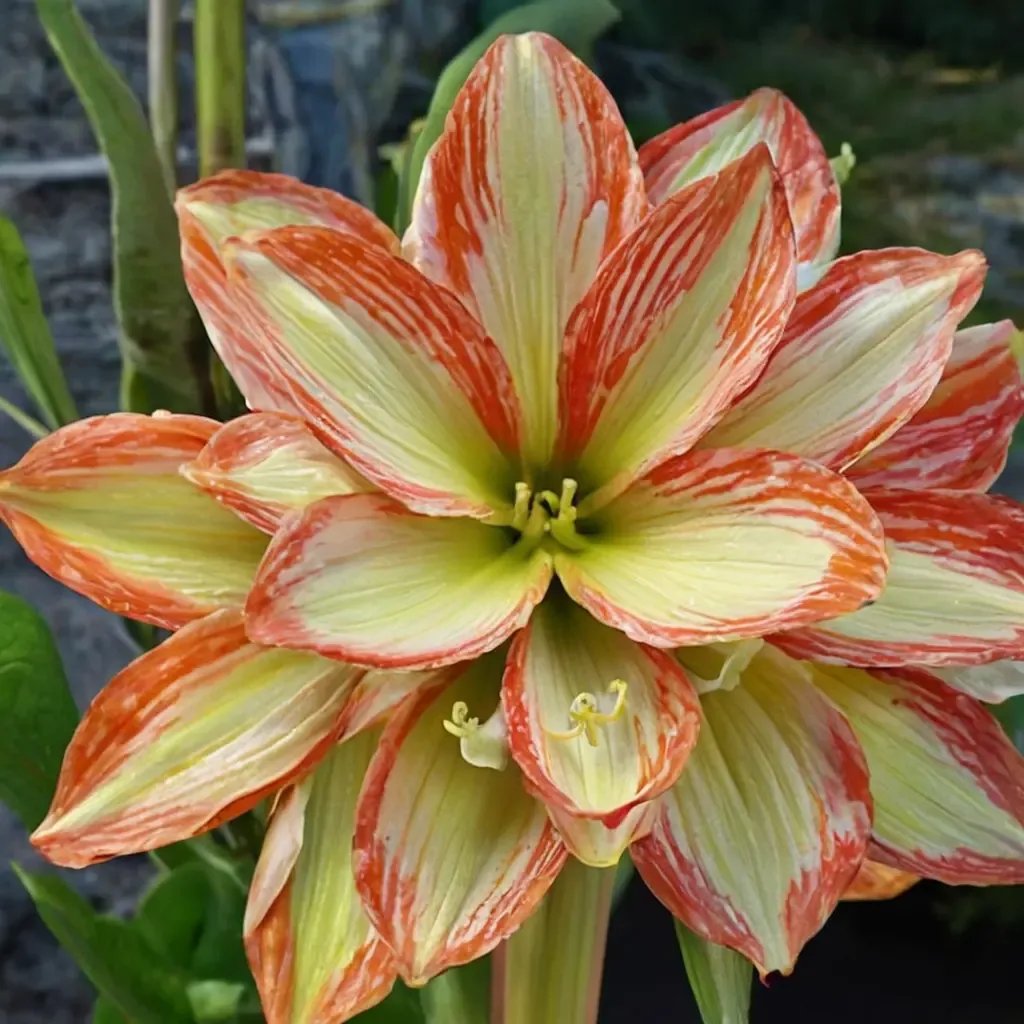
Large, showy flowers that are typically red or in shades of red, orange, and white.
Hybrid variety known for its multiple large flower heads on a single stalk.
Uses & Benefits:
Hippeastrum x floribundum offers vibrant, large flowers that brighten gardens and containers, adding tropical elegance.
Provides seasonal color with minimal maintenance when established.
Supports pollinators like bees and hummingbirds during bloom.
Essentials
At a Glance
Plant Type
Bulb Corm Tuber
Height
24"
Width
12"
Light
Full Sun, Partial Sun
Zones
8, 9, 10
Water
Moderate, avoid overwatering
Humidity
Average indoor humidity
Lifespan
Perennial bulb, several years with proper care
Native To
South America
Toxicity
All parts are toxic to humans and pets if ingested.
Bloom period
Early spring – Late spring
J
F
M
A
M
J
J
A
S
O
N
D
In flower about 3 months of the year
Planting
How to Grow
- Tuck bulbs 2-3 inches deep in well-draining soil in fall.
- Mist bulbs lightly until shoots emerge, about 4-6 weeks.
- Transplant to a sunny location once roots are established.
- Water sparingly until growth appears, then keep soil moist.
- Fertilize monthly during active growth with balanced fertilizer.
- Allow foliage to die back naturally after blooming for bulb health.
Pro Tip
Use a sandy, well-draining soil mix to prevent bulb rot and ensure healthy growth.
Keep It Thriving
Care Guide
Do
- Water when top inch of soil feels dry 💧
- Provide bright, indirect sunlight for optimal flowering 🌞
- Apply balanced fertilizer monthly during growing season
- Lift and divide bulbs every 3-4 years for vigorous growth
- Use organic compost to enrich soil
Don't
- Avoid overwatering to prevent bulb rot ❌
- Don’t expose bulbs to standing water
- Refrain from pruning leaves prematurely
- Don’t use heavy clay soil without amendments
- Avoid fertilizing during dormancy
Seasonal Care Calendar
| Task | Jan | Feb | Mar | Apr | May | Jun | Jul | Aug | Sep | Oct | Nov | Dec |
|---|---|---|---|---|---|---|---|---|---|---|---|---|
| Deadhead | ||||||||||||
| Fertilize | ||||||||||||
| Lift Store | ||||||||||||
| Plant |
Watch Out For
Pests & Diseases
Common Pests
Common Diseases
In the Garden
Landscape Uses & Companions
Landscape Uses
Vivid border with tropical flairPotted centerpiece for patiosColorful accent in mixed flower beds
Multiply
Propagation Methods
Good to Know