The Story
Plant Bio
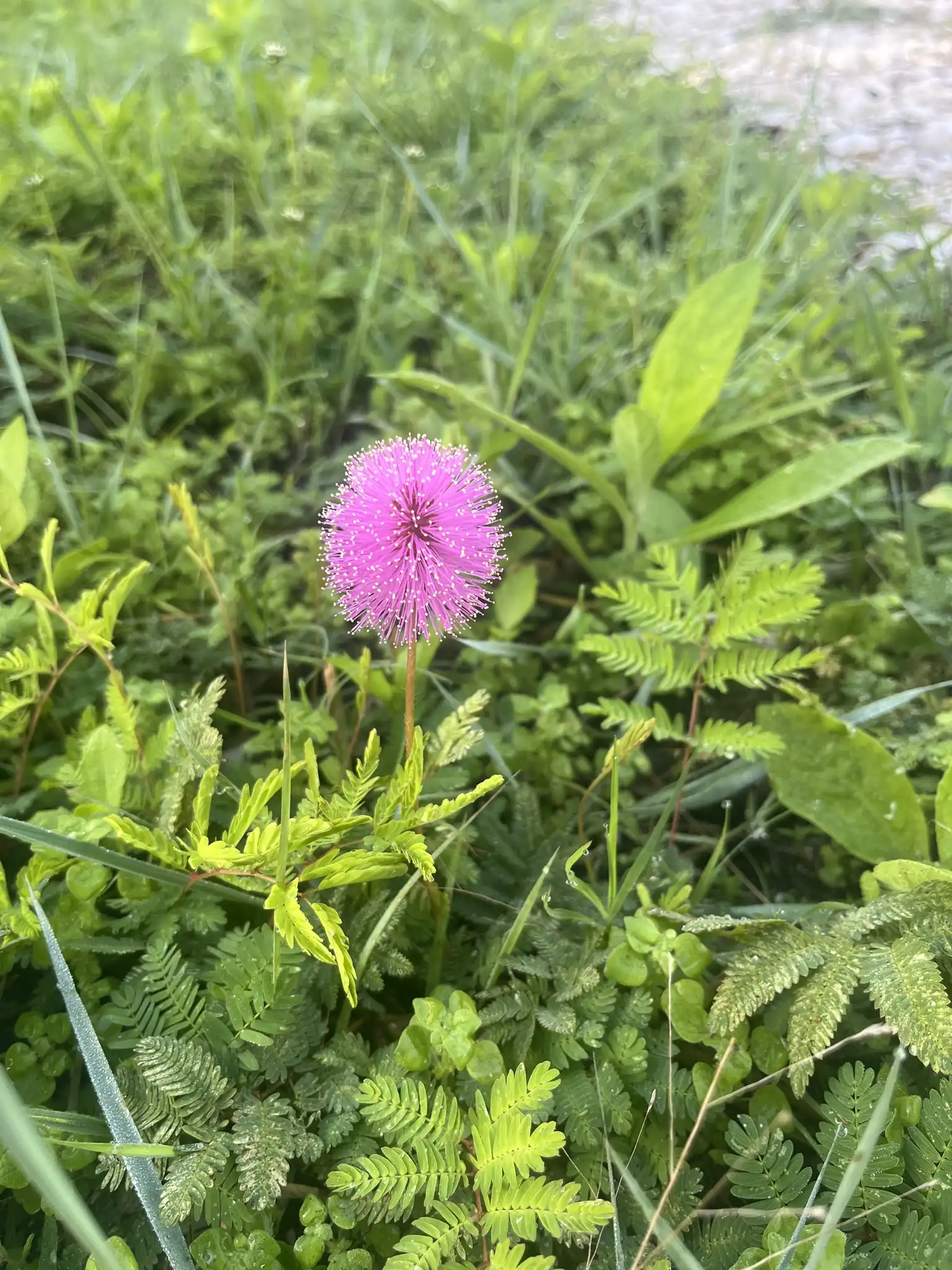
Mimosa strigillosa is a prostrate perennial subshrub that roots at the stem nodes to form a low evergreen mat, anchored by a woody taproot. The alternate leaves are twice-divided and fern-like, folding closed when touched, and the stems carry fine bristle-like hairs.
It is distinguished from its close relatives by the absence of recurved prickles, the stems and leaves carrying only soft strigose bristles. In bloom it holds round powderpuff heads of pink stamens just above the mat, reaching about one foot tall in flower while the mat spreads indefinitely to form groundcover.
Uses & Benefits:
Essentials
At a Glance
Plant Type
Groundcover
Height
12"
Width
1200"
Light
Full Sun, Partial Sun
Zones
8, 9, 10
Water
Low once established
Humidity
Unknown
Lifespan
Perennial
Native To
Central and southeastern USA to Mexico
Toxicity
Unknown
Bloom period
Spring – Fall
In flower about 9 months of the year
Planting
How to Grow
- Plant in full sun in well-drained sand or sandy loam, spacing plugs 12 to 18 inches apart to knit into a mat.
- Water deeply at planting and through the first summer, then taper off once nodal roots and the taproot are anchored.
- Allow stems to run and root at nodes; pin trailing stems to bare soil to fill gaps.
- Mow or trim lightly only to tidy edges, never cutting into old woody crowns.
Pro Tip
Confirm thornless, bristle-only stems that root at the nodes before planting; prickly stems signal a different mimosa.
Keep It Thriving
Care Guide
Do
- Give full sun and sharp drainage in sand
- Let the mat root at nodes to thicken cover
- Use as a lawn alternative in zones 8-11
Don't
- Do not plant in heavy clay or soggy ground
- Do not prune back into old leafless wood
- Do not confuse with thorny mimosas or mimosa tree seedlings
Seasonal Care Calendar
| Task | Jan | Feb | Mar | Apr | May | Jun | Jul | Aug | Sep | Oct | Nov | Dec |
|---|---|---|---|---|---|---|---|---|---|---|---|---|
| Deadhead | ||||||||||||
| Pest Check | ||||||||||||
| Plant | ||||||||||||
| Propagate |
Watch Out For
Pests & Diseases
Common Pests
Common Diseases
In the Garden
Landscape Uses & Companions
Landscape Uses
Multiply
Propagation Methods
Good to Know
Common Questions
Sunshine Mimosa questions
What zones can Sunshine Mimosa grow in?
Sunshine Mimosa is hardy in USDA Zones 8–10: in that range it survives winter in the ground. Colder than Zone 8, grow it in a container you can move to shelter for the winter, or as an annual.
When does Sunshine Mimosa bloom?
Sunshine Mimosa typically blooms from spring to fall. Exact timing shifts a week or two with your zone — Sow's bloom calendar maps it to your garden.
Does Sunshine Mimosa need full sun?
Sunshine Mimosa does best in full sun to part shade. In hot climates, afternoon shade keeps blooms fresher longer.
Is Sunshine Mimosa drought tolerant?
Yes — once established (usually after the first full season), Sunshine Mimosa handles dry spells with minimal watering. Water deeply its first year to build the root system that makes that possible.
Keep exploring
Explore the genus
Hardy in your zone?
Grow Sunshine Mimosa with confidence
See it in a design of your actual yard, get zone-matched care reminders, and track it season by season in your garden journal.