The Story
Plant Bio
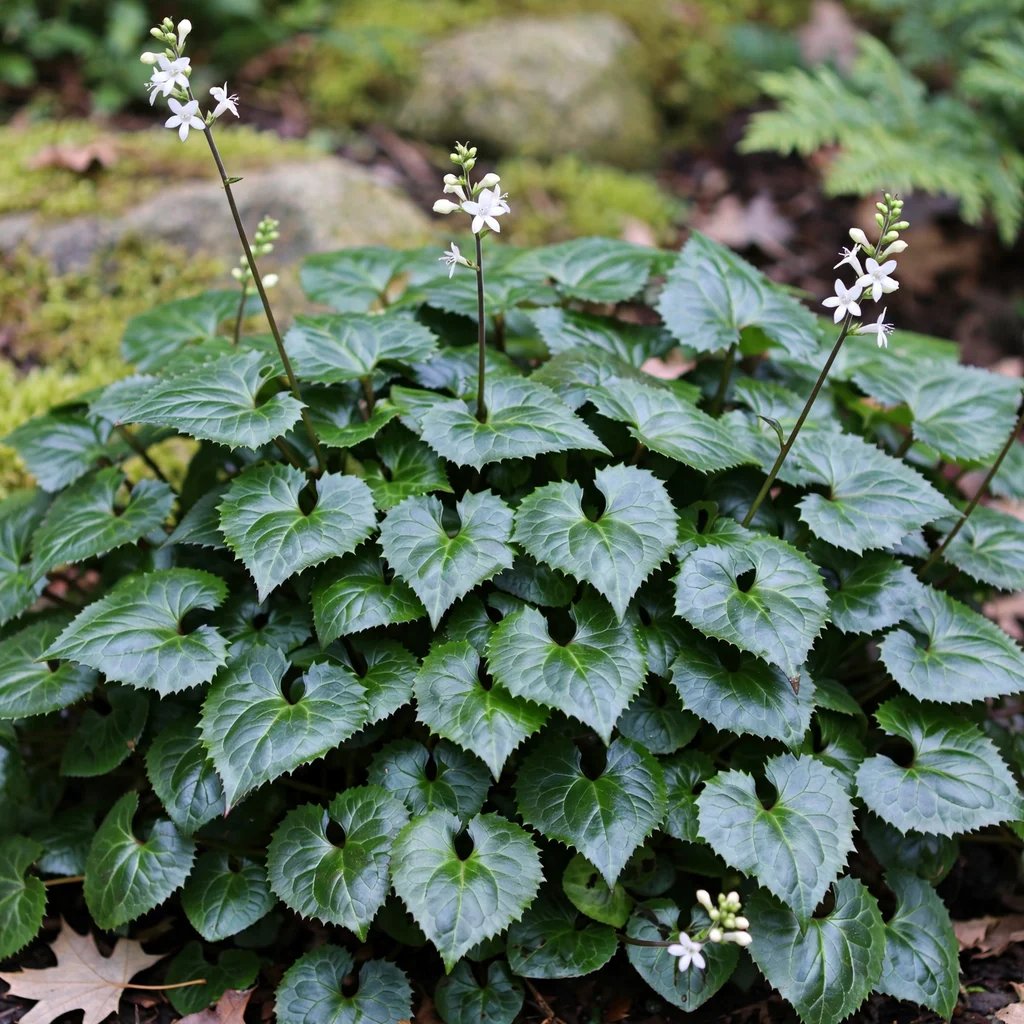
Beesia deltophylla, the false bugbane, is an evergreen woodland perennial from forested slopes and moist meadows in China, forming a dense basal rosette on short rhizomes. The foliage persists through winter and the small star-shaped white flowers are carried on slender airy racemes held well above the leaves.
What sets it apart is exceptionally glossy heart-shaped foliage that emerges purple-tinged and hardens to dark green with a gunmetal-blue cast, turning bluish-purple in cold weather. It is a slow, gently spreading evergreen groundcover 12 to 18 inches high in leaf, with flower spikes to about 32 inches, often sold under the misapplied name Beesia calthifolia.
Uses & Benefits:
Essentials
At a Glance
Plant Type
Perennial
Height
18"
Width
24"
Light
Partial Sun, Shade
Zones
6, 7, 8
Water
Medium, evenly moist
Humidity
Unknown
Lifespan
Perennial
Native To
China
Toxicity
Unknown - no toxicity data found
Bloom period
Late spring – Early summer
In flower about 2 months of the year
Planting
How to Grow
- Choose dappled or full shade with no direct afternoon sun.
- Dig composted leaf mold into humus-rich, well-drained soil and set the crown at soil level.
- Space 18 to 24 inches apart to allow slow clump spread.
- Water deeply at planting and regularly through the first season to establish.
- Top with 2 inches of leaf mulch, keeping mulch back from the crown.
Pro Tip
Plant it in dappled shade in humus-rich, evenly moist soil and then leave it alone; direct sun scorches the leaves and soggy soil rots the crown faster than neglect ever will.
Keep It Thriving
Care Guide
Do
- Keep soil consistently moist but never waterlogged
- Cut out tattered old leaves in early spring before new growth expands
- Clip spent flower stems in late summer
Don't
- Do not plant in full sun or hot reflected light
- Do not overwater or let pots sit in saucers of water
- Do not cut the whole rosette back hard each year
Seasonal Care Calendar
| Task | Jan | Feb | Mar | Apr | May | Jun | Jul | Aug | Sep | Oct | Nov | Dec |
|---|---|---|---|---|---|---|---|---|---|---|---|---|
| Deadhead | ||||||||||||
| Mulch | ||||||||||||
| Pest Check | ||||||||||||
| Plant | ||||||||||||
| Spring Cleanup |
Watch Out For
Pests & Diseases
Common Pests
Common Diseases
In the Garden
Landscape Uses & Companions
Landscape Uses
Companion Plants
Multiply
Propagation Methods
Good to Know
Common Questions
False Bugbane questions
What zones can False Bugbane grow in?
False Bugbane is hardy in USDA Zones 6–8: in that range it survives winter in the ground. Colder than Zone 6, grow it in a container you can move to shelter for the winter, or as an annual. Warmer than Zone 8, winter isn't the problem: it prefers colder winters, and summer heat can shorten its life.
Is False Bugbane deer resistant?
Yes — False Bugbane is rated deer-resistant. Deer typically pass it over, though extreme hunger can override any plant's defenses.
When does False Bugbane bloom?
False Bugbane typically blooms from late spring to early summer. Exact timing shifts a week or two with your zone — Sow's bloom calendar maps it to your garden.
Does False Bugbane need full sun?
False Bugbane does best in part shade.
Keep exploring
Explore the genus
Hardy in your zone?
Grow False Bugbane with confidence
See it in a design of your actual yard, get zone-matched care reminders, and track it season by season in your garden journal.