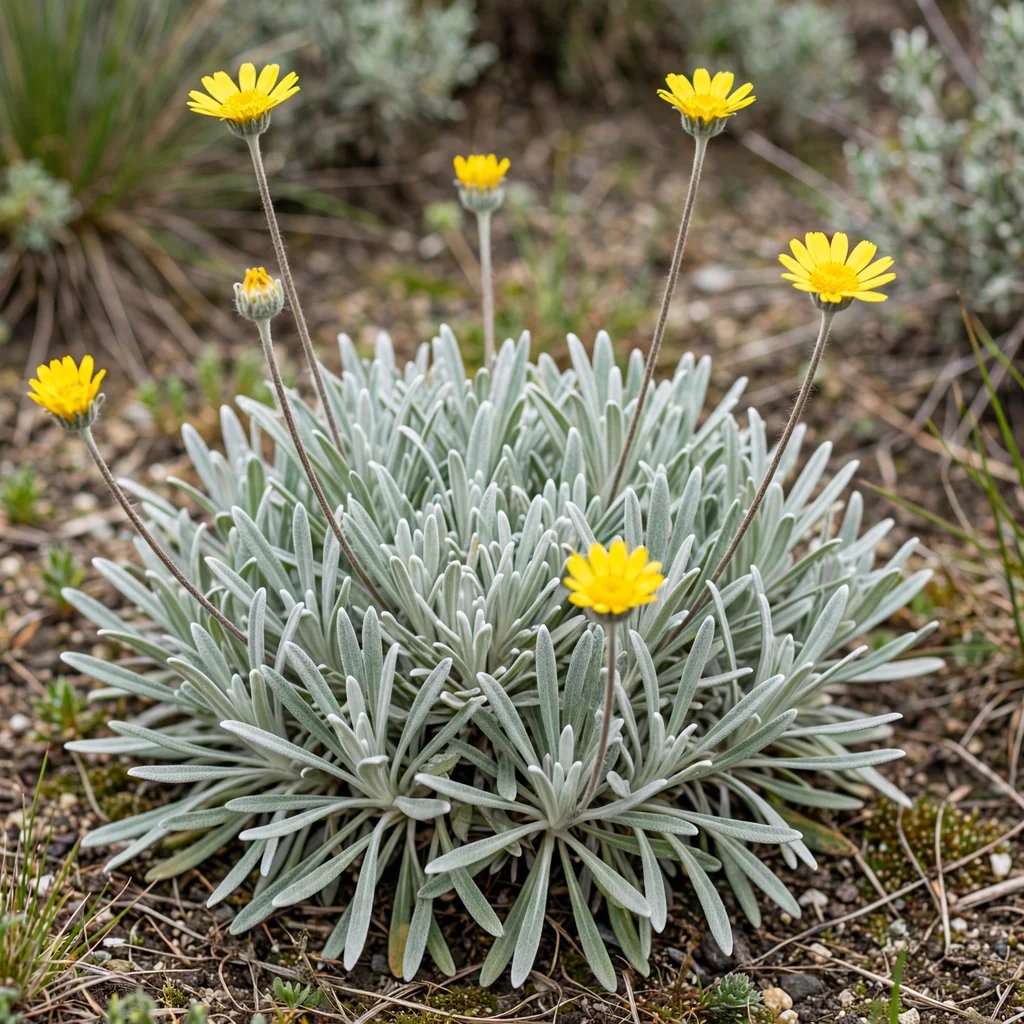
The Story
Plant Bio
Tetraneuris acaulis, still sold as Hymenoxys acaulis, is a low tufted perennial from central-western North America that forms a mound of basal rosettes. The foliage is all basal, narrow and silvery with silky hairs, and each leafless stem carries a single yellow daisy head of ray and disk florets.
It is stemless in effect, throwing 1 to 35 naked peduncles to 12 inches from a woody crown, with tight new leaves clustered at the center. The garden plant sold as Angelita Daisy is the Arizona variety, a compact desert form that flowers in spring to summer and reblooms intermittently if spent heads are removed.
Uses & Benefits:
Essentials
At a Glance
Plant Type
Perennial
Height
12"
Width
15"
Light
Full Sun
Zones
5, 6, 7, 8
Water
Low
Humidity
Unknown
Lifespan
Perennial
Native To
Central-western North America
Toxicity
Toxic to livestock
Bloom period
Spring – Summer
In flower about 6 months of the year
Planting
How to Grow
- Plant in full sun in very well-drained limestone sand or gravel with the crown set slightly above grade.
- Water in once to settle, then water sparingly; let the soil dry between waterings.
- Top-dress with gravel mulch to keep the crown dry and prevent soil splash.
- Remove spent flower stems to encourage intermittent rebloom through summer.
Pro Tip
Plant high in lean limestone gravel and withhold water once established; soggy rich soil rots the crown.
Keep It Thriving
Care Guide
Do
- Give full sun and sharp drainage on a slope or raised rockery.
- Leave the basal rosette intact over winter.
- Use lean, low-fertility soil.
Don't
- Do not overwater or fertilize with rich feeds.
- Do not plant in soggy clay or low ground where water stands.
- Do not cut back into the woody crown.
Seasonal Care Calendar
| Task | Jan | Feb | Mar | Apr | May | Jun | Jul | Aug | Sep | Oct | Nov | Dec |
|---|---|---|---|---|---|---|---|---|---|---|---|---|
| Deadhead | ||||||||||||
| Pest Check | ||||||||||||
| Plant | ||||||||||||
| Propagate |
Watch Out For
Pests & Diseases
Common Pests
Common Diseases
In the Garden
Landscape Uses & Companions
Landscape Uses
Multiply
Propagation Methods
Good to Know
Common Questions
Angelita Daisy questions
What zones can Angelita Daisy grow in?
Angelita Daisy is hardy in USDA Zones 5–8: in that range it survives winter in the ground. Colder than Zone 5, grow it in a container you can move to shelter for the winter, or as an annual. Warmer than Zone 8, winter isn't the problem: it prefers colder winters, and summer heat can shorten its life.
Is Angelita Daisy deer resistant?
Yes — Angelita Daisy is rated deer-resistant. Deer typically pass it over, though extreme hunger can override any plant's defenses.
When does Angelita Daisy bloom?
Angelita Daisy typically blooms from spring to summer. Exact timing shifts a week or two with your zone — Sow's bloom calendar maps it to your garden.
Does Angelita Daisy need full sun?
Angelita Daisy does best in full sun (6+ hours).
Is Angelita Daisy drought tolerant?
Yes — once established (usually after the first full season), Angelita Daisy handles dry spells with minimal watering. Water deeply its first year to build the root system that makes that possible.
More Hymenoxys to compare
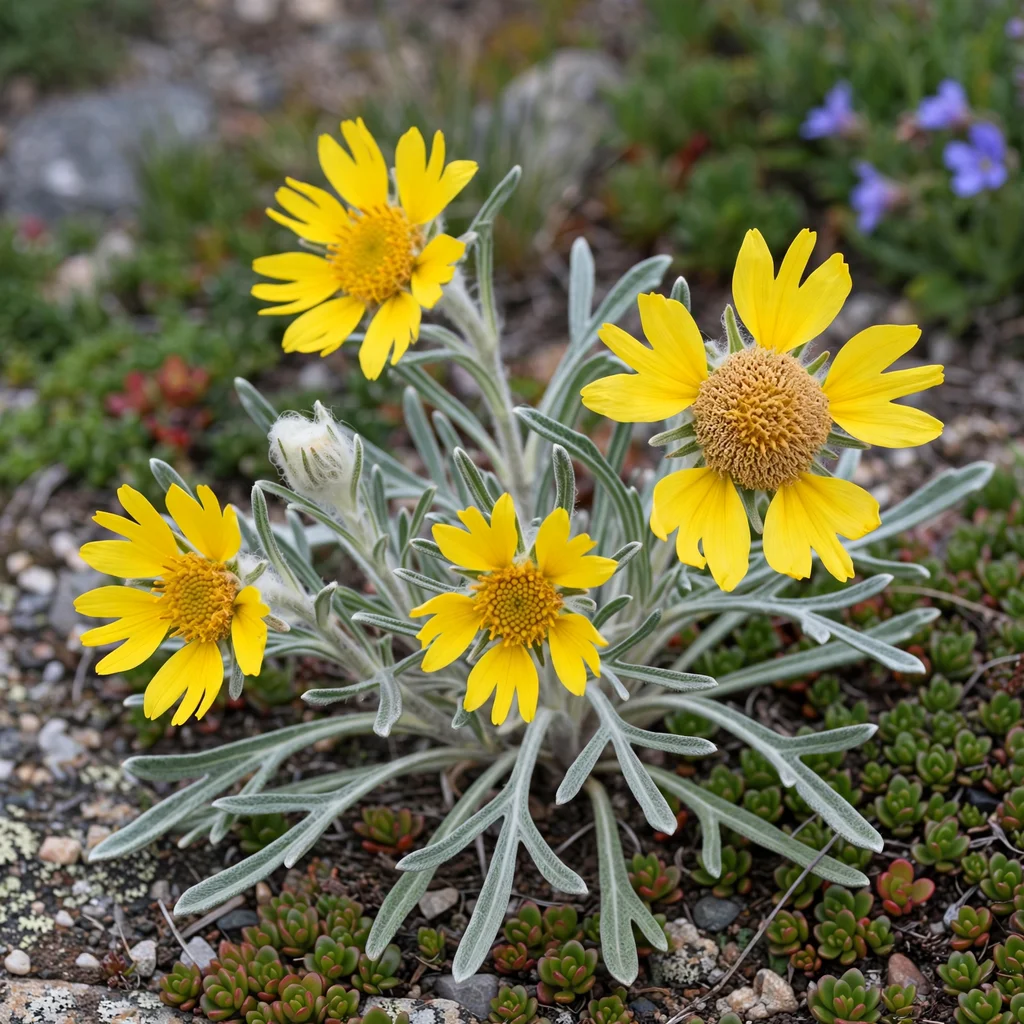
Keep exploring
Explore the genus
Hardy in your zone?
Grow Angelita Daisy with confidence
See it in a design of your actual yard, get zone-matched care reminders, and track it season by season in your garden journal.