The Story
Plant Bio
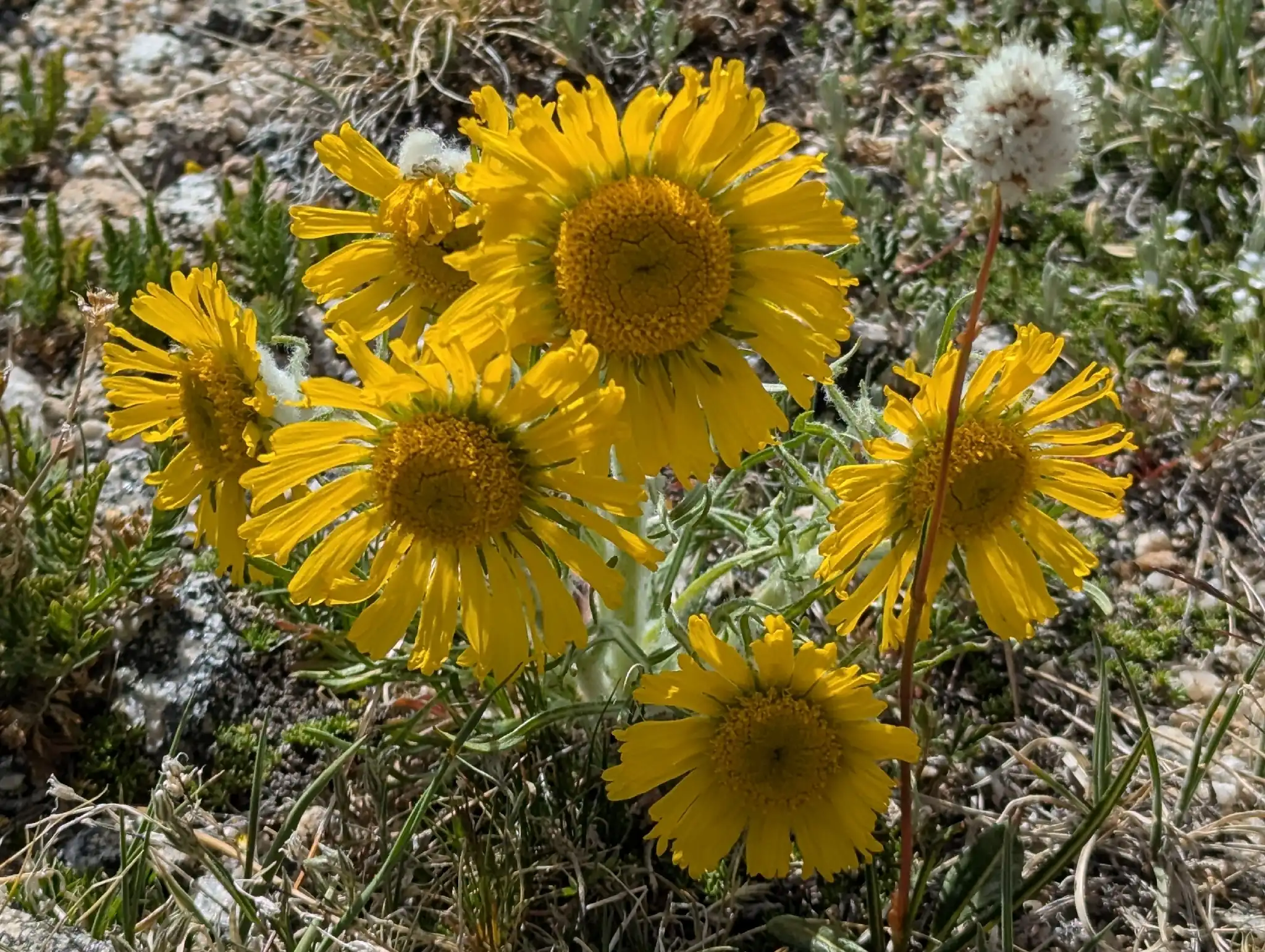
Hymenoxys grandiflora is a low tufted perennial of the Rocky Mountain alpine zone, forming a mat of finely dissected leaves clothed in cottony white hairs. Plants send up one to ten unbranched stems topped by large solitary daisy heads with bright yellow rays around a domed central disk.
It bears the largest heads in the genus, three to four inches across, with three-toothed ray petals around a center that ages from yellow to tan. It is a high-elevation endemic of open rocky tundra from 8500 to 14000 feet, built for cool dry summers and sharp drainage.
Uses & Benefits:
Essentials
At a Glance
Plant Type
Perennial
Height
12"
Width
12"
Light
Full Sun, Partial Sun
Zones
4, 5, 6, 7, 8, 9
Water
Low
Humidity
Low
Lifespan
Short-lived perennial
Native To
Rocky Mountains, USA
Toxicity
Unknown
Bloom period
Late spring – Summer
In flower about 4 months of the year
Planting
How to Grow
- Plant in full sun in gritty, sharply drained soil with limestone gravel mixed through.
- Set the crown at soil level and water in once, then keep evenly moist until rooted.
- Top-dress with a thin gravel mulch to keep the crown dry and cool.
- Water sparingly once established; it tolerates dry spells but fails in hot wet soil.
- Site where summers stay cool and air movement is good.
Pro Tip
Stagger new plants over several years to replace rosettes that die abruptly after flowering.
Keep It Thriving
Care Guide
Do
- Give full sun and open air with cool, dry summer conditions.
- Grow in rocky, well-drained, limestone-rich soil.
- Sow fresh seed with a moist cold period to improve germination.
Don't
- Do not plant in heavy clay or soil that stays wet in winter.
- Do not grow where summers are hot and humid.
- Do not fertilize heavily or overwater established clumps.
Seasonal Care Calendar
| Task | Jan | Feb | Mar | Apr | May | Jun | Jul | Aug | Sep | Oct | Nov | Dec |
|---|---|---|---|---|---|---|---|---|---|---|---|---|
| Deadhead | ||||||||||||
| Divide | ||||||||||||
| Mulch | ||||||||||||
| Plant | ||||||||||||
| Propagate |
Watch Out For
Pests & Diseases
Common Pests
Common Diseases
In the Garden
Landscape Uses & Companions
Landscape Uses
Multiply
Propagation Methods
Good to Know
Common Questions
Old Man of the Mountain questions
What zones can Old Man of the Mountain grow in?
Old Man of the Mountain is hardy in USDA Zones 4–9: in that range it survives winter in the ground. Warmer than Zone 9, winter isn't the problem: it prefers colder winters, and summer heat can shorten its life.
When does Old Man of the Mountain bloom?
Old Man of the Mountain typically blooms from late spring to late summer. Exact timing shifts a week or two with your zone — Sow's bloom calendar maps it to your garden.
Does Old Man of the Mountain need full sun?
Old Man of the Mountain does best in full sun to part shade. In hot climates, afternoon shade keeps blooms fresher longer.
Is Old Man of the Mountain drought tolerant?
Yes — once established (usually after the first full season), Old Man of the Mountain handles dry spells with minimal watering. Water deeply its first year to build the root system that makes that possible.
More Hymenoxys to compare
Keep exploring
Explore the genus
Grow Old Man of the Mountain with confidence
See it in a design of your actual yard, get zone-matched care reminders, and track it season by season in your garden journal.