The Story
Plant Bio
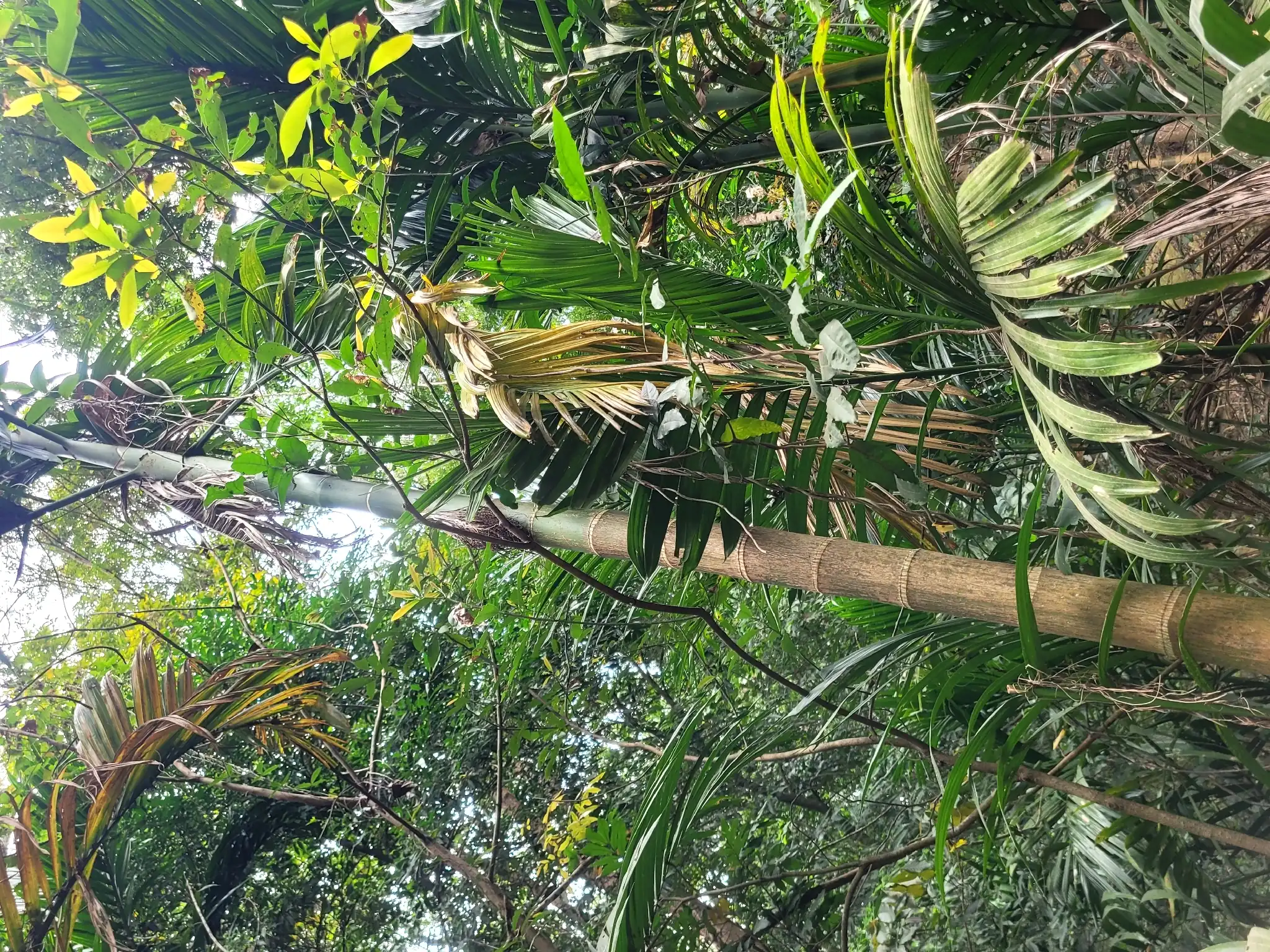
Areca catechu, the betel nut palm, is a solitary single-trunked palm with a slender ringed trunk 4 to 6 inches across, reaching about 30 feet in southern Florida and to 65 feet in the wet tropics. It carries arching pinnate fronds of emerald green that form a dense crown above the trunk.
Plants bear a much-branched spadix to about 28 inches long with one female and two male cream flowers together, the males alone above, followed by green to yellow to red ovoid fruits to about 3 inches long with a lemon scent. The form with a yellow crownshaft and petioles is grown as var. alba, and the species is distinct from the common houseplant sold as areca palm, which is Dypsis lutescens.
Uses & Benefits:
Essentials
At a Glance
Plant Type
Tropical
Height
360"
Width
120"
Light
Full Sun, Partial Sun
Zones
9, 10
Water
High - evenly moist
Humidity
High
Lifespan
Long-lived
Native To
Philippines
Toxicity
Toxic if ingested
Bloom period
Year round
In flower about 12 months of the year
Planting
How to Grow
- Plant in a warm, humid, sheltered spot in full sun to part shade, with shade when young.
- Set into rich, moist, deep, loose soil that drains freely and stays slightly acidic to neutral.
- Water to keep soil evenly moist but never waterlogged, with high humidity.
- Protect from frost; growth stops below about 55F and brief freezes damage foliage.
Pro Tip
Never cut the trunk or trim green fronds; remove dead fronds only, as damage to the single growing point kills the palm.
Keep It Thriving
Care Guide
Do
- Keep soil evenly moist with free drainage.
- Provide shelter from wind and frost.
- Give young plants shade until established.
Don't
- Do not cut the trunk or green crown.
- Do not let soil sit waterlogged.
- Do not chew or eat the nuts; they are carcinogenic.
Seasonal Care Calendar
| Task | Jan | Feb | Mar | Apr | May | Jun | Jul | Aug | Sep | Oct | Nov | Dec |
|---|---|---|---|---|---|---|---|---|---|---|---|---|
| Mulch | ||||||||||||
| Pest Check | ||||||||||||
| Prune | ||||||||||||
| Winter Prep |
Watch Out For
Pests & Diseases
Common Pests
Common Diseases
In the Garden
Landscape Uses & Companions
Landscape Uses
Multiply
Propagation Methods
Good to Know
Common Questions
Betel Nut Palm questions
What zones can Betel Nut Palm grow in?
Betel Nut Palm is hardy in USDA Zones 9–10: in that range it survives winter in the ground. Colder than Zone 9, grow it in a container you can move to shelter for the winter, or as an annual.
When does Betel Nut Palm bloom?
Betel Nut Palm typically blooms year-round. Exact timing shifts a week or two with your zone — Sow's bloom calendar maps it to your garden.
Does Betel Nut Palm need full sun?
Betel Nut Palm does best in full sun to part shade. In hot climates, afternoon shade keeps blooms fresher longer.
Keep exploring
Explore the genus
Hardy in your zone?
Grow Betel Nut Palm with confidence
See it in a design of your actual yard, get zone-matched care reminders, and track it season by season in your garden journal.