The Story
Plant Bio
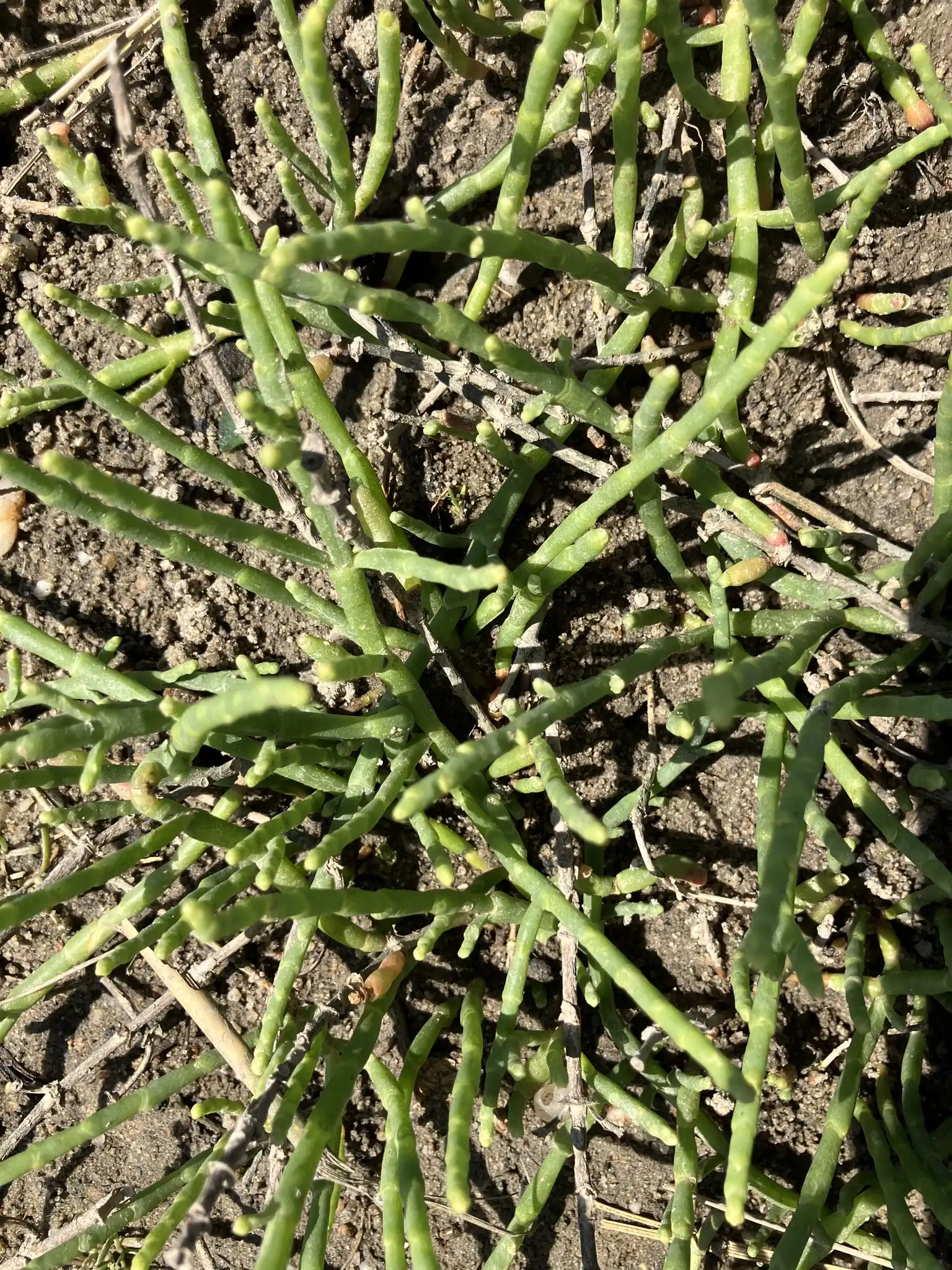
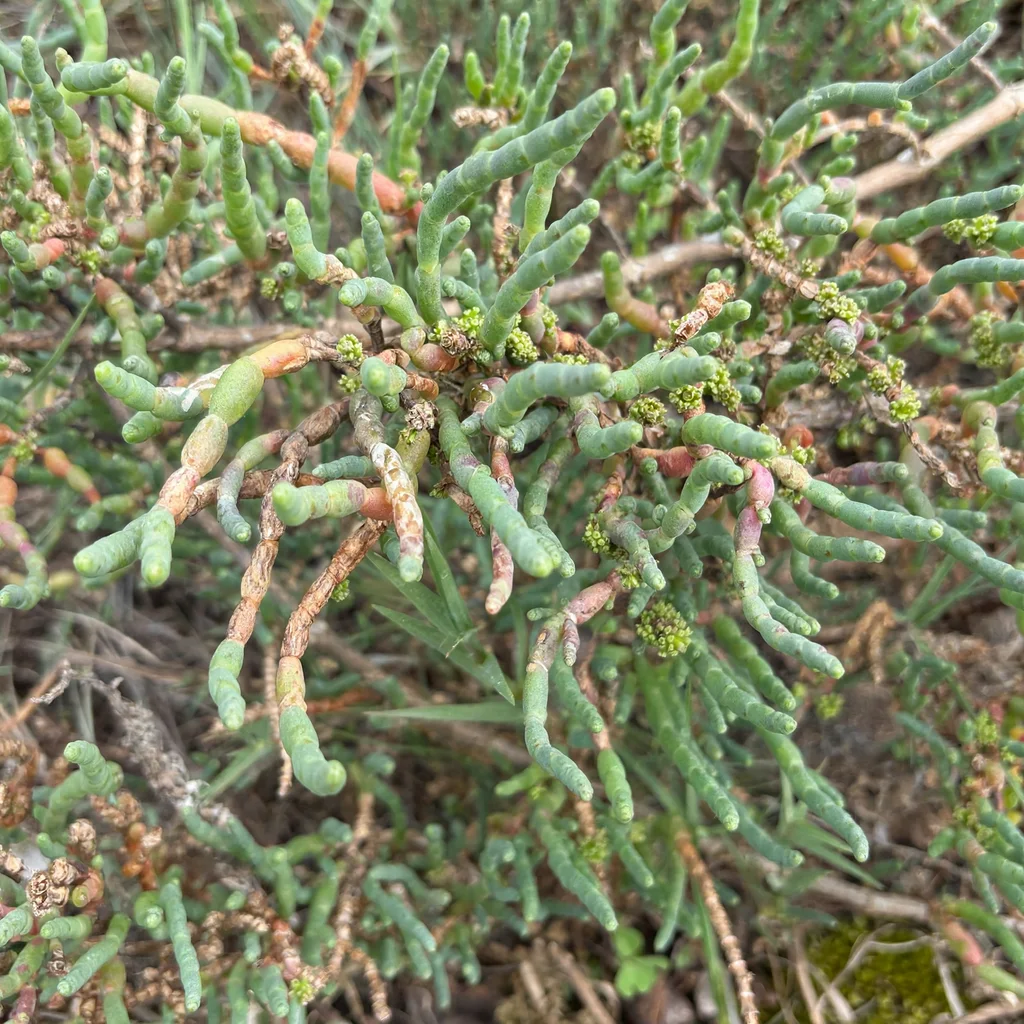
Salicornia virginica is a jointed, leafless halophyte of tidal salt marshes, growing 12 to 28 inches tall with fleshy segmented green stems that flush red to purple in fall. It roots in saline mud, salt pannes, and tidal flats in full sun, where daily flooding and high salinity exclude most other plants.
It carries tiny green wind-pollinated flowers sunk in fleshy terminal spikes from late summer into fall, followed by seed set in the mud. North American plants sold under this name are the native annual often called Salicornia depressa, not the European Salicornia europaea, while the western perennial pickleweed is now separated as Sarcocornia pacifica.
Uses & Benefits:
Essentials
At a Glance
Plant Type
Perennial
Height
28"
Width
12"
Light
Full Sun
Zones
6, 7, 8, 9, 10
Water
Wet - obligate saline wetland
Humidity
High, salt-tolerant
Lifespan
Perennial, often treated as annual
Native To
North America - Atlantic and Pacific salt marshes to Caribbean
Toxicity
Edible - no toxicity reported
Bloom period
Late summer – Fall
In flower about 4 months of the year
Planting
How to Grow
- Plant plugs at mud level in full-sun tidal mud in spring after frost in zones 6-10.
- Keep the substrate saline and waterlogged; do not drain, mound, or mulch.
- Do not fertilize; fertility comes with tidal water.
- Leave plants standing through fall to set seed in place.
Pro Tip
Give it open sun and saline, waterlogged mud that never dries; in drained garden soil or fertilized beds it stalls and rots.
Keep It Thriving
Care Guide
Do
- Plant in full-sun saline mud that stays wet
- Source a local coastal ecotype for your coast
- Leave fall spikes to drop seed in place
Don't
- Do not fertilize salt marsh
- Do not plant in drained garden beds
- Do not cut or dig in protected restoration marsh
Seasonal Care Calendar
| Task | Jan | Feb | Mar | Apr | May | Jun | Jul | Aug | Sep | Oct | Nov | Dec |
|---|---|---|---|---|---|---|---|---|---|---|---|---|
| Harvest | ||||||||||||
| Pest Check | ||||||||||||
| Plant | ||||||||||||
| Winter Prep |
Watch Out For
Pests & Diseases
Common Pests
Common Diseases
In the Garden
Landscape Uses & Companions
Landscape Uses
Good to Know
Common Questions
Virginia Glasswort questions
What zones can Virginia Glasswort grow in?
Virginia Glasswort is hardy in USDA Zones 6–10: in that range it survives winter in the ground. Colder than Zone 6, grow it in a container you can move to shelter for the winter, or as an annual.
When does Virginia Glasswort bloom?
Virginia Glasswort typically blooms from late summer to late fall. Exact timing shifts a week or two with your zone — Sow's bloom calendar maps it to your garden.
Does Virginia Glasswort need full sun?
Virginia Glasswort does best in full sun (6+ hours).
More Salicornia to compare
Keep exploring
Explore the genus
Hardy in your zone?
Grow Virginia Glasswort with confidence
See it in a design of your actual yard, get zone-matched care reminders, and track it season by season in your garden journal.