The Story
Plant Bio
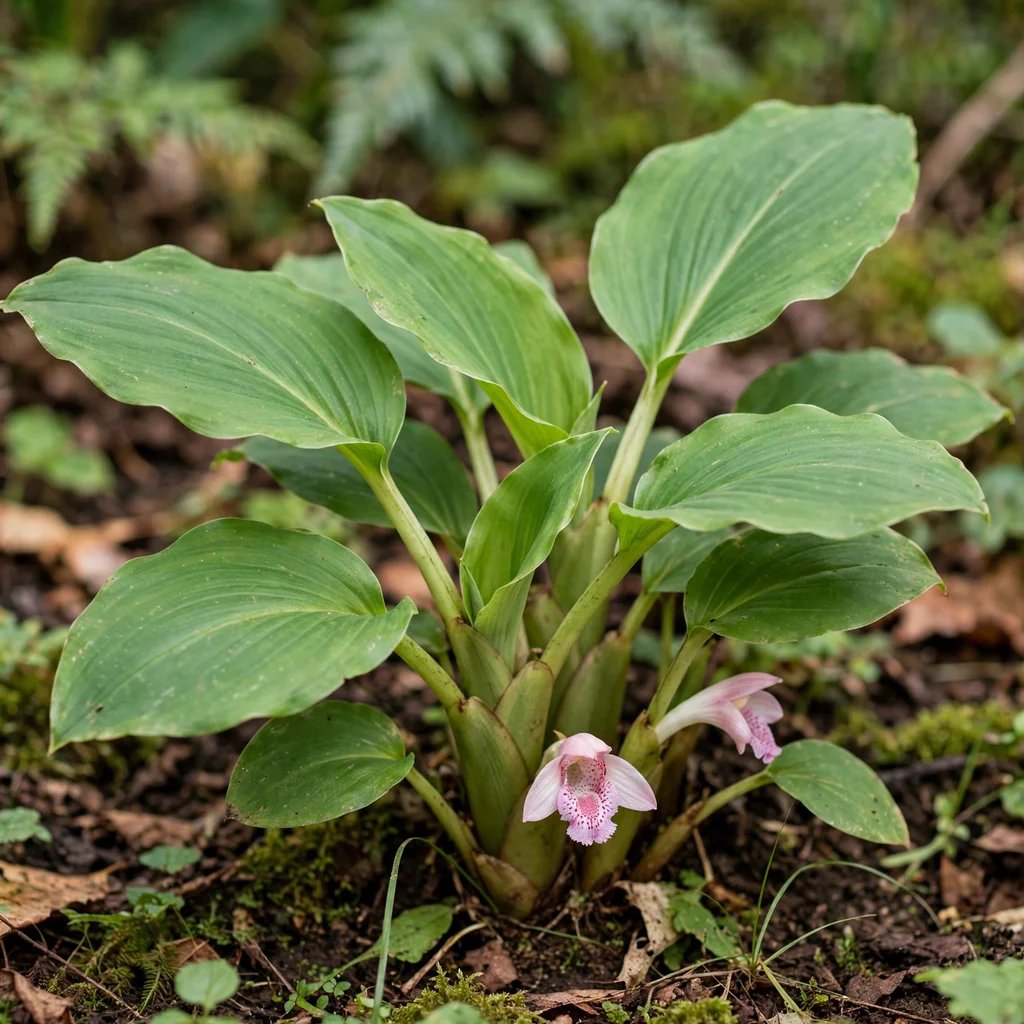
Boesenbergia rotunda is a small clumping ginger from the damp forests of southern Yunnan to western Malesia, growing from finger-like rhizomes to twelve to twenty inches in leaf. It carries three to four broad lance-shaped green leaves from the base and goes fully dormant in the cool dry season, resprouting from the rhizome with heat and moisture.
The flowers sit low between the leaf sheaths, with a white six-centimeter tube opening to pale pink lobes and a pink lip dotted red-violet. It is distinguished from common ginger by its clustered slender rhizomes and low ground-level bloom, and it is the true fingerroot used in Thai and Indonesian cooking.
Uses & Benefits:
Essentials
At a Glance
Plant Type
Perennial
Height
20"
Width
12"
Light
Partial Sun, Shade
Zones
9, 10
Water
Medium
Humidity
High
Lifespan
Perennial
Native To
Southeast Asia
Toxicity
Non-toxic
Bloom period
Summer – Autumn
In flower about 6 months of the year
Planting
How to Grow
- Plant divisions in spring after nights stay above 60F, buds just below the surface in rich high-organic mix.
- Give part to full shade with 2 to 3 hours of bright filtered sun and shelter from harsh afternoon sun.
- Water evenly in growth to keep soil moist but never soggy, then withhold water as foliage yellows in fall.
- Mulch 2 inches with leaf mold or bark to hold humidity and feed the shallow roots.
- In Zone 8 and colder, grow in pots and move frost-free for winter dormancy.
Pro Tip
When leaves yellow and collapse in fall, stop watering and keep the rhizomes almost dry until new shoots emerge in spring; winter wet rots dormant fingerroot.
Keep It Thriving
Care Guide
Do
- Water at soil level to keep foliage and crown dry
- Mulch with organic matter to hold moisture and humidity
- Divide crowded clumps in warm spring weather
Don't
- Do not overwater dormant leafless pots in winter
- Do not plant in waterlogged clay or let pots sit in saucers
- Do not store damaged or bored rhizomes with healthy stock
Seasonal Care Calendar
| Task | Jan | Feb | Mar | Apr | May | Jun | Jul | Aug | Sep | Oct | Nov | Dec |
|---|---|---|---|---|---|---|---|---|---|---|---|---|
| Harvest | ||||||||||||
| Lift Store | ||||||||||||
| Mulch | ||||||||||||
| Pest Check | ||||||||||||
| Plant |
Watch Out For
Pests & Diseases
Common Pests
Common Diseases
In the Garden
Landscape Uses & Companions
Landscape Uses
Companion Plants
Multiply
Propagation Methods
Good to Know
Common Questions
Fingerroot questions
What zones can Fingerroot grow in?
Fingerroot is hardy in USDA Zones 9–10: in that range it survives winter in the ground. Colder than Zone 9, grow it in a container you can move to shelter for the winter, or as an annual.
When does Fingerroot bloom?
Fingerroot typically blooms from summer to fall. Exact timing shifts a week or two with your zone — Sow's bloom calendar maps it to your garden.
Does Fingerroot need full sun?
Fingerroot does best in part shade.
Keep exploring
Explore the genus
Hardy in your zone?
Grow Fingerroot with confidence
See it in a design of your actual yard, get zone-matched care reminders, and track it season by season in your garden journal.