The Story
Plant Bio
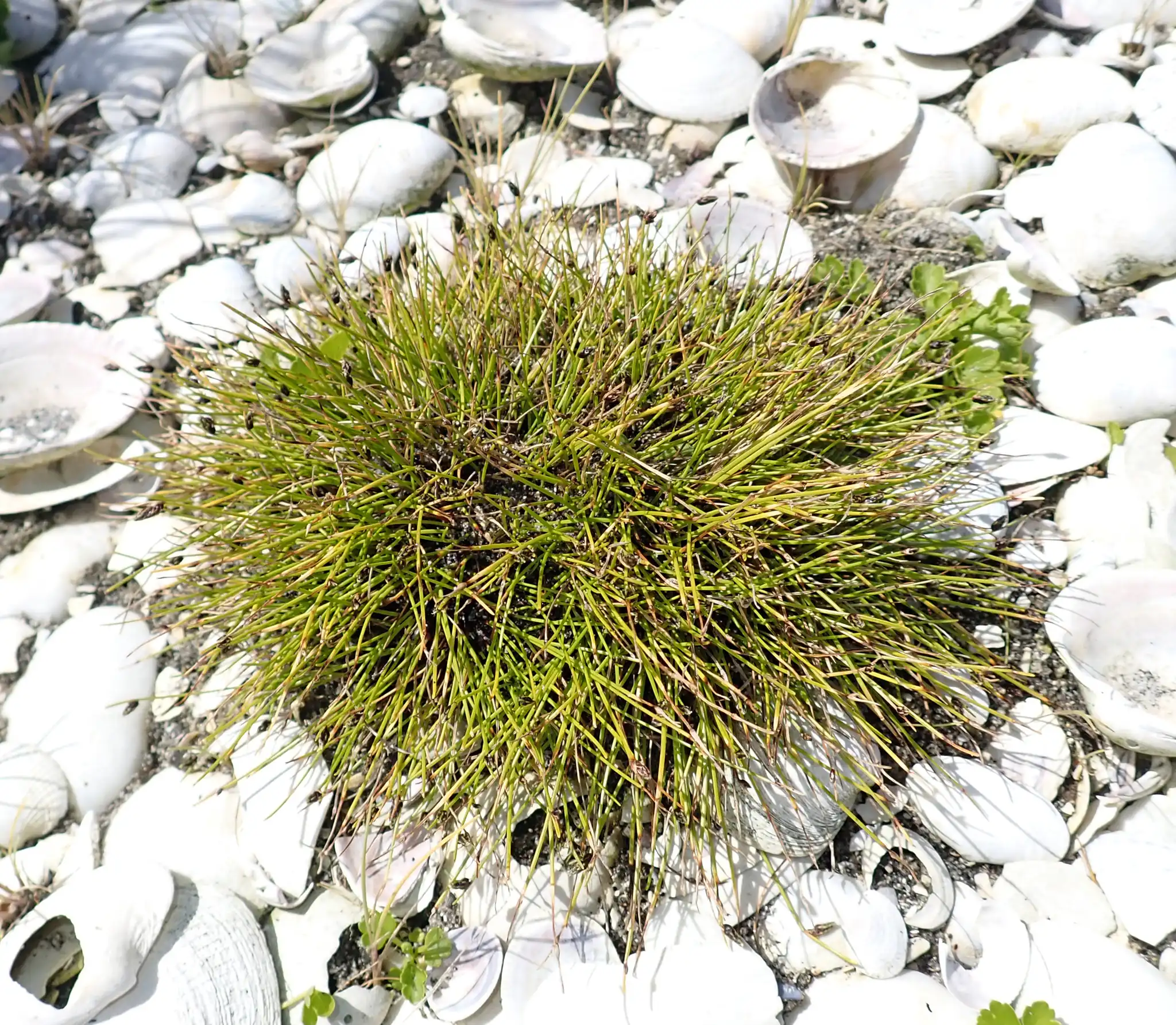
Isolepis cernua is a dense, mounding sedge forming a low tuft of thread-like, bright green stems that arch downward. Inconspicuous greenish to brown terminal spikelets bloom at the tips during spring and summer, creating the appearance of fiber optic strands.
This wetland species functions as an emergent marginal plant, thriving in saturated soils and shallow standing water where dry-land ornamental grasses fail. Its weeping habit and fine texture suit wet container displays, water garden margins, and terrariums.
Uses & Benefits:
Essentials
At a Glance
Plant Type
Grass
Height
12"
Width
12"
Light
Full Sun, Partial Sun
Zones
8, 9, 10
Water
High
Humidity
High
Lifespan
Perennial
Native To
Cosmopolitan (including North America, Australia)
Toxicity
Non-toxic
Bloom period
Spring – Summer
In flower about 6 months of the year
Planting
How to Grow
- Plant in full sun to partial shade using rich, moisture-retentive potting soil or loamy garden earth.
- Place containers in shallow saucers of water or position directly along saturated pond margins.
- Apply a balanced, water-soluble fertilizer monthly at half strength during active growth from spring through summer.
- Remove dead or browned foliage in early spring by trimming individual stems cleanly at the base.
Pro Tip
Keep the root zone perpetually saturated or set containers in shallow saucers of water; allowing the planting medium to dry out causes immediate, irreversible foliage tip burn.
Keep It Thriving
Care Guide
Do
- Maintain saturated soil conditions or shallow standing water around the root mass at all times.
- Provide high atmospheric humidity when keeping specimens indoors or under cover.
Don't
- Do not allow the growing medium to dry out between waterings.
- Do not shear severely back into old basal wood when cleaning up foliage.
Seasonal Care Calendar
| Task | Jan | Feb | Mar | Apr | May | Jun | Jul | Aug | Sep | Oct | Nov | Dec |
|---|---|---|---|---|---|---|---|---|---|---|---|---|
| Divide | ||||||||||||
| Fertilize | ||||||||||||
| Pest Check | ||||||||||||
| Prune |
Watch Out For
Pests & Diseases
Common Pests
Common Diseases
In the Garden
Landscape Uses & Companions
Landscape Uses
Companion Plants
Multiply
Propagation Methods
Good to Know
Common Questions
Fiber Optic Grass questions
What zones can Fiber Optic Grass grow in?
Fiber Optic Grass is hardy in USDA Zones 8–10: in that range it survives winter in the ground. Colder than Zone 8, grow it in a container you can move to shelter for the winter, or as an annual.
When does Fiber Optic Grass bloom?
Fiber Optic Grass typically blooms from spring to summer. Exact timing shifts a week or two with your zone — Sow's bloom calendar maps it to your garden.
Does Fiber Optic Grass need full sun?
Fiber Optic Grass does best in full sun to part shade. In hot climates, afternoon shade keeps blooms fresher longer.
Keep exploring
Explore the genus
Hardy in your zone?
Grow Fiber Optic Grass with confidence
See it in a design of your actual yard, get zone-matched care reminders, and track it season by season in your garden journal.