The Story
Plant Bio
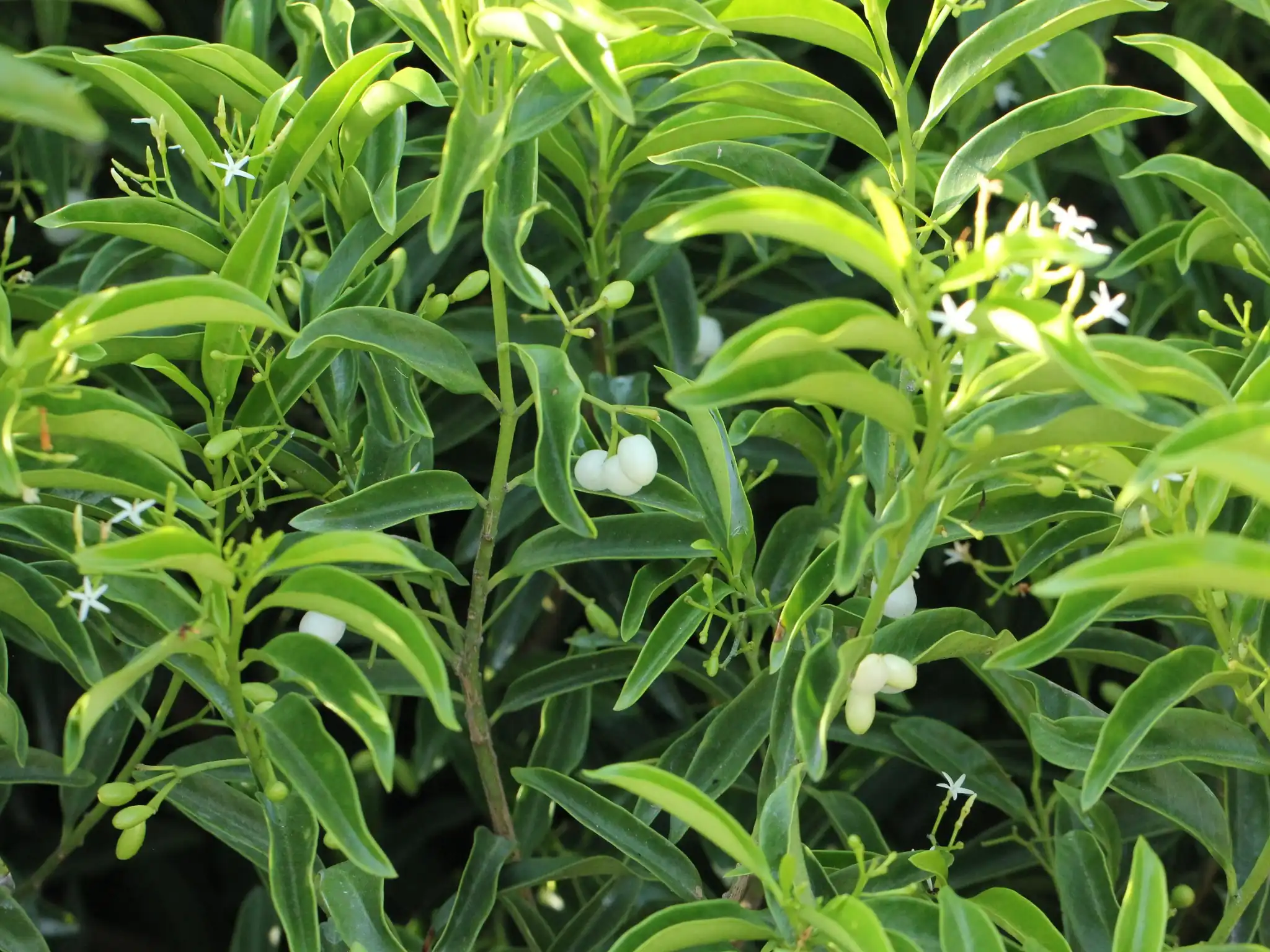
Vallesia antillana is a densely branched evergreen shrub 5 to 10 feet tall in cultivation, rarely reaching 15 feet as a small tree, with alternate glossy green elliptic leaves to about 3 inches long. It grows very slowly in rockland hammocks and coastal berms on moist, humus-covered limestone at low elevation.
It carries open clusters of white salverform flowers with five narrow petals alongside translucent pearl-white berries on the same plant, flowering and fruiting in all months. Unlike fast screening shrubs, it stays dense but adds growth very slowly and holds both flowers and fruit at once for birds and small mammals.
Uses & Benefits:
Essentials
At a Glance
Plant Type
Shrub
Height
120"
Width
72"
Light
Partial Sun, Shade
Zones
9, 10
Water
Medium
Humidity
High
Lifespan
Long-lived shrub
Native To
South Florida, Caribbean, Southeast Mexico
Toxicity
Toxic if ingested
Bloom period
Year round
In flower about 12 months of the year
Planting
How to Grow
- Plant in light shade in humusy alkaline limestone soil that drains freely but stays moist.
- Set the root ball level and water deeply, then mulch with leaf litter keeping mulch off the stems.
- Water regularly to establish; once rooted it tolerates short dry spells but not waterlogging.
- Protect from frost in zone 9 and move container plants inside in winter outside the subtropics.
Pro Tip
Do not shear for a quick hedge; leave the open clusters alone so flowers can set the pearl-white fruit, and buy the largest potted plant you can afford because growth is very slow.
Keep It Thriving
Care Guide
Do
- Plant in part sun to light shade in moist, well-drained alkaline soil.
- Mulch with leaf litter to mimic hammock humus and hold moisture.
- Buy nursery-grown stock to protect endangered wild populations.
Don't
- Do not plant in waterlogged soil or let pots sit in standing water.
- Do not shear off flowers and young fruit to force a formal hedge.
- Do not eat the berries and do not let pets chew the plant.
Seasonal Care Calendar
| Task | Jan | Feb | Mar | Apr | May | Jun | Jul | Aug | Sep | Oct | Nov | Dec |
|---|---|---|---|---|---|---|---|---|---|---|---|---|
| Mulch | ||||||||||||
| Plant | ||||||||||||
| Prune | ||||||||||||
| Winter Prep |
Watch Out For
Pests & Diseases
Common Pests
Common Diseases
In the Garden
Landscape Uses & Companions
Landscape Uses
Multiply
Propagation Methods
Good to Know
Common Questions
Pearlberry questions
What zones can Pearlberry grow in?
Pearlberry is hardy in USDA Zones 9–10: in that range it survives winter in the ground. Colder than Zone 9, grow it in a container you can move to shelter for the winter.
When does Pearlberry bloom?
Pearlberry typically blooms year-round. Exact timing shifts a week or two with your zone — Sow's bloom calendar maps it to your garden.
Does Pearlberry need full sun?
Pearlberry does best in part shade.
Is Pearlberry drought tolerant?
Yes — once established (usually after the first full season), Pearlberry handles dry spells with minimal watering. Water deeply its first year to build the root system that makes that possible.
Keep exploring
Explore the genus
Hardy in your zone?
Grow Pearlberry with confidence
See it in a design of your actual yard, get zone-matched care reminders, and track it season by season in your garden journal.