The Story
Plant Bio
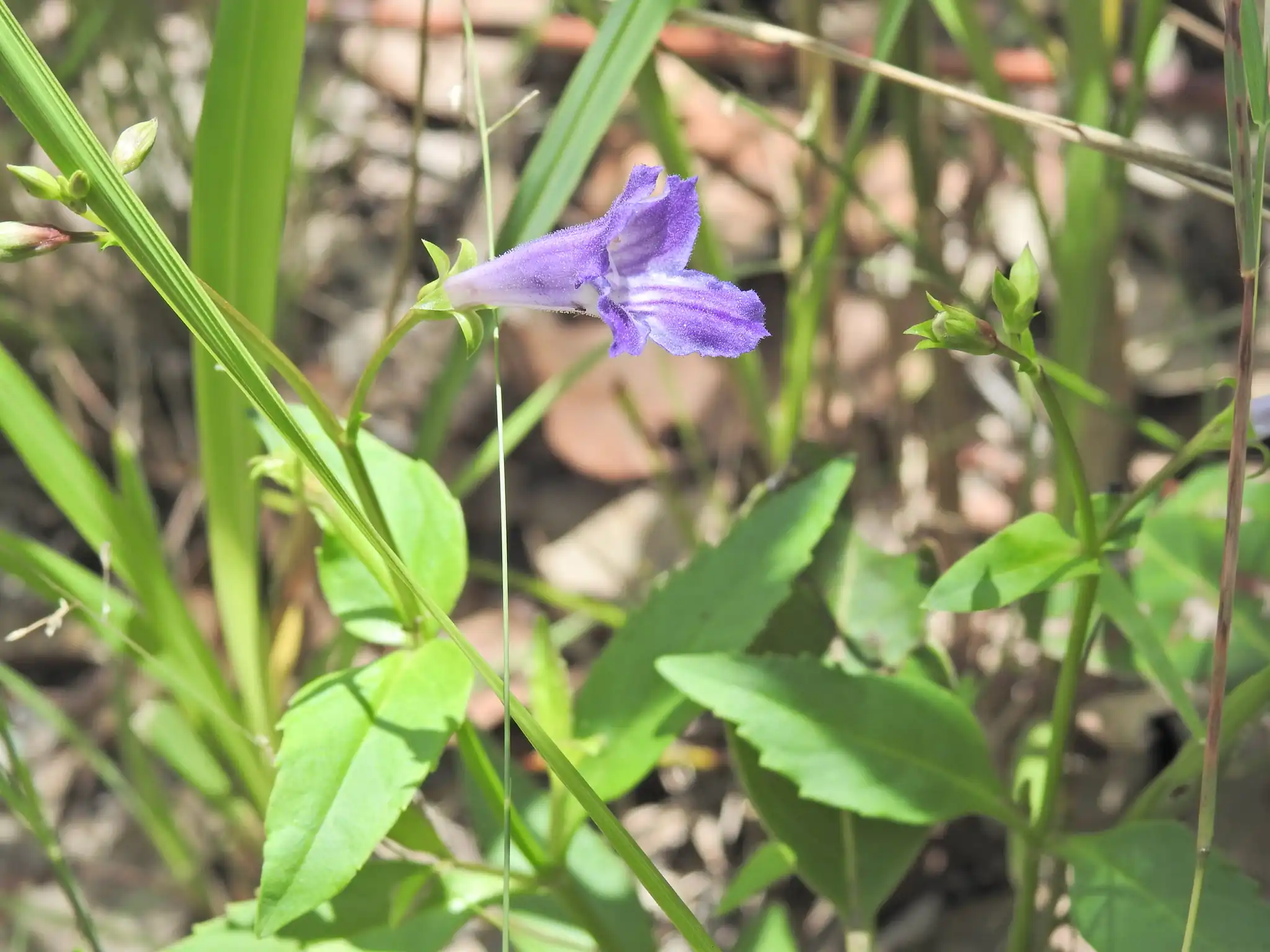
Artanema fimbriatum is a short-lived herbaceous subshrub native to moist rainforest margins in eastern Australia as well as parts of tropical Asia and Africa. It forms ribbed, gland-dotted stems set with soft, dark green, lanceolate foliage and produces distinctly fringed, bell-shaped blossoms.
The tubular blue to purple flowers feature delicate fringed petal edges and contrasting throat markings held on upright terminal spikes. Without post-flowering pruning, the short-lived stems exhaust themselves through heavy seed setting and die back rapidly.
Uses & Benefits:
Essentials
At a Glance
Plant Type
Perennial
Height
24"
Width
18"
Light
Full Sun, Partial Sun
Zones
9, 10
Water
Moderate to High
Humidity
High
Lifespan
Short-lived Perennial
Native To
Eastern Australia, Asia, Africa
Toxicity
Non-toxic
Bloom period
Spring – Summer
In flower about 6 months of the year
Planting
How to Grow
- Plant in a well-draining potting mix or fertile loamy garden soil in full sun to partial shade.
- Water regularly during active growth to keep soil consistently moist without saturating roots.
- Apply a balanced water-soluble fertilizer monthly from late spring through mid-summer.
- Prune back spent flowering stalks hard after the primary bloom flush to promote new shoots.
Pro Tip
Cut stems back heavily right after the main spring flowering flush finishes to prevent early decline and force fresh basal growth.
Keep It Thriving
Care Guide
Do
- Keep root zone consistently moist during hot flowering periods.
- Provide afternoon shade in hot inland locations to prolong bloom lifespan.
- Prune hard post-blooming to force clean basal growth and prevent exhaustion.
Don't
- Do not allow roots to sit in waterlogged soil or stagnant drainage saucers.
- Do not leave outdoors once night temperatures drop near freezing.
- Do not omit post-flowering pruning if you intend to maintain the plant past its first year.
Seasonal Care Calendar
| Task | Jan | Feb | Mar | Apr | May | Jun | Jul | Aug | Sep | Oct | Nov | Dec |
|---|---|---|---|---|---|---|---|---|---|---|---|---|
| Fertilize | ||||||||||||
| Pest Check | ||||||||||||
| Prune | ||||||||||||
| Winter Prep |
Watch Out For
Pests & Diseases
Common Pests
Common Diseases
In the Garden
Landscape Uses & Companions
Landscape Uses
Companion Plants
Multiply
Propagation Methods
Good to Know
Common Questions
Koala Bells questions
What zones can Koala Bells grow in?
Koala Bells is hardy in USDA Zones 9–10: in that range it survives winter in the ground. Colder than Zone 9, grow it in a container you can move to shelter for the winter, or as an annual.
Is Koala Bells deer resistant?
Not reliably. Deer may browse Koala Bells, especially tender spring growth — plan on repellents or fencing where pressure is high.
When does Koala Bells bloom?
Koala Bells typically blooms from spring to summer. Exact timing shifts a week or two with your zone — Sow's bloom calendar maps it to your garden.
Does Koala Bells need full sun?
Koala Bells does best in full sun to part shade. In hot climates, afternoon shade keeps blooms fresher longer.
Keep exploring
Explore the genus
Hardy in your zone?
Grow Koala Bells with confidence
See it in a design of your actual yard, get zone-matched care reminders, and track it season by season in your garden journal.