The Story
Plant Bio
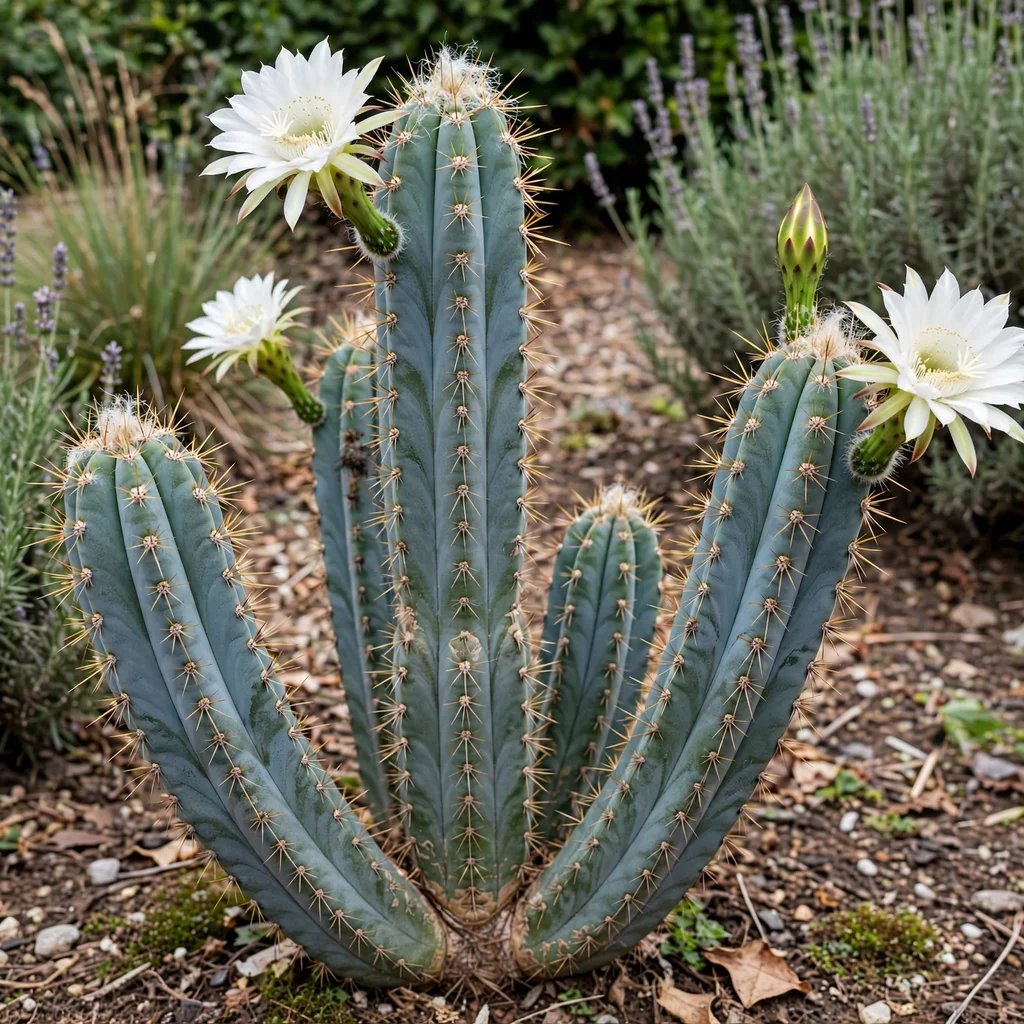
Pilosocereus pachycladus is a tree-like columnar cactus from semi-arid eastern Brazil that branches from the base to form thick upright ribbed stems to ten feet tall in warm gardens. The stems are leafless, with felted white-grey areoles bearing translucent golden-yellow spines that turn grey with age.
The epidermis carries a waxy silver-blue bloom that is strongest in full sun and separates it from green columnar cacti. Mature stems produce fragrant white funnel flowers to three inches long on summer nights, followed by reddish-purple fruit with red pulp.
Uses & Benefits:
Essentials
At a Glance
Plant Type
Cactus Succulent
Height
120"
Width
36"
Light
Full Sun, Partial Sun
Zones
9, 10
Water
Low
Humidity
Low
Lifespan
Long-lived perennial
Native To
Eastern Brazil
Toxicity
Non-toxic but spiny
Bloom period
Summer
In flower about 3 months of the year
Planting
How to Grow
- Plant in full sun in a very porous cactus mix with pumice, perlite or coarse sand, in a pot with large drainage holes.
- Set the stem base just above the mix surface and stake tall columns until rooted.
- Water deeply in summer only after the mix dries completely, then withhold water through winter dormancy.
- Feed once in early summer with half-strength liquid fertilizer during active growth only.
- Grow outdoors only in zones 9-11; move indoors to a bright, cool, dry spot before first frost.
Pro Tip
Never scrub, soap or oil the stems; that strips the blue farina and it does not return on old growth — give full sun for color and keep it completely dry through winter.
Keep It Thriving
Care Guide
Do
- Give 6 or more hours of direct sun to hold the blue color
- Use a fast-draining mineral mix and empty the saucer after watering
- Allow the mix to dry completely between waterings
- Provide strong air flow and low humidity around the stems
Don't
- Do not water in winter while it is dormant
- Do not scrub, soap or oil the stems to clean them
- Do not plant in clay or moisture-holding potting soil
- Do not cut healthy stems except to remove damaged growth
Seasonal Care Calendar
| Task | Jan | Feb | Mar | Apr | May | Jun | Jul | Aug | Sep | Oct | Nov | Dec |
|---|---|---|---|---|---|---|---|---|---|---|---|---|
| Fertilize | ||||||||||||
| Pest Check | ||||||||||||
| Plant | ||||||||||||
| Propagate | ||||||||||||
| Winter Prep |
Watch Out For
Pests & Diseases
Common Pests
Common Diseases
In the Garden
Landscape Uses & Companions
Landscape Uses
Multiply
Propagation Methods
Good to Know
Common Questions
Blue Torch Cactus questions
What zones can Blue Torch Cactus grow in?
Blue Torch Cactus is hardy in USDA Zones 9–10: in that range it survives winter in the ground. Colder than Zone 9, grow it in a container you can move to shelter for the winter, or as an annual.
Is Blue Torch Cactus deer resistant?
Yes — Blue Torch Cactus is rated deer-resistant. Deer typically pass it over, though extreme hunger can override any plant's defenses.
When does Blue Torch Cactus bloom?
Blue Torch Cactus typically blooms in summer. Exact timing shifts a week or two with your zone — Sow's bloom calendar maps it to your garden.
Does Blue Torch Cactus need full sun?
Blue Torch Cactus does best in full sun to part shade. In hot climates, afternoon shade keeps blooms fresher longer.
Is Blue Torch Cactus drought tolerant?
Yes — once established (usually after the first full season), Blue Torch Cactus handles dry spells with minimal watering. Water deeply its first year to build the root system that makes that possible.
Keep exploring
Explore the genus
Hardy in your zone?
Grow Blue Torch Cactus with confidence
See it in a design of your actual yard, get zone-matched care reminders, and track it season by season in your garden journal.