The Story
Plant Bio
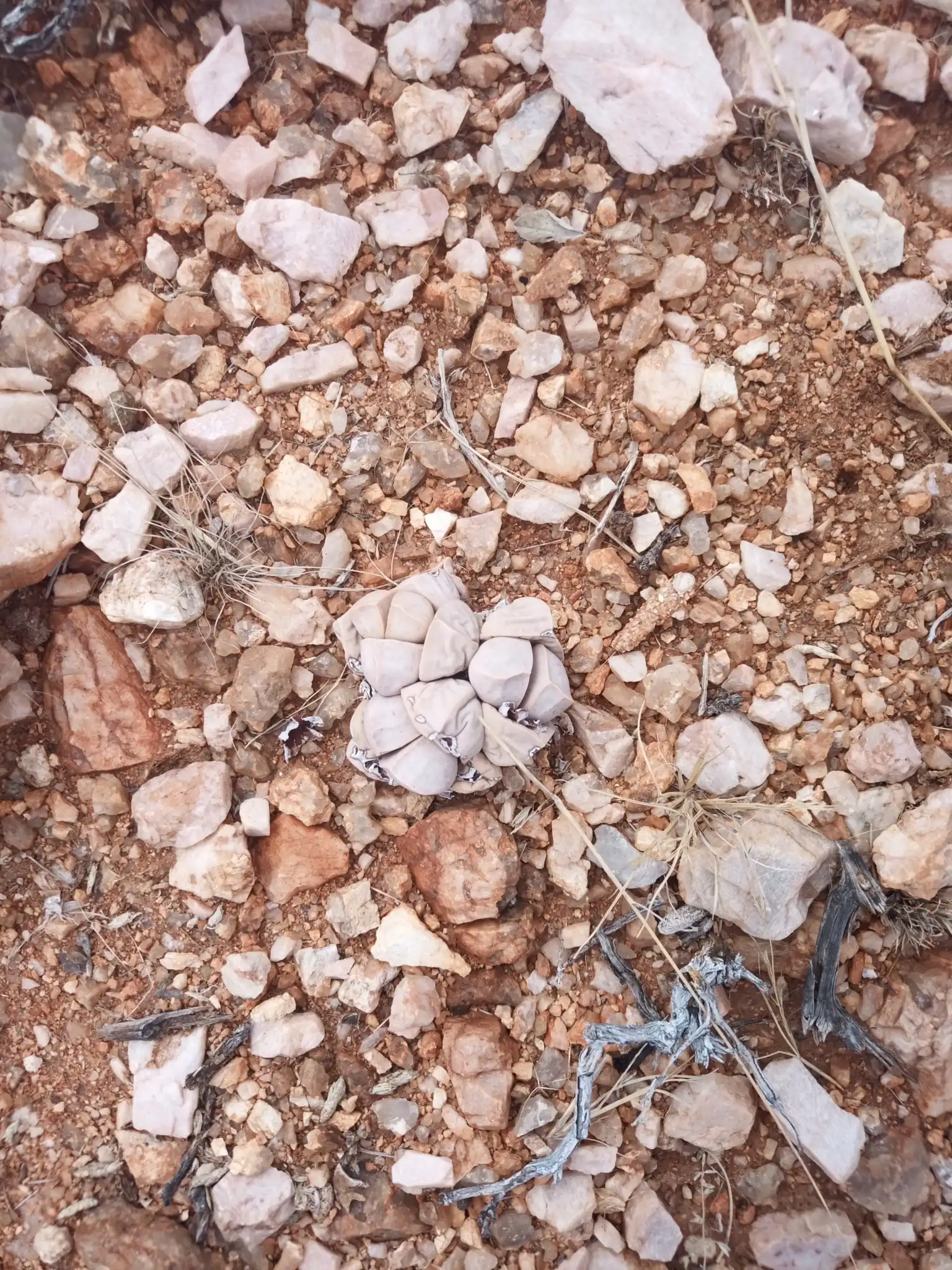
Lapidaria margaretae is a stemless dwarf succulent from quartz plains and red sand rock fissures around Warmbad in southern Namibia and the adjacent Northern Cape, growing at 660 to 1100 m on about 250 mm of rain a year. It forms a low rosette of thick three-sided stone-like leaves, grey-blue to pale blue-green with a pinkish tinge and hard pale margins, reaching three inches high and wide.
It is the only species in the genus Lapidaria, separated from other living stones by sharply triangular leaves in two to four opposite pairs that may clump to three rosettes. Its solitary yellow daisy flower reaches two inches across with up to one hundred petals, opening by day and closing at night to eclipse the plant.
Uses & Benefits:
Essentials
At a Glance
Plant Type
Cactus Succulent
Height
3"
Width
3"
Light
Full Sun, Partial Sun
Zones
9, 10
Water
Low
Humidity
Low
Lifespan
Perennial
Native To
Namibia, South Africa
Toxicity
Unknown
Bloom period
Summer – Fall
In flower about 6 months of the year
Planting
How to Grow
- Grow outdoors only in zones 9b-11b in full sun with 4 to 6 hours direct light and good airflow; elsewhere keep on a sunny windowsill or under grow lights.
- Plant in a deep pot with a drainage hole in fast-draining mineral mix, about 80 percent grit to 20 percent organic or cactus mix cut with 40 percent sand.
- Water deeply only when completely dry, about every 2 to 3 weeks in the growing season and monthly or less in winter, keeping leaves dry.
- Give shade during extreme summer heat to prevent scorch and bring pots indoors well before frost, as it has no frost tolerance.
- Feed rarely if at all with dilute cactus fertilizer and repot infrequently, never leaving the pot in standing water or low light.
Pro Tip
Let the mineral mix dry completely between waterings and keep it almost dry in winter; cold wet soil splits leaves and rots roots, and acclimate plants to strong sun to avoid scorch.
Keep It Thriving
Care Guide
Do
- Do grow in maximum light with ventilation and 4 to 6 hours direct sun
- Do use a deep pot with a drainage hole and gritty mineral mix
- Do water sparingly and allow full dry-out between waterings
Don't
- Do not overwater or mist; wet soil causes root and leaf rot
- Do not expose to frost or leave outdoors below 25F
- Do not plant in rich moisture-retentive soil or a pot without drainage
Seasonal Care Calendar
| Task | Jan | Feb | Mar | Apr | May | Jun | Jul | Aug | Sep | Oct | Nov | Dec |
|---|---|---|---|---|---|---|---|---|---|---|---|---|
| Pest Check | ||||||||||||
| Plant | ||||||||||||
| Propagate | ||||||||||||
| Winter Prep |
Watch Out For
Pests & Diseases
Common Pests
Common Diseases
In the Garden
Landscape Uses & Companions
Landscape Uses
Multiply
Propagation Methods
Good to Know
Common Questions
Karoo Rose questions
What zones can Karoo Rose grow in?
Karoo Rose is hardy in USDA Zones 9–10: in that range it survives winter in the ground. Colder than Zone 9, grow it in a container you can move to shelter for the winter, or as an annual.
When does Karoo Rose bloom?
Karoo Rose typically blooms from summer to fall. Exact timing shifts a week or two with your zone — Sow's bloom calendar maps it to your garden.
Does Karoo Rose need full sun?
Karoo Rose does best in full sun to part shade. In hot climates, afternoon shade keeps blooms fresher longer.
Is Karoo Rose drought tolerant?
Yes — once established (usually after the first full season), Karoo Rose handles dry spells with minimal watering. Water deeply its first year to build the root system that makes that possible.
Keep exploring
Explore the genus
Hardy in your zone?
Grow Karoo Rose with confidence
See it in a design of your actual yard, get zone-matched care reminders, and track it season by season in your garden journal.