The Story
Plant Bio
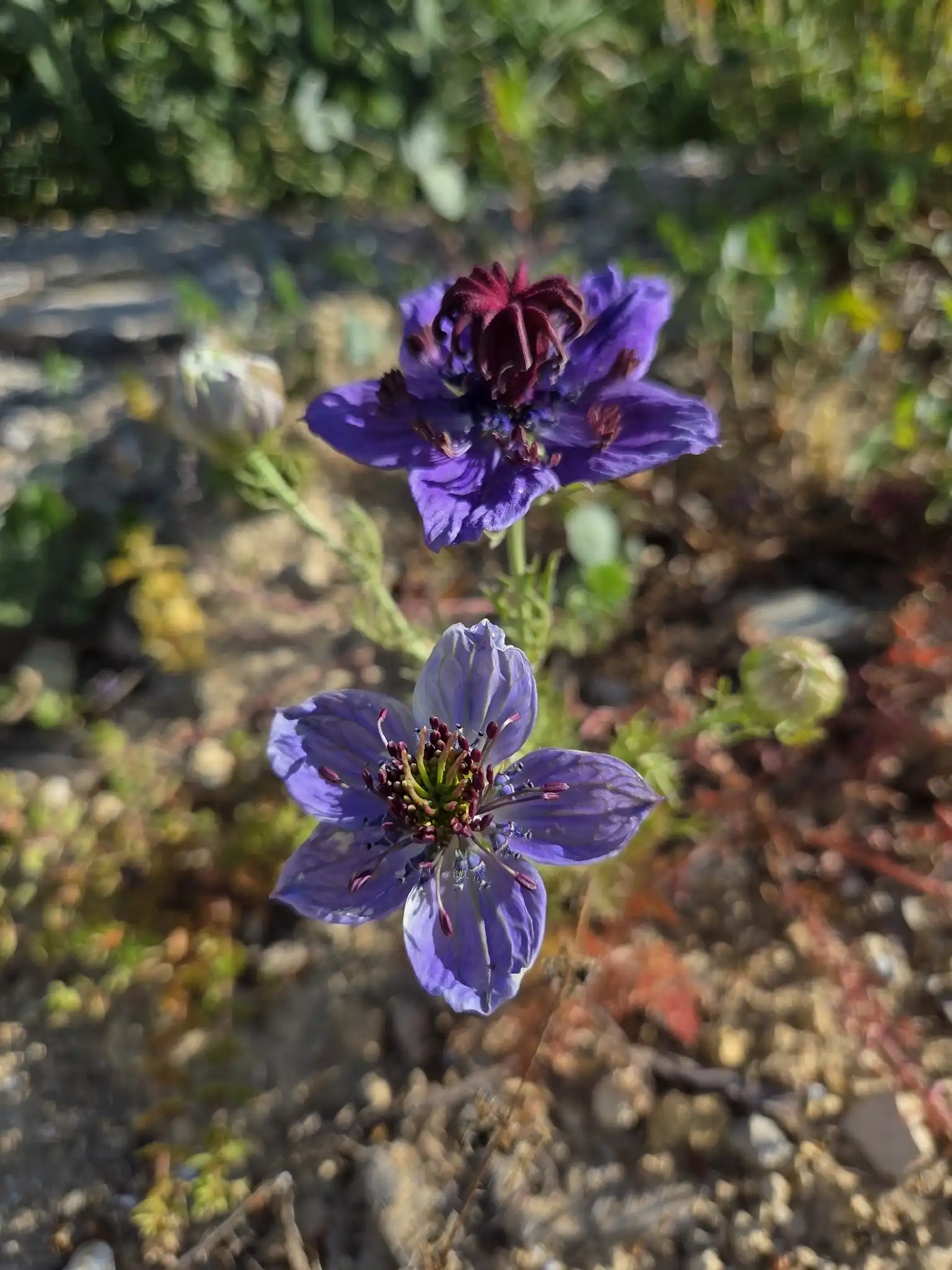
Nigella papillosa is an upright, bushy hardy annual reaching 20 to 30 inches, with slender branching stems clothed in very finely divided fern-like green leaves. Each stem carries a solitary 4 to 7 cm flower of five petal-like sepals in blue, purple or white around a boss of dark stamens, followed by an inflated goblet-shaped seed pod.
It is the Mediterranean love-in-a-mist of cereal fields and sandy and clay loams, distinct from Nigella damascena by its larger flowers ringed with feathery bracts and its prominently veined pods. Seed is most often sold under cultivar names such as 'African Bride', 'Delft Blue' and 'Midnight', much of it still mislabelled as Nigella hispanica.
Uses & Benefits:
Essentials
At a Glance
Plant Type
Annual
Height
28"
Width
12"
Light
Full Sun, Partial Sun
Zones
4, 5, 6, 7, 8, 9, 10
Water
Moderate
Humidity
Average
Lifespan
Annual
Native To
Mediterranean
Toxicity
Mildly toxic if ingested
Bloom period
Summer – Fall
In flower about 6 months of the year
Planting
How to Grow
- Sow seed in place in full sun in mid-spring for summer bloom, or in fall for earlier flowers.
- Sow 1/4 to 1/2 inch deep in any well-drained soil, from moderately fertile to poor and lean.
- Keep seedbed evenly moist until germination, then water only during dry spells.
- Thin seedlings to 8 to 12 inches apart and leave late pods to self-sow.
Pro Tip
Direct sow where it is to flower and do not transplant; leave the last pods to ripen for self-sowing and cutting.
Keep It Thriving
Care Guide
Do
- Do sow in place in full sun and well-drained soil.
- Do leave spent pods for ornament, cutting and self-sowing.
- Do pull spent annual stems at season end and compost them.
Don't
- Do not start indoors and transplant; roots resent disturbance.
- Do not feed or overwater; lean conditions give sturdier stems.
- Do not eat seed; grow for flowers and pods only.
Seasonal Care Calendar
| Task | Jan | Feb | Mar | Apr | May | Jun | Jul | Aug | Sep | Oct | Nov | Dec |
|---|---|---|---|---|---|---|---|---|---|---|---|---|
| Deadhead | ||||||||||||
| Pest Check | ||||||||||||
| Plant | ||||||||||||
| Propagate | ||||||||||||
| Winter Prep |
Watch Out For
Pests & Diseases
Common Pests
Common Diseases
In the Garden
Landscape Uses & Companions
Landscape Uses
Multiply
Propagation Methods
Good to Know
Common Questions
Love-In-A-Mist questions
What zones can Love-In-A-Mist grow in?
Love-In-A-Mist is an annual: it grows, flowers and sets seed in one season, so winter cold doesn't limit where it grows. Gardeners in any zone can grow it by planting at the right time, usually after the last spring frost.
When does Love-In-A-Mist bloom?
Love-In-A-Mist typically blooms from summer to fall. Exact timing shifts a week or two with your zone — Sow's bloom calendar maps it to your garden.
Does Love-In-A-Mist need full sun?
Love-In-A-Mist does best in full sun to part shade. In hot climates, afternoon shade keeps blooms fresher longer.
Is Love-In-A-Mist drought tolerant?
Yes — once established (usually after the first full season), Love-In-A-Mist handles dry spells with minimal watering. Water deeply its first year to build the root system that makes that possible.
More Nigella to compare
Keep exploring
Explore the genus
Grow Love-In-A-Mist with confidence
See it in a design of your actual yard, get zone-matched care reminders, and track it season by season in your garden journal.