The Story
Plant Bio
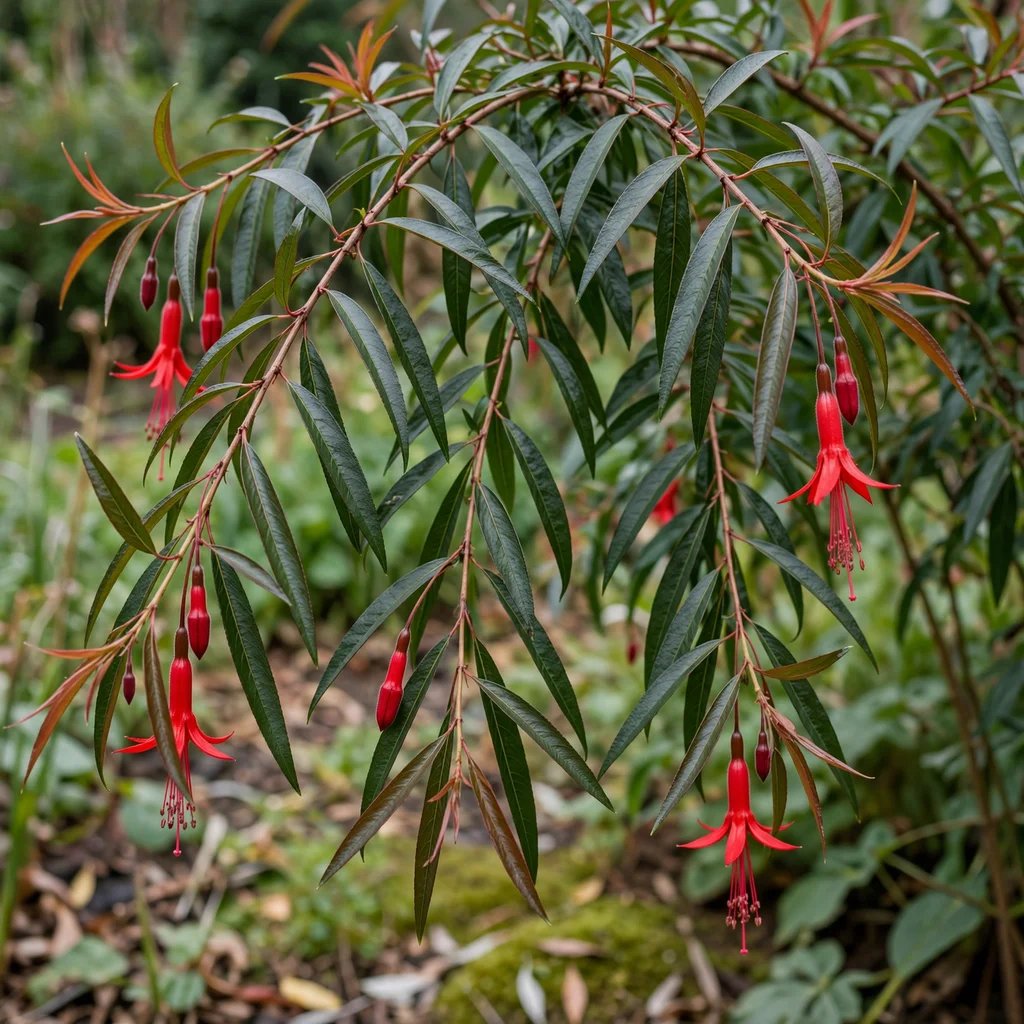
Fuchsia hatschbachii is a semi-evergreen shrub from southern Brazil that reaches four to six feet tall, with erect to arching slender reddish stems. The leaves are narrow, willow-like, dark green and glossy with a reddish tint, carried on open arching shoots that resprout from the roots after freezing.
The flowers are slender, slightly horizontal tubes about an inch and a half long, with red to deep-pink sepals surrounding a purple corolla and stamens that project well beyond the mouth. Bloom runs from summer into fall and is followed by small purple fruit, and established roots survive to about 0F when the crown is planted deep and mulched.
Uses & Benefits:
Essentials
At a Glance
Plant Type
Shrub
Height
72"
Width
60"
Light
Full Sun, Partial Sun, Shade
Zones
7, 8, 9, 10
Water
Medium
Humidity
Unknown
Lifespan
Woody perennial
Native To
Southern Brazil
Toxicity
Non-toxic
Bloom period
Summer – Fall
In flower about 6 months of the year
Planting
How to Grow
- Plant in spring after frost in partial shade in well-drained soil, setting the crown 2 to 3 inches below soil level.
- Water to settle the soil and spread 2 to 3 inches of mulch over the root zone, keeping mulch off the stems.
- Give afternoon shade in hot summers; full sun is accepted only with steady moisture.
- Cut freeze-damaged stems back to live base tissue in early spring as new shoots emerge.
Pro Tip
Plant the crown two to three inches deep and mulch heavily in fall; the top growth may freeze but new shoots return from the roots in spring.
Keep It Thriving
Care Guide
Do
- Plant deep and mulch the crown to protect roots through winter
- Grow in partial shade to shade in well-drained soil
- Check leaf undersides in summer for aphids, mites and rust
Don't
- Do not bring plants indoors to a warm room for winter
- Do not feed heavy nitrogen that pushes soft growth
- Do not leave roots in waterlogged soil
Seasonal Care Calendar
| Task | Jan | Feb | Mar | Apr | May | Jun | Jul | Aug | Sep | Oct | Nov | Dec |
|---|---|---|---|---|---|---|---|---|---|---|---|---|
| Deadhead | ||||||||||||
| Mulch | ||||||||||||
| Pest Check | ||||||||||||
| Plant | ||||||||||||
| Prune |
Watch Out For
Pests & Diseases
Common Pests
Common Diseases
In the Garden
Landscape Uses & Companions
Landscape Uses
Companion Plants
Multiply
Propagation Methods
Good to Know
Common Questions
Willow-Leaf Fuchsia questions
What zones can Willow-Leaf Fuchsia grow in?
Willow-Leaf Fuchsia is hardy in USDA Zones 7–10: in that range it survives winter in the ground. Colder than Zone 7, grow it in a container you can move to shelter for the winter.
When does Willow-Leaf Fuchsia bloom?
Willow-Leaf Fuchsia typically blooms from summer to fall. Exact timing shifts a week or two with your zone — Sow's bloom calendar maps it to your garden.
Does Willow-Leaf Fuchsia need full sun?
Willow-Leaf Fuchsia does best in full sun to part shade. In hot climates, afternoon shade keeps blooms fresher longer.
More Fuchsia to compare
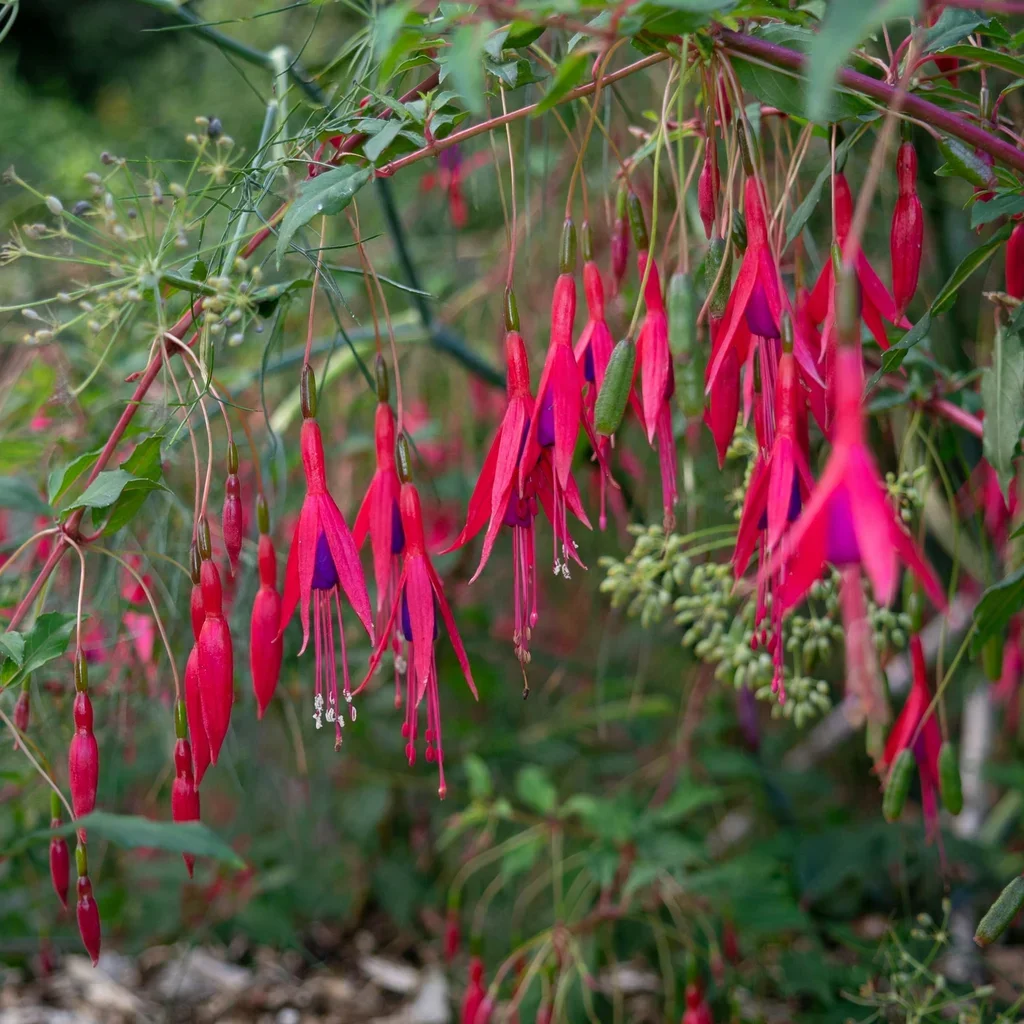
Santa Cruz Fuchsia
Fuchsia magellanica 'Santa Cruz'
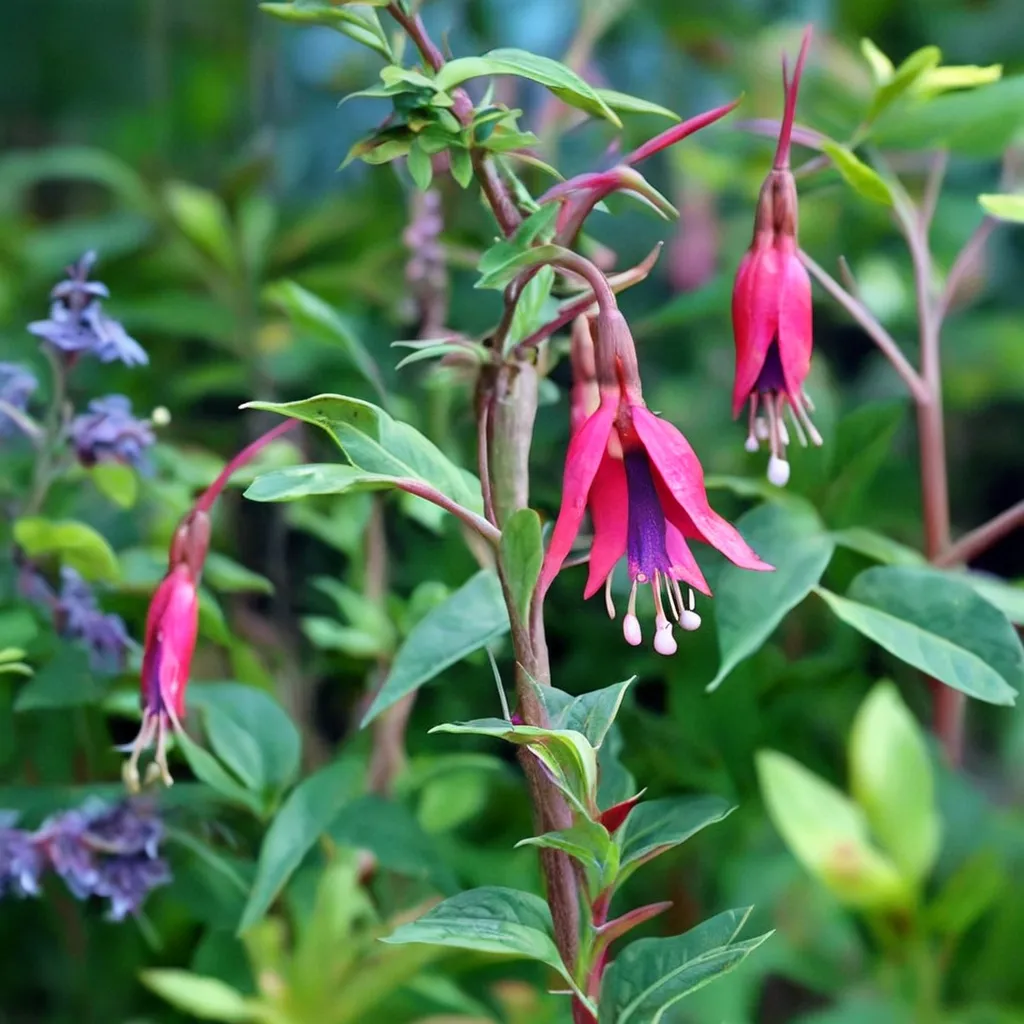
Hardy Fuchsia 'Riccartonii'
Fuchsia magellanica 'Riccartonii'
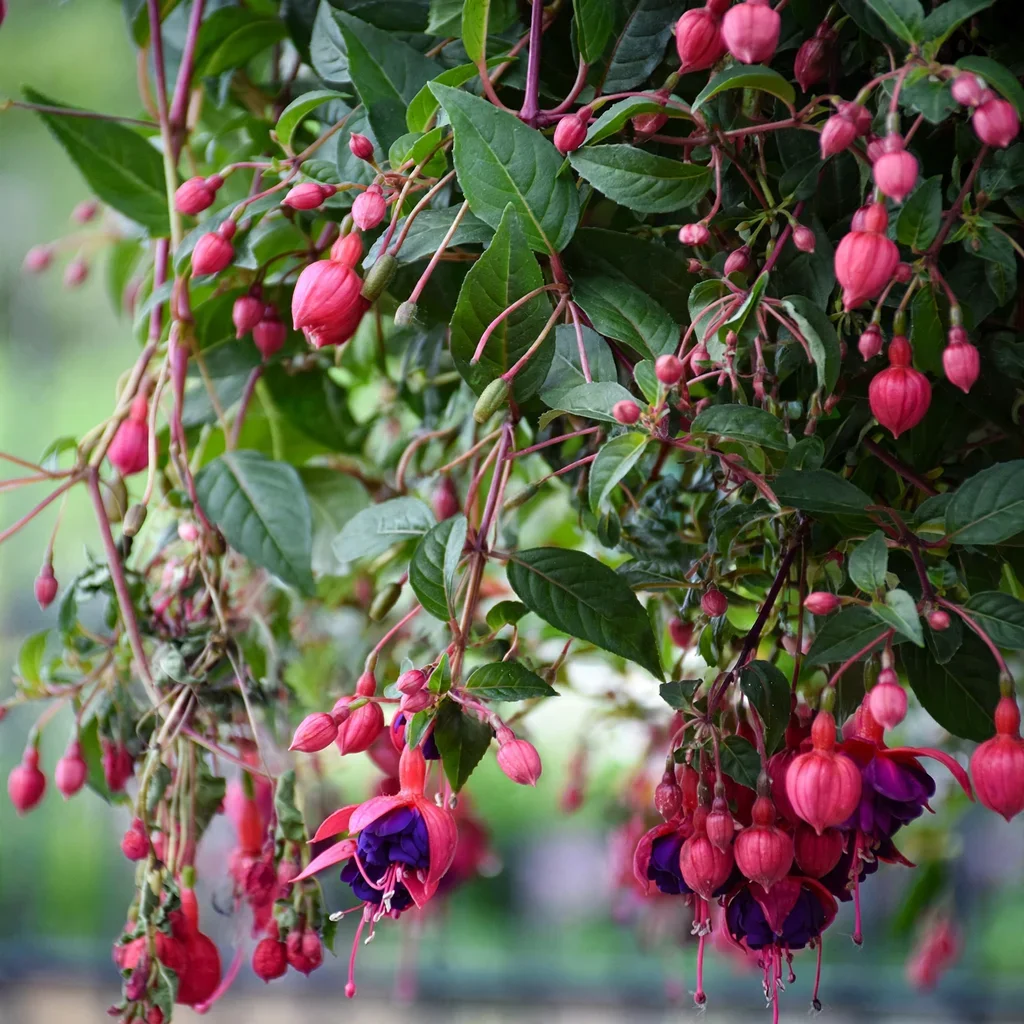
Dollar Princess Fuchsia
Fuchsia x hybrida 'Dollar Princess'
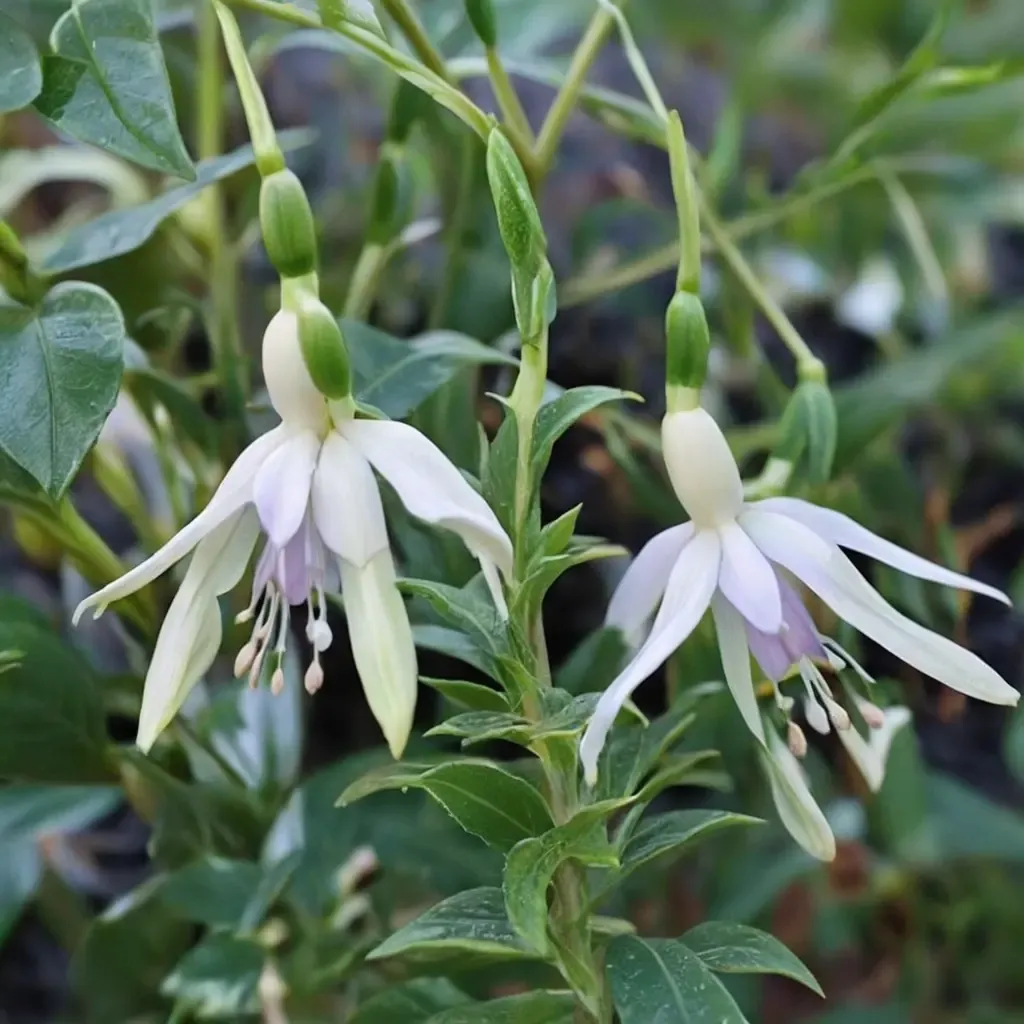
Hawkshead Fuchsia
Fuchsia magellanica 'Hawkshead'
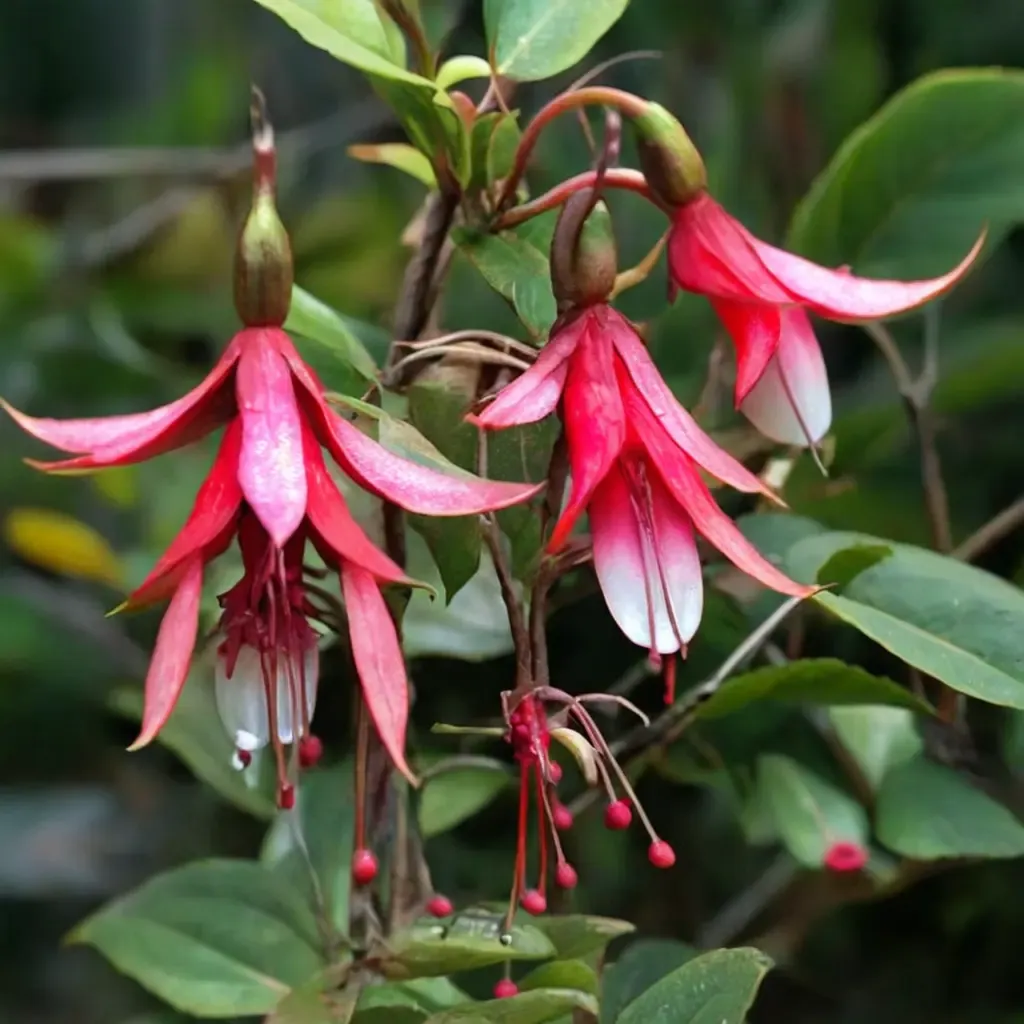
Ruddy Rodney Fuchsia
Fuchsia magellanica 'Ruddy Rodney'
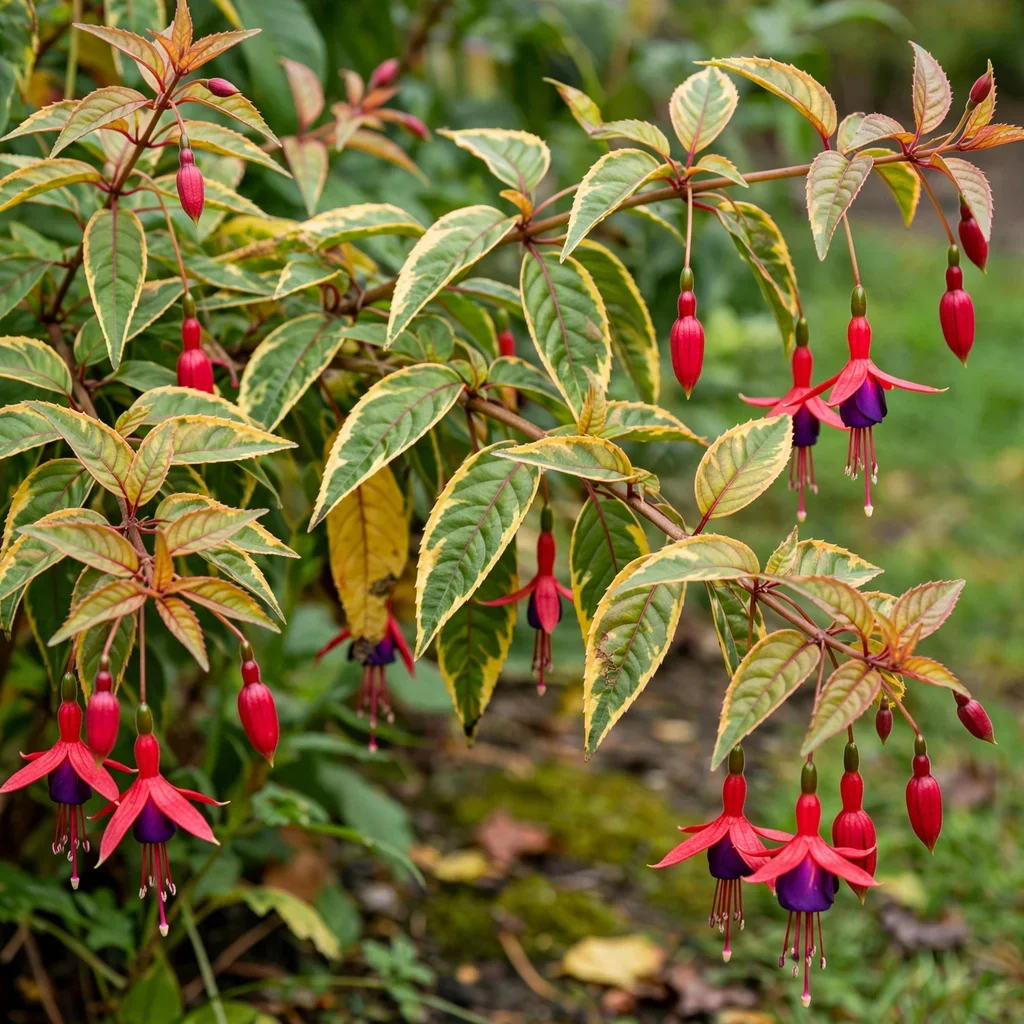
Autumnale Hardy Fuchsia
Fuchsia magellanica 'Autumnale'
Keep exploring
Explore the genus
Hardy in your zone?
Grow Willow-Leaf Fuchsia with confidence
See it in a design of your actual yard, get zone-matched care reminders, and track it season by season in your garden journal.