The Story
Plant Bio
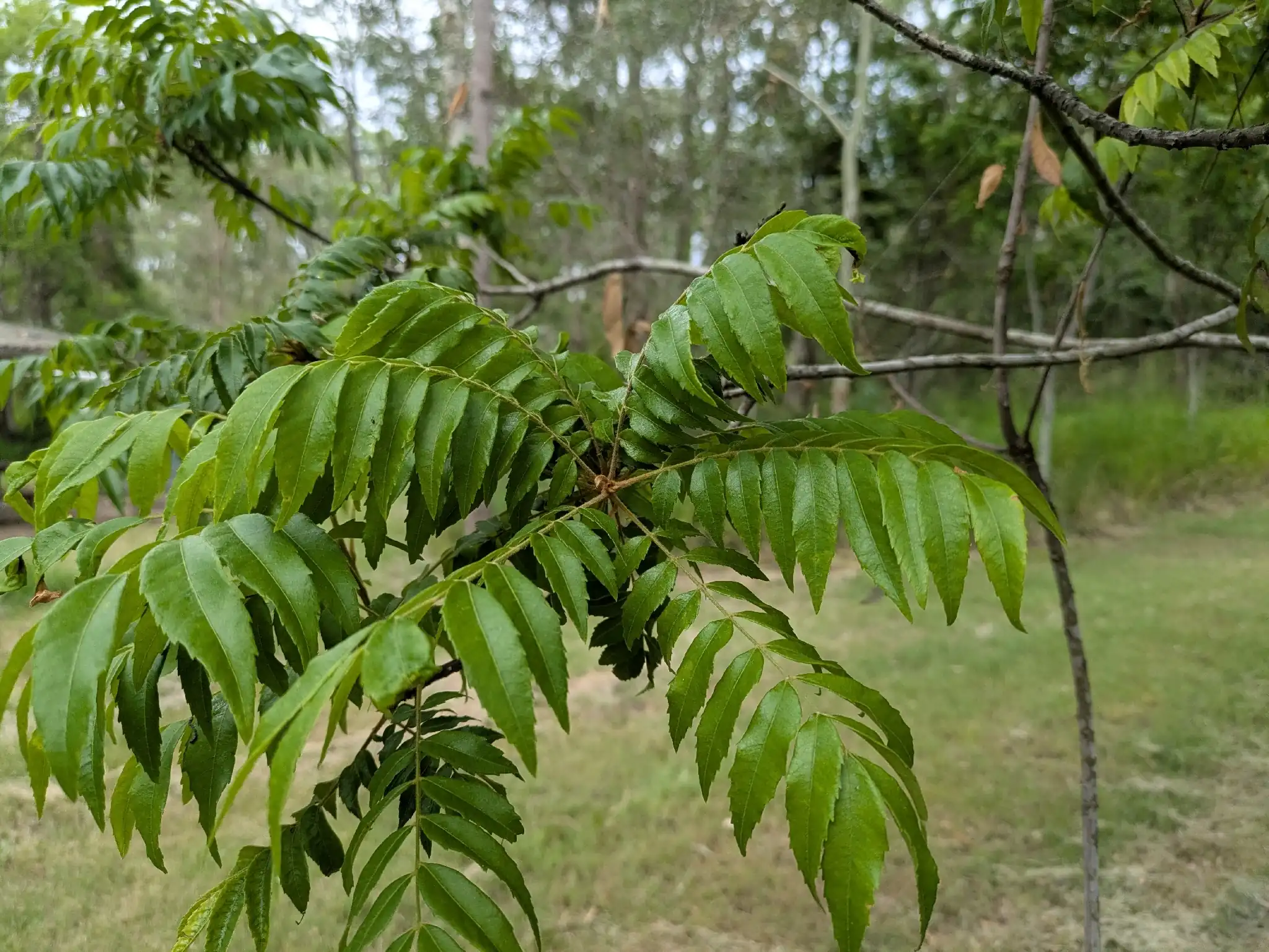
Jagera pseudorhus is a small to medium-sized evergreen tree native to coastal and lowland rainforests of eastern Australia and New Guinea. It develops a dense, rounded crown of pinnately compound foliage with young stems densely covered in persistent, rusty-brown hairs.
Large panicles of small yellowish-brown to pinkish-green flowers form near branch ends and are followed by woody seed capsules coated in stiff, sharp hairs. The bark contains high concentrations of natural saponins, which produce a soap-like lather when wet.
Uses & Benefits:
Essentials
At a Glance
Plant Type
Tree
Height
472"
Width
295"
Light
Full Sun, Partial Sun
Zones
10
Water
Moderate
Humidity
High
Lifespan
Perennial
Native To
Australia, New Guinea
Toxicity
Seed capsule hairs cause severe skin irritation; bark contains saponins.
Bloom period
Fall – Winter
In flower about 6 months of the year
Planting
How to Grow
- Plant in full sun or partial shade using a rich, organic soil mix that drains rapidly.
- Select a deep container or garden bed with excellent drainage to prevent standing moisture around the root zone.
- Water regularly during early establishment, letting the top inch of soil dry out between applications.
- Apply a balanced, slow-release fertilizer sparingly during the spring growth flush.
Pro Tip
Avoid touching mature seed capsules bare-handed; the fine, rusty bristles penetrate skin easily and cause severe contact irritation.
Keep It Thriving
Care Guide
Do
- Wear protective gloves when handling fruit or mature seed pods.
- Provide well-draining soil to prevent fungal root rots.
- Protect young potted plants from exposure to frost or cold drafts.
Don't
- Do not prune hard into old, leafless wood as stem regeneration is minimal.
- Do not allow container soil to remain waterlogged or stagnant.
- Do not handle seed pods with bare hands.
Seasonal Care Calendar
| Task | Jan | Feb | Mar | Apr | May | Jun | Jul | Aug | Sep | Oct | Nov | Dec |
|---|---|---|---|---|---|---|---|---|---|---|---|---|
| Fertilize | ||||||||||||
| Mulch | ||||||||||||
| Pest Check | ||||||||||||
| Prune | ||||||||||||
| Winter Prep |
Watch Out For
Pests & Diseases
Common Pests
Common Diseases
In the Garden
Landscape Uses & Companions
Landscape Uses
Multiply
Propagation Methods
Good to Know
Common Questions
Foam Bark Tree questions
What zones can Foam Bark Tree grow in?
Foam Bark Tree is hardy in USDA Zone 10: in that range it survives winter in the ground. Colder than Zone 10, winters are too cold for it to survive outdoors.
When does Foam Bark Tree bloom?
Foam Bark Tree typically blooms from fall to winter. Exact timing shifts a week or two with your zone — Sow's bloom calendar maps it to your garden.
Does Foam Bark Tree need full sun?
Foam Bark Tree does best in full sun to part shade. In hot climates, afternoon shade keeps blooms fresher longer.
Is Foam Bark Tree drought tolerant?
Yes — once established (usually after the first full season), Foam Bark Tree handles dry spells with minimal watering. Water deeply its first year to build the root system that makes that possible.
Keep exploring
Explore the genus
Hardy in your zone?
Grow Foam Bark Tree with confidence
See it in a design of your actual yard, get zone-matched care reminders, and track it season by season in your garden journal.