The Story
Plant Bio
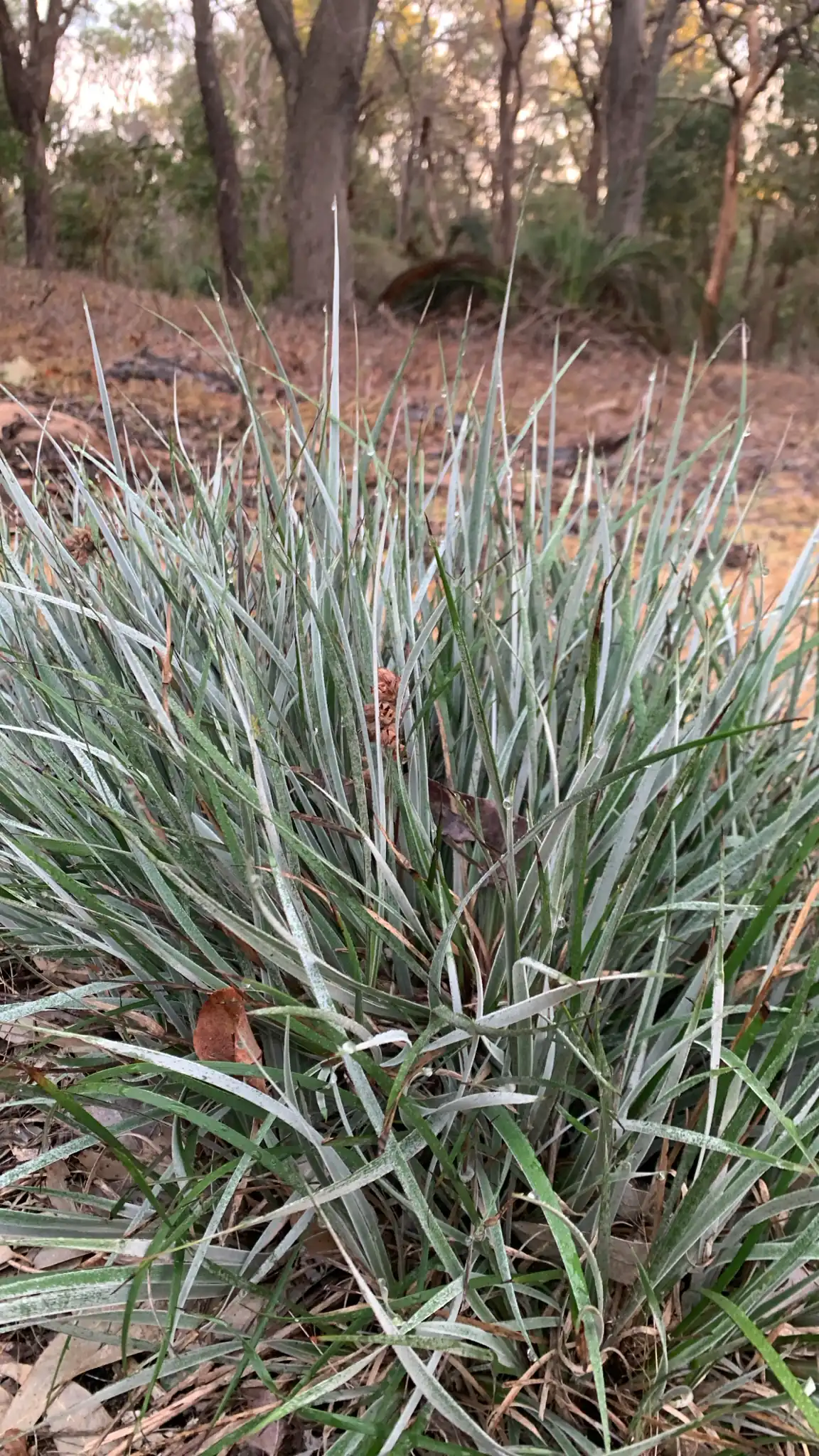
Conostylis candicans is an Australian perennial herb forming dense clumps of narrow, grass-like leaves coated in fine silver-grey hairs. In winter and spring, short scapes carry tight globular heads of small, tubular yellow flowers carried roughly level with the leaf tips.
Unlike green-foliaged members of the genus, this species retains its dense white-hairy coating year-round, maintaining a bright silvery texture in dry, sunny conditions. The soft foliage is prickle-free and held clear of the soil on a shallow system of short prop roots.
Uses & Benefits:
Essentials
At a Glance
Plant Type
Perennial
Height
16"
Width
39"
Light
Full Sun
Zones
9, 10
Water
Low
Humidity
Low
Lifespan
Perennial
Native To
Western Australia
Toxicity
Non-toxic
Bloom period
Spring – Summer
In flower about 6 months of the year
Planting
How to Grow
- Select a fully exposed planting site with sandy, gravelly, or calcareous soil that drains rapidly.
- Dig a hole twice as wide as the container and set the plant so the crown sits level with the surrounding soil line.
- Water lightly at planting to settle the soil, then allow the potting site to dry out between subsequent waterings.
- Apply a thin layer of coarse gravel mulch around the base, keeping it clear of the leaf crown.
Pro Tip
Avoid cutting back into old leafless stems, as Conostylis lacks dormant buds on bare wood and will not regenerate from heavy hard pruning.
Keep It Thriving
Care Guide
Do
- Provide full sun and sharp drainage at all times.
- Use low-phosphorus or native-formulated fertilizers sparingly.
- Protect container specimens from prolonged wet conditions or high summer humidity.
Don't
- Do not cut foliage back into bare stem tissue.
- Do not apply standard high-phosphorus fertilizers.
- Do not overwater or plant in heavy clay soils.
Seasonal Care Calendar
| Task | Jan | Feb | Mar | Apr | May | Jun | Jul | Aug | Sep | Oct | Nov | Dec |
|---|---|---|---|---|---|---|---|---|---|---|---|---|
| Fertilize | ||||||||||||
| Pest Check | ||||||||||||
| Prune | ||||||||||||
| Spring Cleanup |
Watch Out For
Pests & Diseases
Common Pests
Common Diseases
In the Garden
Landscape Uses & Companions
Landscape Uses
Companion Plants
Multiply
Propagation Methods
Good to Know
Common Questions
Grey Cottonhead questions
What zones can Grey Cottonhead grow in?
Grey Cottonhead is hardy in USDA Zones 9–10: in that range it survives winter in the ground. Colder than Zone 9, grow it in a container you can move to shelter for the winter, or as an annual.
When does Grey Cottonhead bloom?
Grey Cottonhead typically blooms from spring to summer. Exact timing shifts a week or two with your zone — Sow's bloom calendar maps it to your garden.
Does Grey Cottonhead need full sun?
Grey Cottonhead does best in full sun (6+ hours).
Is Grey Cottonhead drought tolerant?
Yes — once established (usually after the first full season), Grey Cottonhead handles dry spells with minimal watering. Water deeply its first year to build the root system that makes that possible.
Keep exploring
Explore the genus
Hardy in your zone?
Grow Grey Cottonhead with confidence
See it in a design of your actual yard, get zone-matched care reminders, and track it season by season in your garden journal.