The Story
Plant Bio
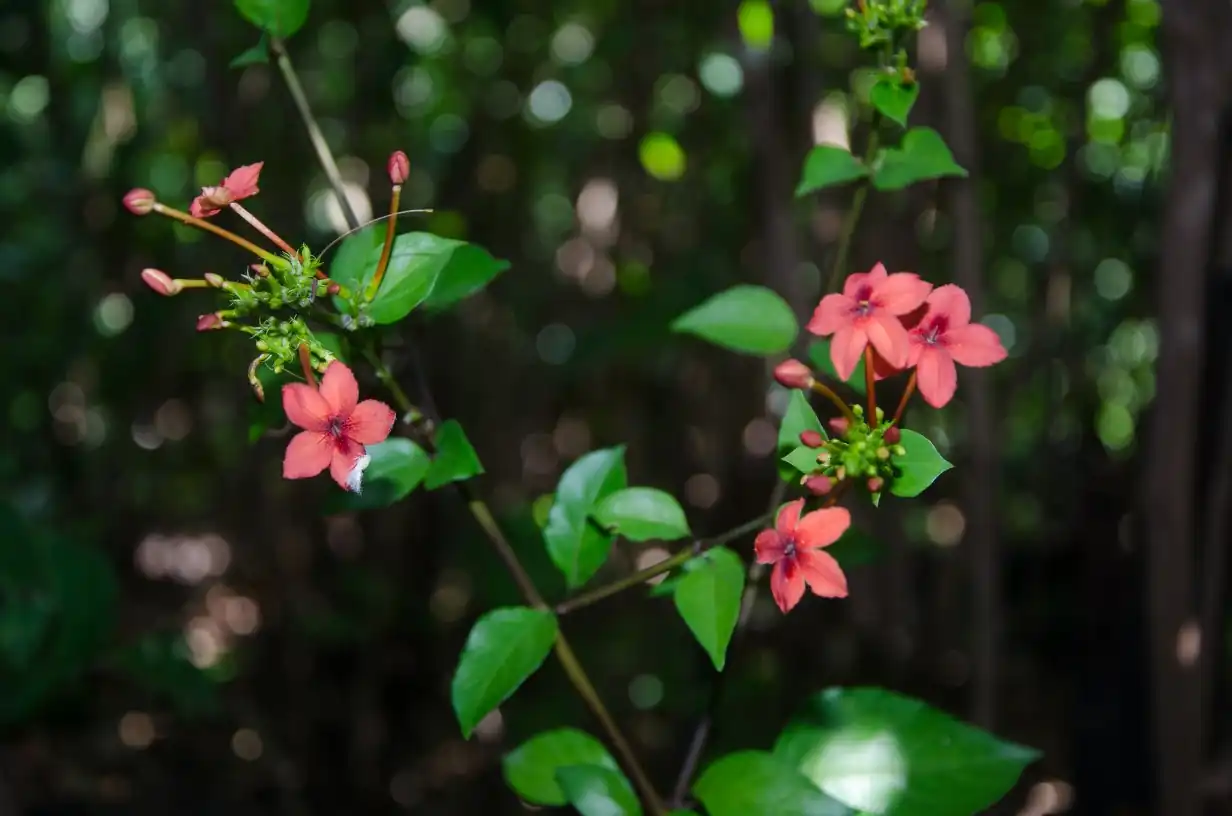
Ruspolia hypocrateriformis is an evergreen scrambling shrub from sub-Saharan Africa, reaching three feet in pruned garden form but to five to ten feet unclipped in the wild. The bright green smooth leaves are borne on angled stems, and the red to coral-pink tubular flowers with darker spots on the lower lobes are carried in spikes at the tips of new growth.
True plants are separated from Ruspolia seticalyx by smooth leaves and sharply angled stems, against hairy leaves and round stems in that species. It blooms over many months from summer into fall, with one-inch tubes that feed hummingbirds and butterflies as a nectar plant.
Uses & Benefits:
Essentials
At a Glance
Plant Type
Shrub
Height
35"
Width
35"
Light
Full Sun, Partial Sun
Zones
9, 10
Water
Even moisture
Humidity
Average
Lifespan
Evergreen shrub
Native To
Sub-Saharan Africa
Toxicity
No garden toxicity reported
Bloom period
Summer – Fall
In flower about 6 months of the year
Planting
How to Grow
- Site in full sun to bright semi-shade in fertile well-drained loam.
- Plant in spring after frost at the same depth as the pot and water in to settle.
- Mulch to hold even moisture without waterlogging the crown.
- Tip-prune spent flowering tips to a leaf joint to keep a 3-foot mound.
- Move potted plants to a frost-free greenhouse or conservatory before first fall frost.
Pro Tip
Cut spent flowering tips back to a leaf joint to hold a compact three-foot mound; north of Zone 9 keep potted plants frost-free under glass.
Keep It Thriving
Care Guide
Do
- Grow in fertile well-drained loam in full sun to semi-shade.
- Water to keep soil evenly moist in summer.
- Overwinter frost-free under glass north of Zone 9.
Don't
- Do not leave outdoors through hard frost.
- Do not confuse hairy round-stemmed plants with the true species.
- Do not expect the wild 5- to 10-foot size in pruned garden form.
Seasonal Care Calendar
| Task | Jan | Feb | Mar | Apr | May | Jun | Jul | Aug | Sep | Oct | Nov | Dec |
|---|---|---|---|---|---|---|---|---|---|---|---|---|
| Mulch | ||||||||||||
| Pest Check | ||||||||||||
| Plant | ||||||||||||
| Prune | ||||||||||||
| Winter Prep |
Watch Out For
Pests & Diseases
Common Pests
Common Diseases
In the Garden
Landscape Uses & Companions
Landscape Uses
Multiply
Propagation Methods
Good to Know
Common Questions
Ruddy Rose questions
What zones can Ruddy Rose grow in?
Ruddy Rose is hardy in USDA Zones 9–10: in that range it survives winter in the ground. Colder than Zone 9, grow it in a container you can move to shelter for the winter.
When does Ruddy Rose bloom?
Ruddy Rose typically blooms from summer to fall. Exact timing shifts a week or two with your zone — Sow's bloom calendar maps it to your garden.
Does Ruddy Rose need full sun?
Ruddy Rose does best in full sun to part shade. In hot climates, afternoon shade keeps blooms fresher longer.
Keep exploring
Explore the genus
Hardy in your zone?
Grow Ruddy Rose with confidence
See it in a design of your actual yard, get zone-matched care reminders, and track it season by season in your garden journal.