The Story
Plant Bio
Brya ebenus, commonly known as the Jamaican rain tree, is a small, slow-growing tropical tree native to Caribbean scrublands with arching, fountain-like branches studded with tiny evergreen leaves and sharp spines. In frost-free landscapes, it forms an open, fine-textured canopy that reaches ten to twenty feet tall.
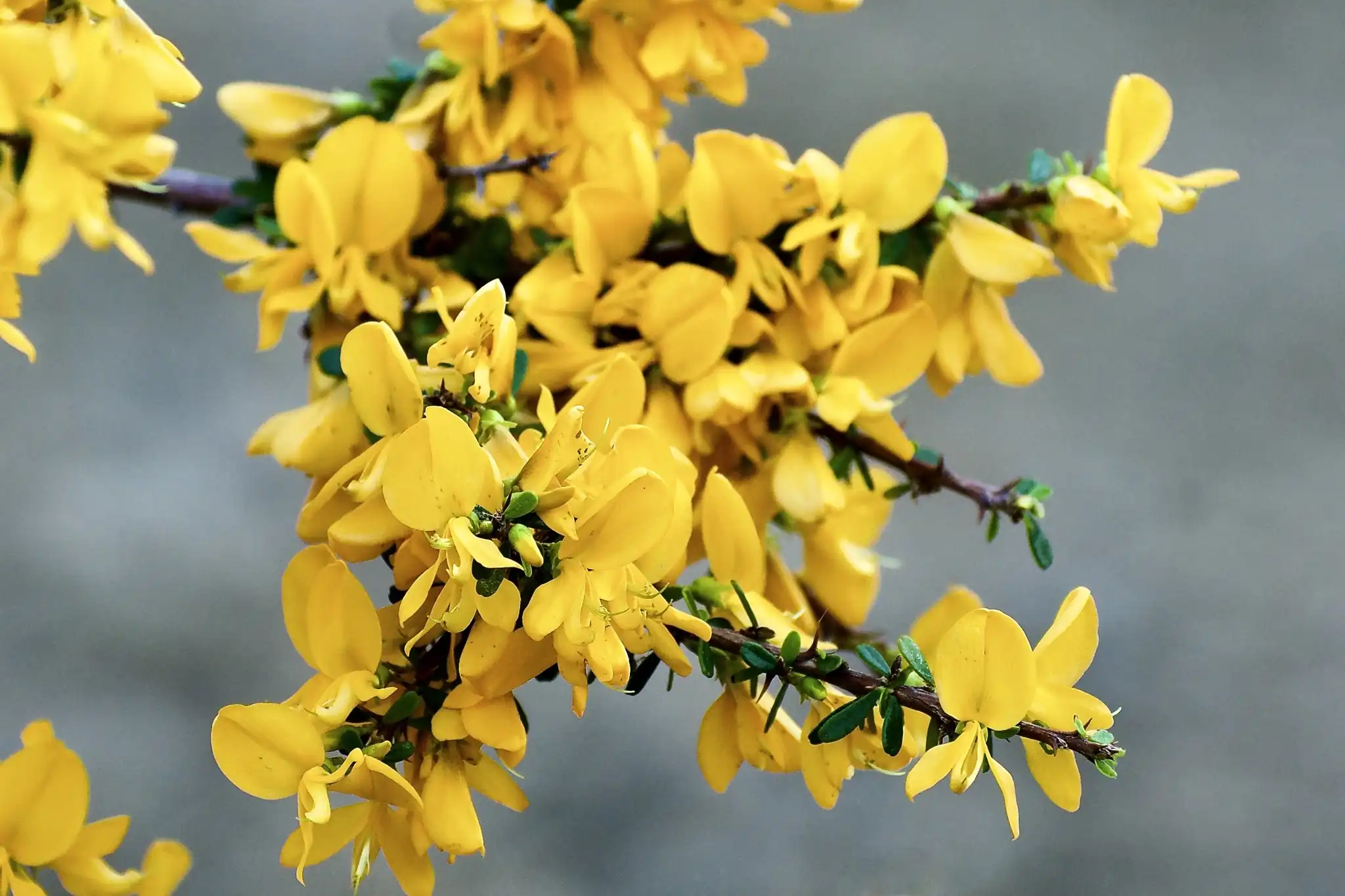
Showy pea-shaped flowers in vibrant yellow to orange bloom in dense, fragrant clusters along the woody stems after rain and humidity spikes. Its dense wood and weeping habit make it a valued subject for container growing and bonsai training.
Uses & Benefits:
Essentials
At a Glance
Plant Type
Tree
Height
240"
Width
120"
Light
Full Sun
Zones
9, 10
Water
Low
Humidity
High
Lifespan
Perennial
Native To
Caribbean
Toxicity
Skin Irritant
Bloom period
Spring – Autumn
In flower about 9 months of the year
Planting
How to Grow
- Select a site in full sunlight with highly permeable, well-draining soil.
- Dig a planting hole twice as wide as the root ball and set the crown level with the surrounding grade.
- Water regularly during the first few months to establish the root system.
- Reduce irrigation once established, allowing the upper soil layer to dry between waterings.
Pro Tip
Position in full sun and ensure excellent soil drainage; deep watering with a garden hose will not force a bloom flush without the atmospheric humidity changes brought by natural rain.
Keep It Thriving
Care Guide
Do
- Plant in a full-sun location to maximize flowering intensity.
- Wear heavy gloves when handling or pruning due to sharp stem spines and potential sap irritation.
- Provide protection or move container plants indoors if temperatures drop near freezing.
Don't
- Do not overwater, as poor drainage and soggy roots lead to fatal root rot.
- Do not plant in heavily shaded areas where flowering will fail completely.
- Do not prune heavily during peak rain events when active bloom cycles begin.
Seasonal Care Calendar
| Task | Jan | Feb | Mar | Apr | May | Jun | Jul | Aug | Sep | Oct | Nov | Dec |
|---|---|---|---|---|---|---|---|---|---|---|---|---|
| Fertilize | ||||||||||||
| Pest Check | ||||||||||||
| Prune | ||||||||||||
| Winter Prep |
Watch Out For
Pests & Diseases
Common Pests
Common Diseases
In the Garden
Landscape Uses & Companions
Landscape Uses
Companion Plants
Multiply
Propagation Methods
Good to Know
Common Questions
Jamaican Rain Tree questions
What zones can Jamaican Rain Tree grow in?
Jamaican Rain Tree is hardy in USDA Zones 9–10: in that range it survives winter in the ground. Colder than Zone 9, winters are too cold for it to survive outdoors.
When does Jamaican Rain Tree bloom?
Jamaican Rain Tree typically blooms from spring to fall. Exact timing shifts a week or two with your zone — Sow's bloom calendar maps it to your garden.
Does Jamaican Rain Tree need full sun?
Jamaican Rain Tree does best in full sun (6+ hours).
Is Jamaican Rain Tree drought tolerant?
Yes — once established (usually after the first full season), Jamaican Rain Tree handles dry spells with minimal watering. Water deeply its first year to build the root system that makes that possible.
Keep exploring
Explore the genus
Hardy in your zone?
Grow Jamaican Rain Tree with confidence
See it in a design of your actual yard, get zone-matched care reminders, and track it season by season in your garden journal.