The Story
Plant Bio
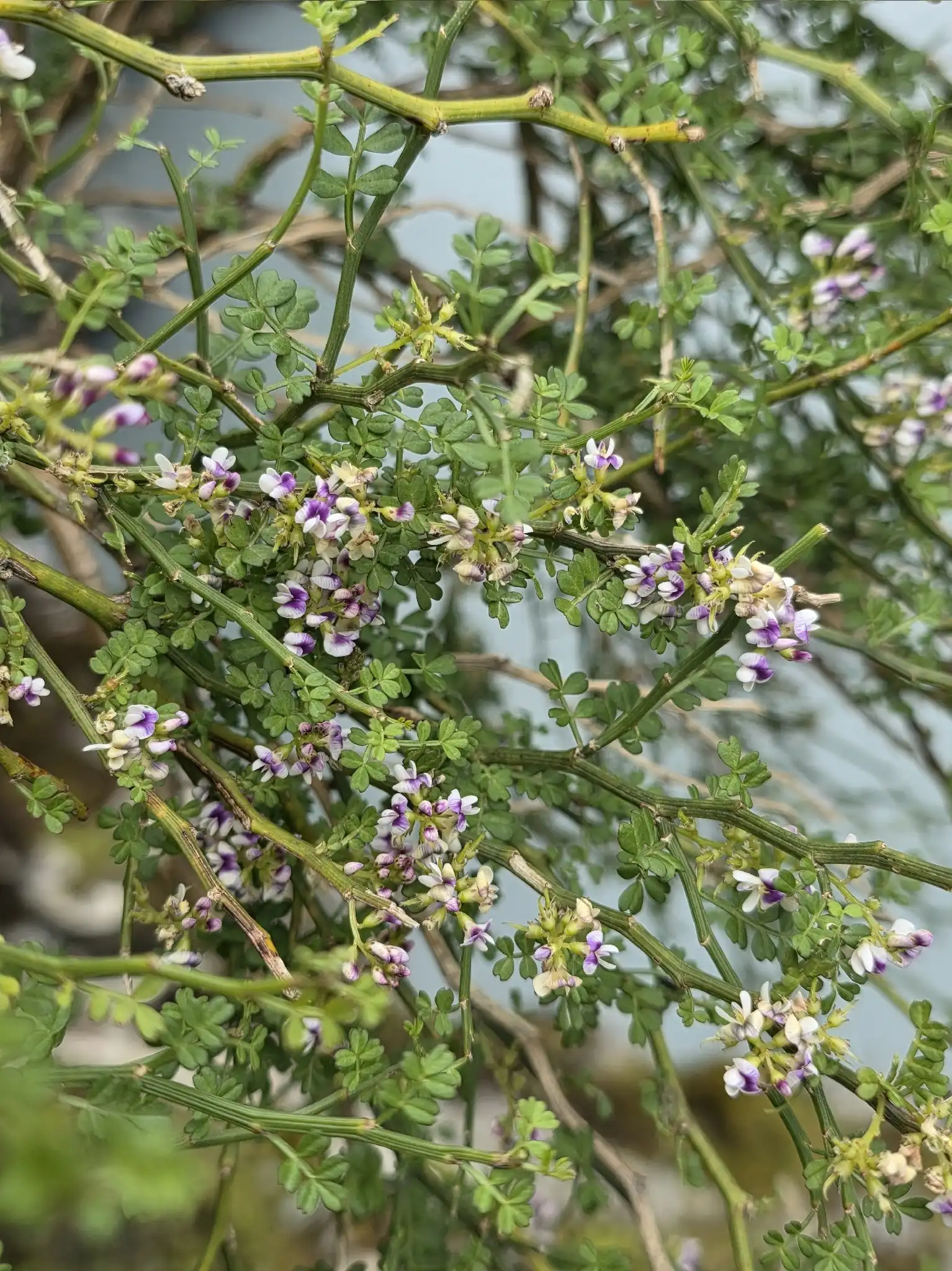
Carmichaelia odorata is a semi-deciduous New Zealand shrub growing up to ten feet tall with fine, interlacing branchlets and flattened green photosynthetic stems. In spring and summer, it produces dense clusters of intensely sweet-scented, tiny pea-like flowers with purple-veined petals.
The small leaflets drop early in the growing season, shifting primary photosynthesis to the weeping green twigs that form a fan-like branch structure. Its prolific flowering display relies on full sun exposure and sharp soil drainage to thrive long-term.
Uses & Benefits:
Essentials
At a Glance
Plant Type
Shrub
Height
118"
Width
79"
Light
Full Sun, Partial Sun
Zones
8, 9, 10
Water
Low
Humidity
Moderate
Lifespan
Perennial
Native To
New Zealand
Toxicity
Non-toxic
Bloom period
Spring – Summer
In flower about 6 months of the year
Planting
How to Grow
- Select a full sun or partially shaded location with gritty, fast-draining soil.
- Plant container specimens at the same depth as in the pot, taking care not to disturb the root ball.
- Water regularly during the first growing season until the root system is established.
- Reduce watering once established, allowing the upper soil layer to dry out thoroughly between irrigations.
Pro Tip
Lightly trim branch tips immediately after flowering, but never cut back into old leafless wood, which cannot regenerate new growth.
Keep It Thriving
Care Guide
Do
- Plant in coarse, sharply draining soil to prevent root issues.
- Trim tips lightly after spring and summer flowering finishes.
- Provide full sun to maximize flower production and stem density.
Don't
- Do not cut back into old, bare wood during pruning.
- Do not overwater or allow soil to remain soggy.
- Do not apply heavy nitrogen fertilizers, as the plant fixes its own nitrogen.
Seasonal Care Calendar
| Task | Jan | Feb | Mar | Apr | May | Jun | Jul | Aug | Sep | Oct | Nov | Dec |
|---|---|---|---|---|---|---|---|---|---|---|---|---|
| Fertilize | ||||||||||||
| Pest Check | ||||||||||||
| Plant | ||||||||||||
| Prune |
Watch Out For
Pests & Diseases
Common Pests
Common Diseases
In the Garden
Landscape Uses & Companions
Landscape Uses
Companion Plants
Multiply
Propagation Methods
Good to Know
Common Questions
Scented Broom questions
What zones can Scented Broom grow in?
Scented Broom is hardy in USDA Zones 8–10: in that range it survives winter in the ground. Colder than Zone 8, grow it in a container you can move to shelter for the winter.
Is Scented Broom deer resistant?
Not reliably. Deer may browse Scented Broom, especially tender spring growth — plan on repellents or fencing where pressure is high.
When does Scented Broom bloom?
Scented Broom typically blooms from spring to summer. Exact timing shifts a week or two with your zone — Sow's bloom calendar maps it to your garden.
Does Scented Broom need full sun?
Scented Broom does best in full sun to part shade. In hot climates, afternoon shade keeps blooms fresher longer.
Is Scented Broom drought tolerant?
Yes — once established (usually after the first full season), Scented Broom handles dry spells with minimal watering. Water deeply its first year to build the root system that makes that possible.
More Carmichaelia to compare
Keep exploring
Explore the genus
Hardy in your zone?
Grow Scented Broom with confidence
See it in a design of your actual yard, get zone-matched care reminders, and track it season by season in your garden journal.