The Story
Plant Bio
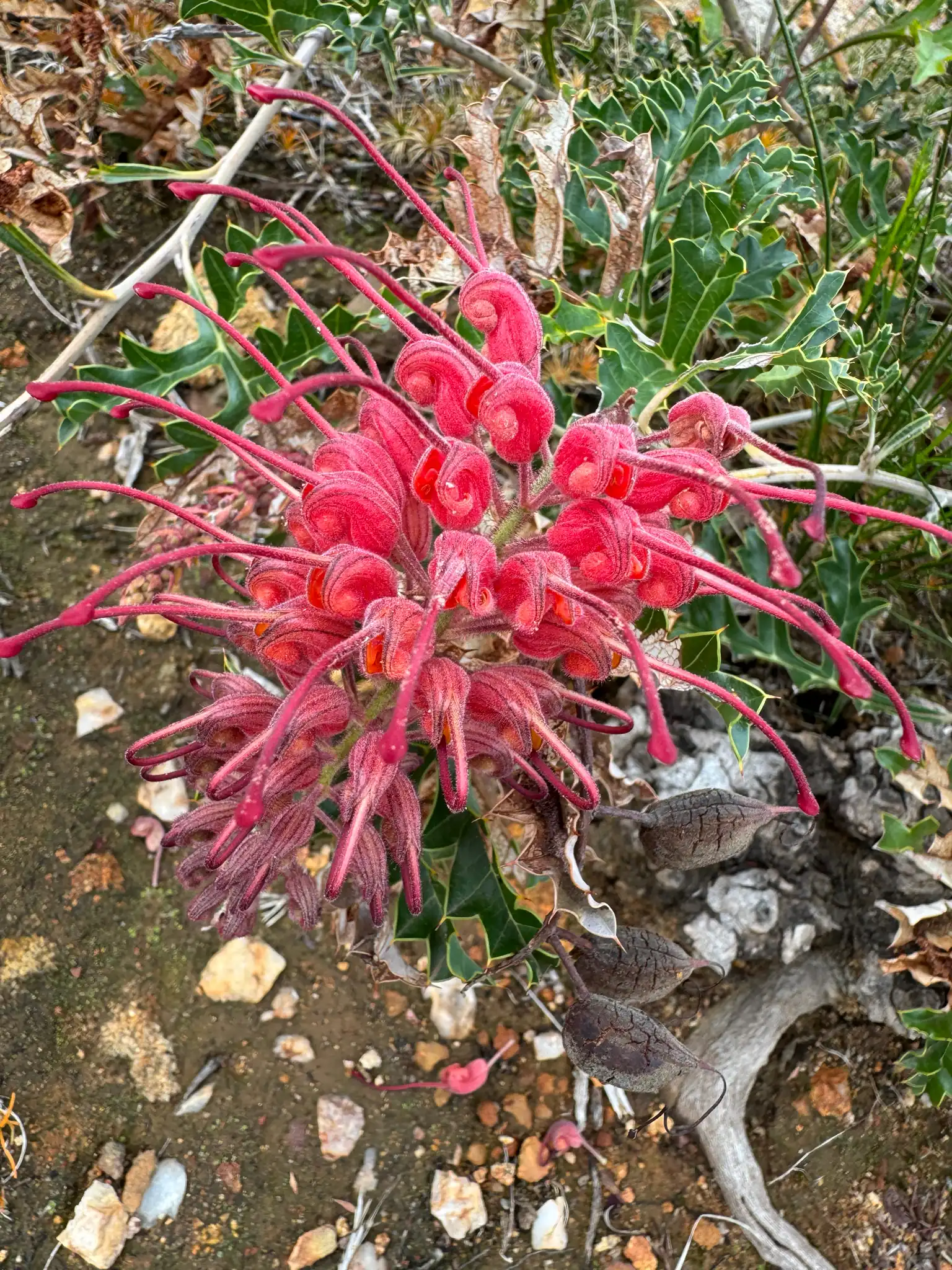
Grevillea bipinnatifida is an evergreen Australian shrub that grows up to three feet tall with a wide, spreading decumbent habit. Stiff, deeply lobed leaves feature sharp prickly points, accompanied by toothbrush-like racemes of crimson to orange-red flowers.
Its low-growing frame arises from a woody lignotuber that aids in recovery after surface damage or light frost. Vibrant young growth turns into tough foliage that deters heavy browsing while producing nectar that draws pollinators.
Uses & Benefits:
Essentials
At a Glance
Plant Type
Shrub
Height
39"
Width
79"
Light
Full Sun, Partial Sun
Zones
9, 10
Water
Low once established
Humidity
Low to moderate
Lifespan
Perennial
Native To
Western Australia
Toxicity
Prickly foliage can puncture skin; non-toxic if ingested
Bloom period
Spring – Summer
In flower about 6 months of the year
Planting
How to Grow
- Select a planting site in full sun to partial shade with sharply draining, acidic to neutral soil.
- Dig a planting hole twice as wide as the root ball without adding high-phosphorus organic amendments.
- Set the plant level with the surrounding soil, gently firming the native soil back into place.
- Water sparingly until established, ensuring water drains freely away from the crown.
Pro Tip
Avoid cutting back past leafy stem sections into old bare wood where dormant buds are absent, and use strictly zero-phosphorus or low-phosphorus fertilizers.
Keep It Thriving
Care Guide
Do
- Provide exceptional drainage using raised beds, gravel, or sandy soils.
- Apply low-phosphorus native fertilizers sparingly.
- Prune lightly after the main flowering flush to maintain a compact shape.
Don't
- Do not cut back into old leafless woody stems.
- Do not use general-purpose fertilizers high in phosphorus.
- Do not allow soil to remain saturated or waterlogged.
Seasonal Care Calendar
| Task | Jan | Feb | Mar | Apr | May | Jun | Jul | Aug | Sep | Oct | Nov | Dec |
|---|---|---|---|---|---|---|---|---|---|---|---|---|
| Fertilize | ||||||||||||
| Mulch | ||||||||||||
| Pest Check | ||||||||||||
| Prune |
Watch Out For
Pests & Diseases
Common Pests
Common Diseases
In the Garden
Landscape Uses & Companions
Landscape Uses
Multiply
Propagation Methods
Good to Know
Common Questions
Fuchsia Grevillea questions
What zones can Fuchsia Grevillea grow in?
Fuchsia Grevillea is hardy in USDA Zones 9–10: in that range it survives winter in the ground. Colder than Zone 9, grow it in a container you can move to shelter for the winter.
Is Fuchsia Grevillea deer resistant?
Yes — Fuchsia Grevillea is rated deer-resistant. Deer typically pass it over, though extreme hunger can override any plant's defenses.
When does Fuchsia Grevillea bloom?
Fuchsia Grevillea typically blooms from spring to summer. Exact timing shifts a week or two with your zone — Sow's bloom calendar maps it to your garden.
Does Fuchsia Grevillea need full sun?
Fuchsia Grevillea does best in full sun to part shade. In hot climates, afternoon shade keeps blooms fresher longer.
Is Fuchsia Grevillea drought tolerant?
Yes — once established (usually after the first full season), Fuchsia Grevillea handles dry spells with minimal watering. Water deeply its first year to build the root system that makes that possible.
More Grevillea to compare
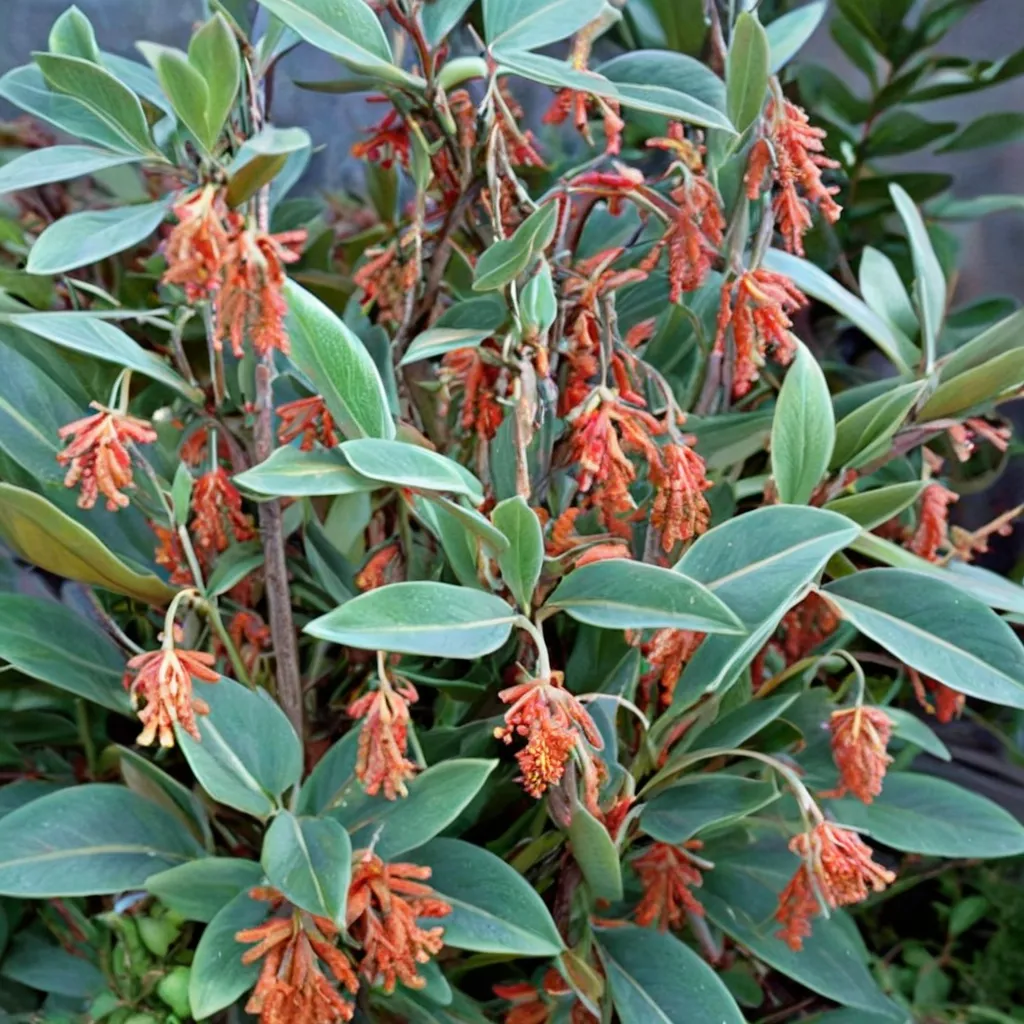
Murray Queen Grevillea
Grevillea victoriae 'Murray Queen'
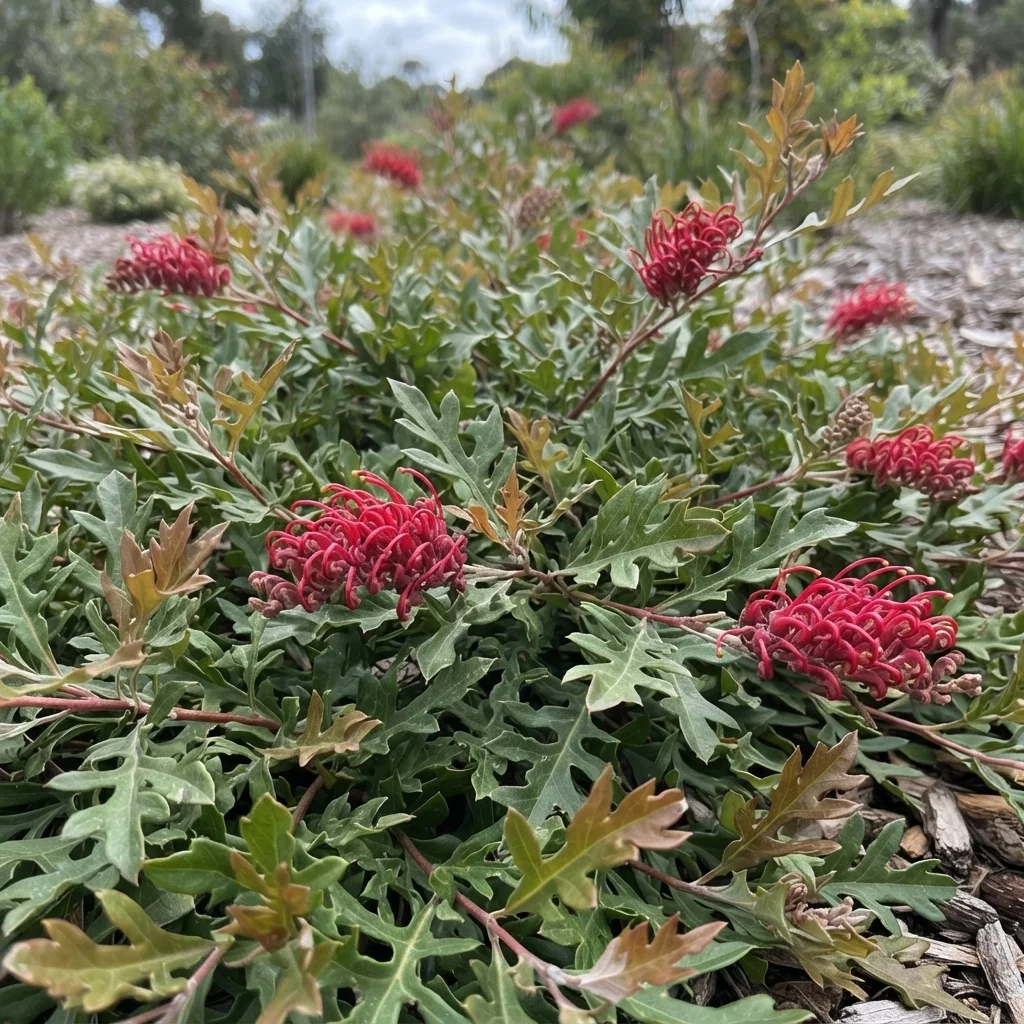
Prostrate Grevillea
Grevillea × gaudichaudii 'Gaudi Chaudi'
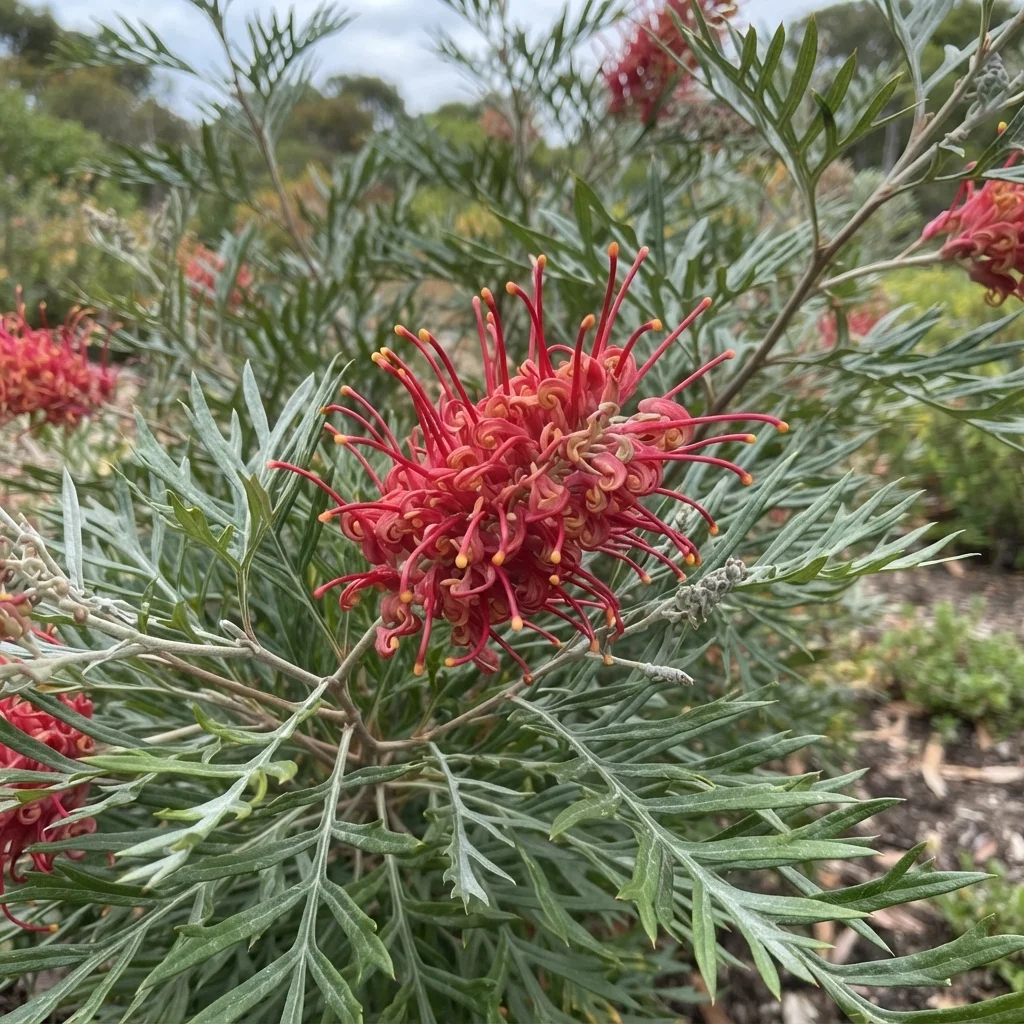
Superb Grevillea
Grevillea x hybrida 'Superb'
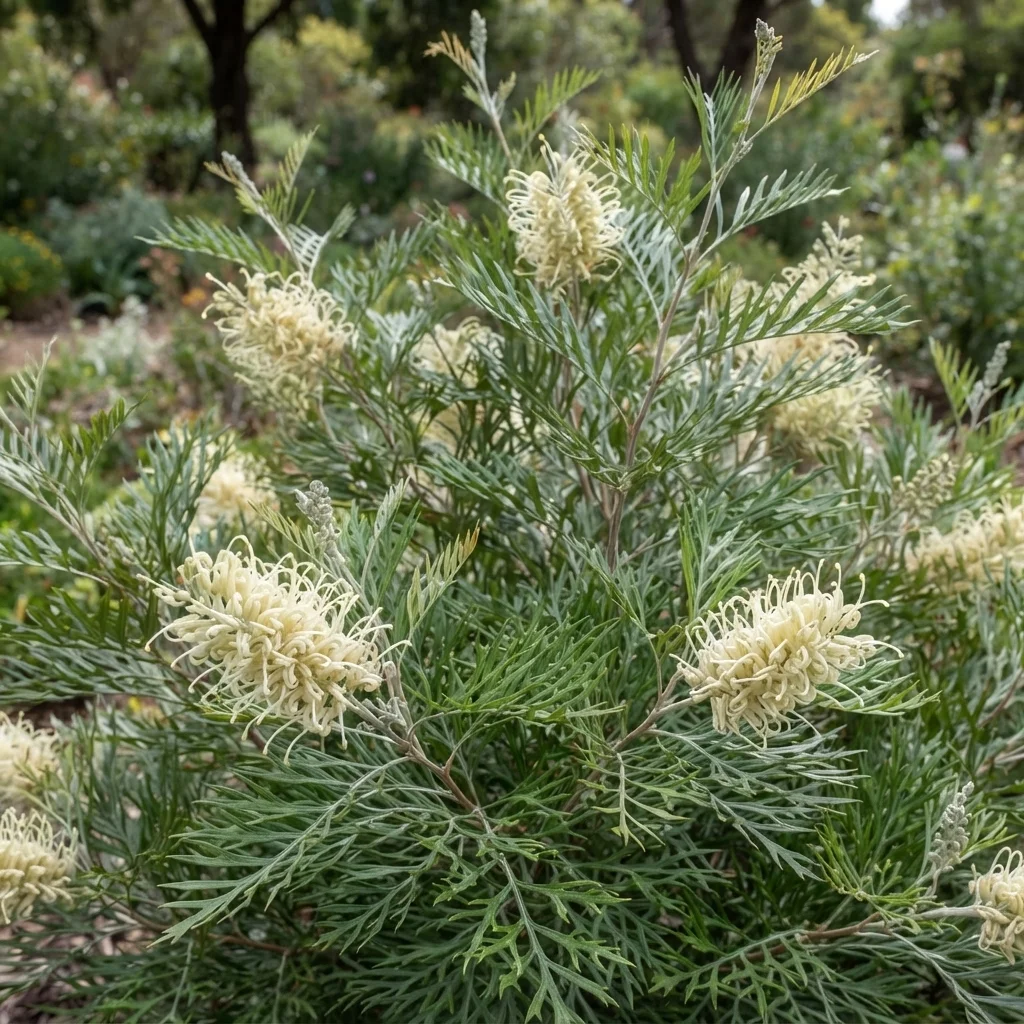
Moonlight Grevillea
Grevillea x hybrida 'Moonlight'
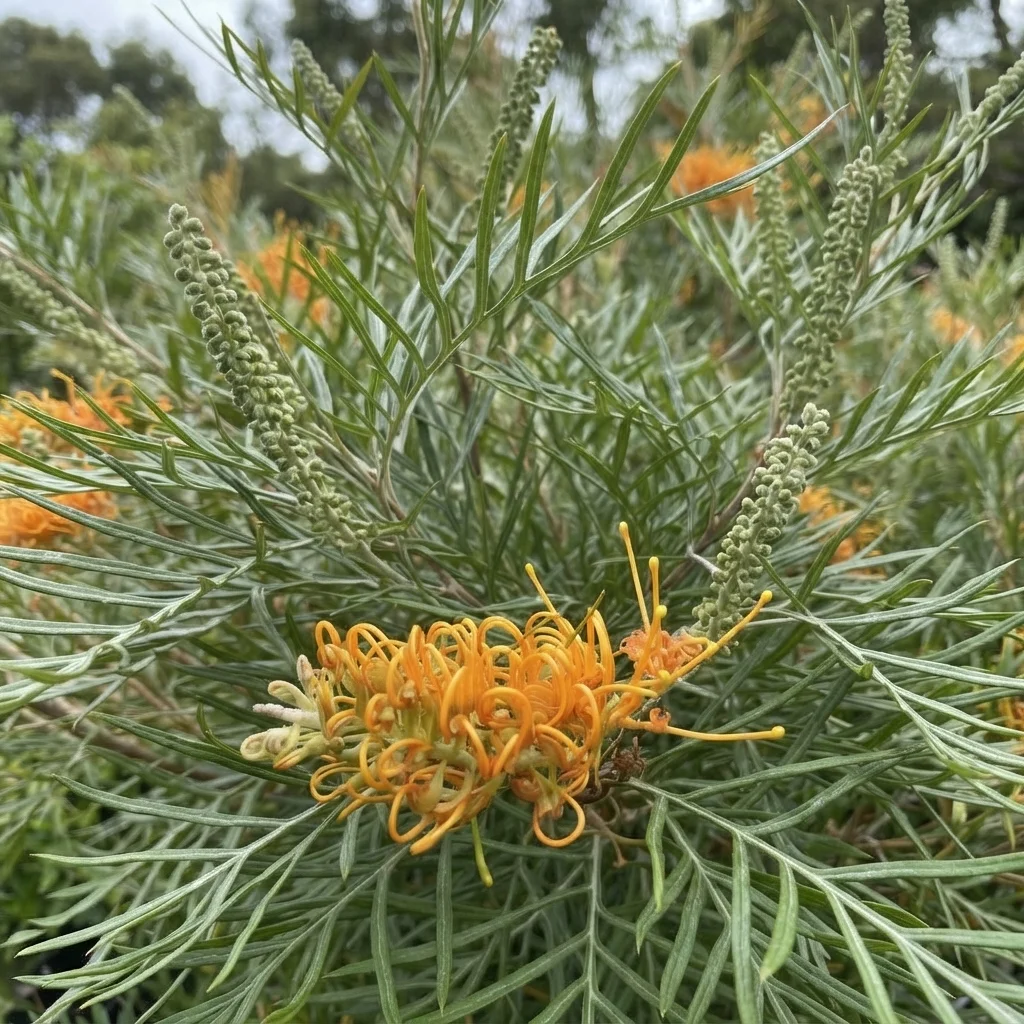
Honey Gem Grevillea
Grevillea x hybrida 'Honey Gem'
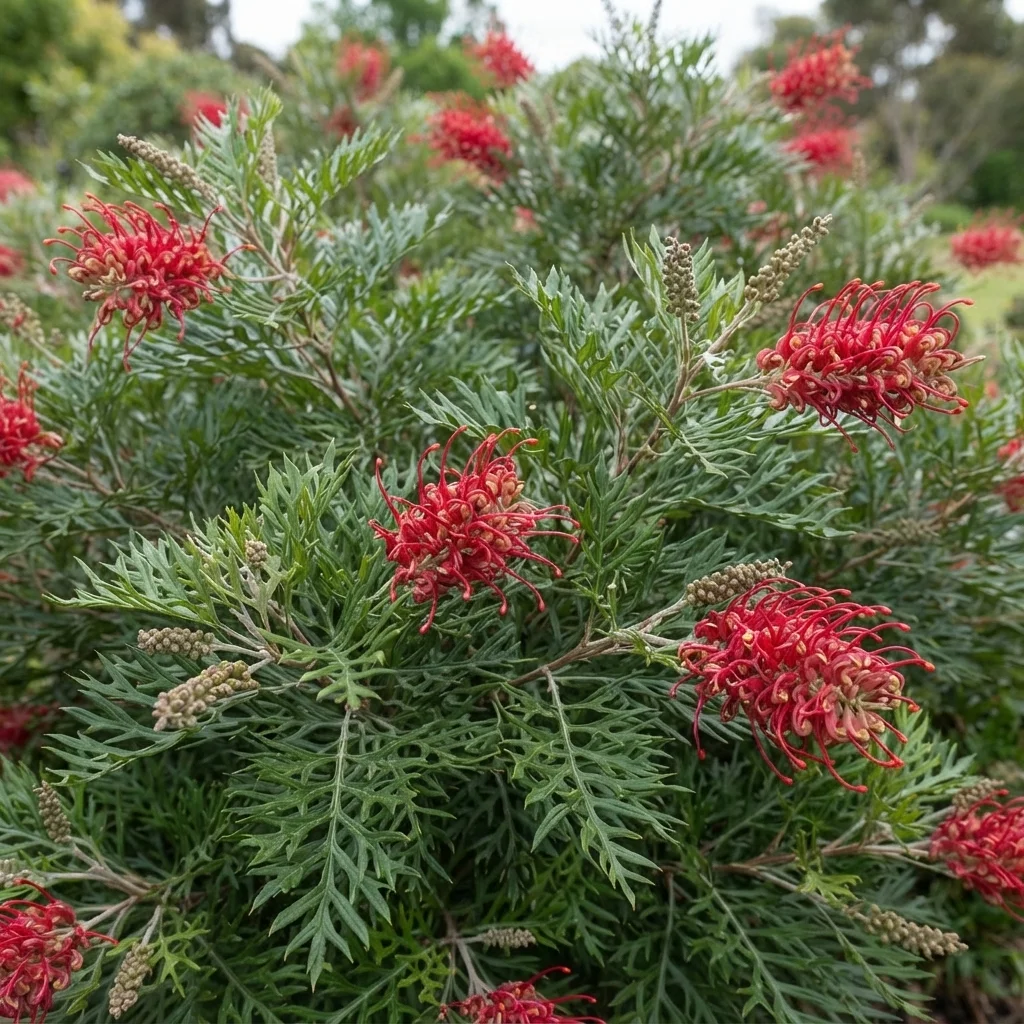
Robyn Gordon Grevillea
Grevillea x hybrida 'Robyn Gordon'
Keep exploring
Explore the genus
Hardy in your zone?
Grow Fuchsia Grevillea with confidence
See it in a design of your actual yard, get zone-matched care reminders, and track it season by season in your garden journal.