The Story
Plant Bio
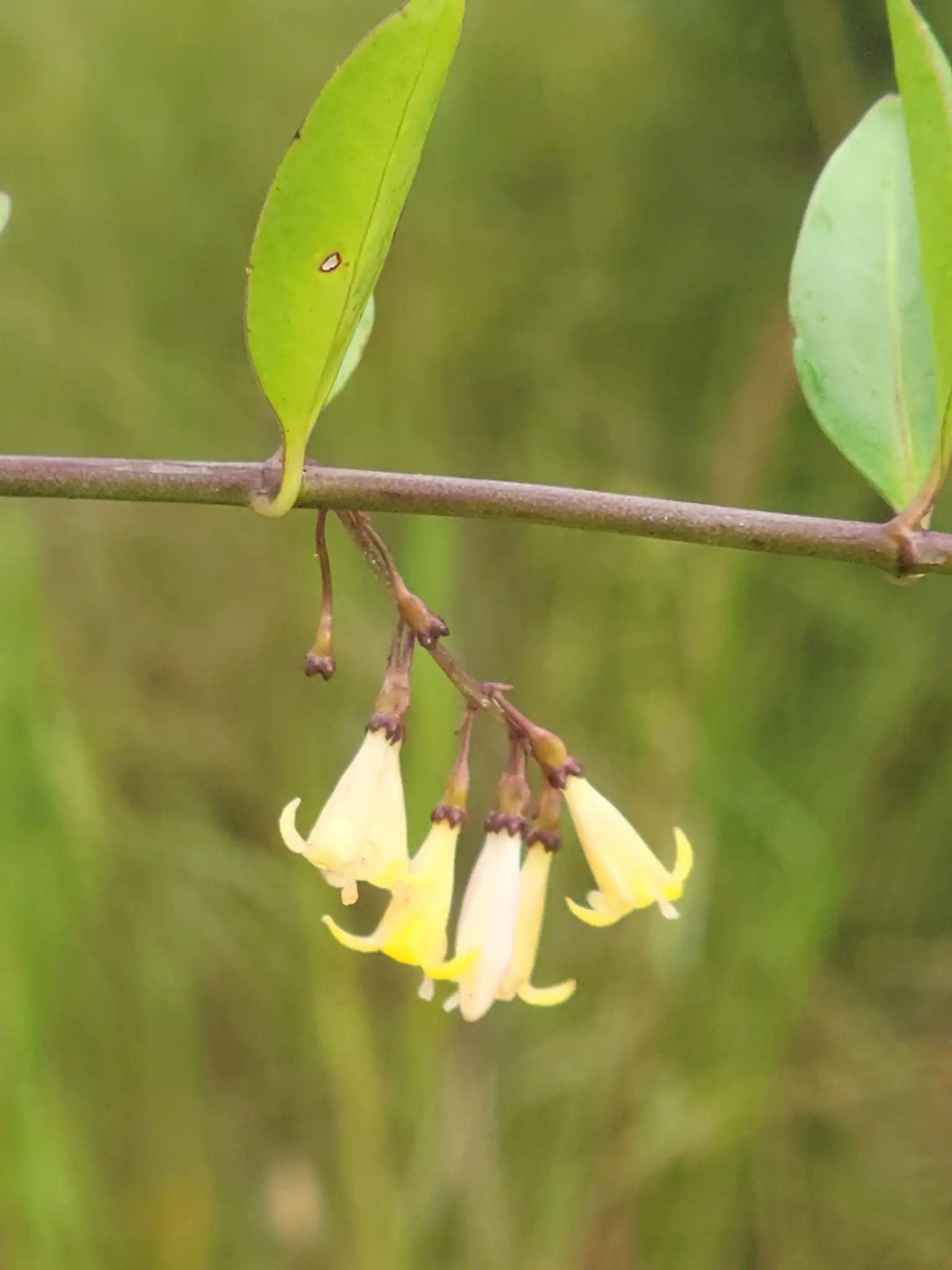
Chiococca parvifolia is an evergreen woody member of the Rubiaceae native to South Florida, the Caribbean and northern South America. It forms a low sprawling shrub with arching vine-like stems that mat across the ground and climb when support is available, clothed in thick shining dark green leaves.
Compared with Chiococca alba, its leaves are distinctly smaller, about 1.5 inches long, stiff and glossy on green to purplish stems. It bears few-flowered axillary racemes 2 to 5 cm long of small bell-shaped white to yellowish fragrant flowers all year, followed by white berries that birds readily eat.
Uses & Benefits:
Essentials
At a Glance
Plant Type
Groundcover
Height
72"
Width
72"
Light
Full Sun, Partial Sun, Shade
Zones
9, 10
Water
Unknown
Humidity
Unknown
Lifespan
Perennial
Native To
South Florida, Caribbean, northern South America
Toxicity
Not poisonous
Bloom period
Year round
In flower about 12 months of the year
Planting
How to Grow
- Plant in spring in sun to shade, spacing to allow a 3- to 6-foot mat.
- Set the rootball level with the surrounding grade in pine rockland, hammock, or dune-type soil.
- Water in well to settle soil around roots, then maintain even moisture until established.
- Mulch lightly around, not over, the stems to suppress weeds.
- Allow stems to arch and root where they touch or guide them into adjacent low vegetation.
Pro Tip
Give it room to mat to 3 to 6 feet wide and let arching stems layer or lift into low support rather than shearing it into a mound.
Keep It Thriving
Care Guide
Do
- Do plant where stems can sprawl or clamber.
- Do leave ripe white fruit for birds.
- Do keep competing weeds clear while the mat closes.
Don't
- Do not shear into a tight hedge; it breaks the arching habit.
- Do not confuse it with Chiococca alba when siting for a low groundcover.
- Do not eat the fruit; it is reported not poisonous but not tasty.
Seasonal Care Calendar
| Task | Jan | Feb | Mar | Apr | May | Jun | Jul | Aug | Sep | Oct | Nov | Dec |
|---|---|---|---|---|---|---|---|---|---|---|---|---|
| Mulch | ||||||||||||
| Pest Check | ||||||||||||
| Plant | ||||||||||||
| Prune |
Watch Out For
Pests & Diseases
Common Pests
Common Diseases
In the Garden
Landscape Uses & Companions
Landscape Uses
Multiply
Propagation Methods
Good to Know
Common Questions
Pineland Milkberry questions
What zones can Pineland Milkberry grow in?
Pineland Milkberry is hardy in USDA Zones 9–10: in that range it survives winter in the ground. Colder than Zone 9, grow it in a container you can move to shelter for the winter, or as an annual.
When does Pineland Milkberry bloom?
Pineland Milkberry typically blooms year-round. Exact timing shifts a week or two with your zone — Sow's bloom calendar maps it to your garden.
Does Pineland Milkberry need full sun?
Pineland Milkberry does best in full sun to part shade. In hot climates, afternoon shade keeps blooms fresher longer.
Keep exploring
Explore the genus
Hardy in your zone?
Grow Pineland Milkberry with confidence
See it in a design of your actual yard, get zone-matched care reminders, and track it season by season in your garden journal.