The Story
Plant Bio
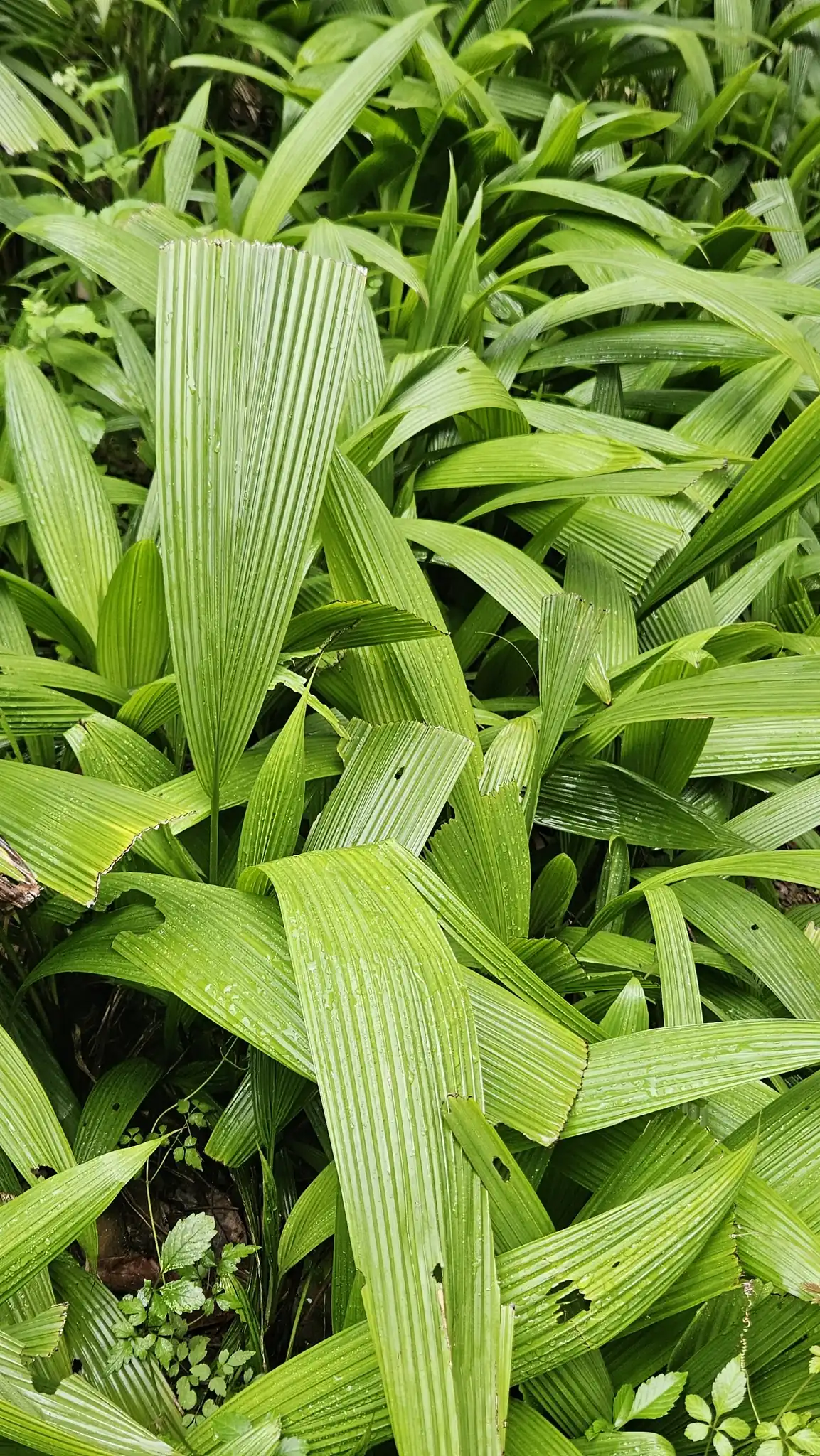
Curculigo capitulata is a clump-forming tropical rhizomatous perennial geophyte native to wet rainforest understories across tropical Asia and northeastern Australia. It forms bold tufts of broad, pleated, bright green leaves up to five feet long that closely resemble palm fronds.
In summer and fall, compact cluster heads of small, yellow, star-shaped flowers emerge on short pendulous stalks positioned low near the soil surface. The deeply ribbed, arching foliage provides a dense architectural presence without forming a woody trunk.
Uses & Benefits:
Essentials
At a Glance
Plant Type
Tropical
Height
48"
Width
48"
Light
Partial Sun, Shade
Zones
9, 10
Water
Consistent
Humidity
High
Lifespan
Perennial
Native To
Tropical Asia, Queensland
Toxicity
Non-toxic
Bloom period
Summer – Fall
In flower about 6 months of the year
Planting
How to Grow
- Select a planting location in light to deep shade that is protected from strong, dry winds.
- Amend the planting area with abundant organic matter to create a rich, water-retentive, well-draining soil medium.
- Plant the rhizome clump so the crown sits level with the surrounding soil line.
- Water thoroughly after planting and apply a layer of organic mulch around the base to preserve moisture.
Pro Tip
Position in sheltered, shaded understory locations and maintain consistent soil moisture, as direct sun severely scorches the pleated leaf surfaces.
Keep It Thriving
Care Guide
Do
- Keep soil consistently moist throughout the spring and summer growing season.
- Provide high ambient humidity when growing indoors or in greenhouse settings.
- Prune tattered or damaged outer leaves flush with the soil line in early spring.
Don't
- Do not allow the root zone to dry out completely during active growth.
- Do not expose plants to harsh direct midday sun or frost.
- Do not leave container pots standing in waterlogged saucers.
Seasonal Care Calendar
| Task | Jan | Feb | Mar | Apr | May | Jun | Jul | Aug | Sep | Oct | Nov | Dec |
|---|---|---|---|---|---|---|---|---|---|---|---|---|
| Divide | ||||||||||||
| Fertilize | ||||||||||||
| Pest Check | ||||||||||||
| Spring Cleanup | ||||||||||||
| Winter Prep |
Watch Out For
Pests & Diseases
Common Pests
Common Diseases
In the Garden
Landscape Uses & Companions
Landscape Uses
Companion Plants
Multiply
Propagation Methods
Good to Know
Common Questions
Palm Grass questions
What zones can Palm Grass grow in?
Palm Grass is hardy in USDA Zones 9–10: in that range it survives winter in the ground. Colder than Zone 9, grow it in a container you can move to shelter for the winter, or as an annual.
When does Palm Grass bloom?
Palm Grass typically blooms from summer to fall. Exact timing shifts a week or two with your zone — Sow's bloom calendar maps it to your garden.
Does Palm Grass need full sun?
Palm Grass does best in part shade.
Keep exploring
Explore the genus
Hardy in your zone?
Grow Palm Grass with confidence
See it in a design of your actual yard, get zone-matched care reminders, and track it season by season in your garden journal.