
The Story
Plant Bio
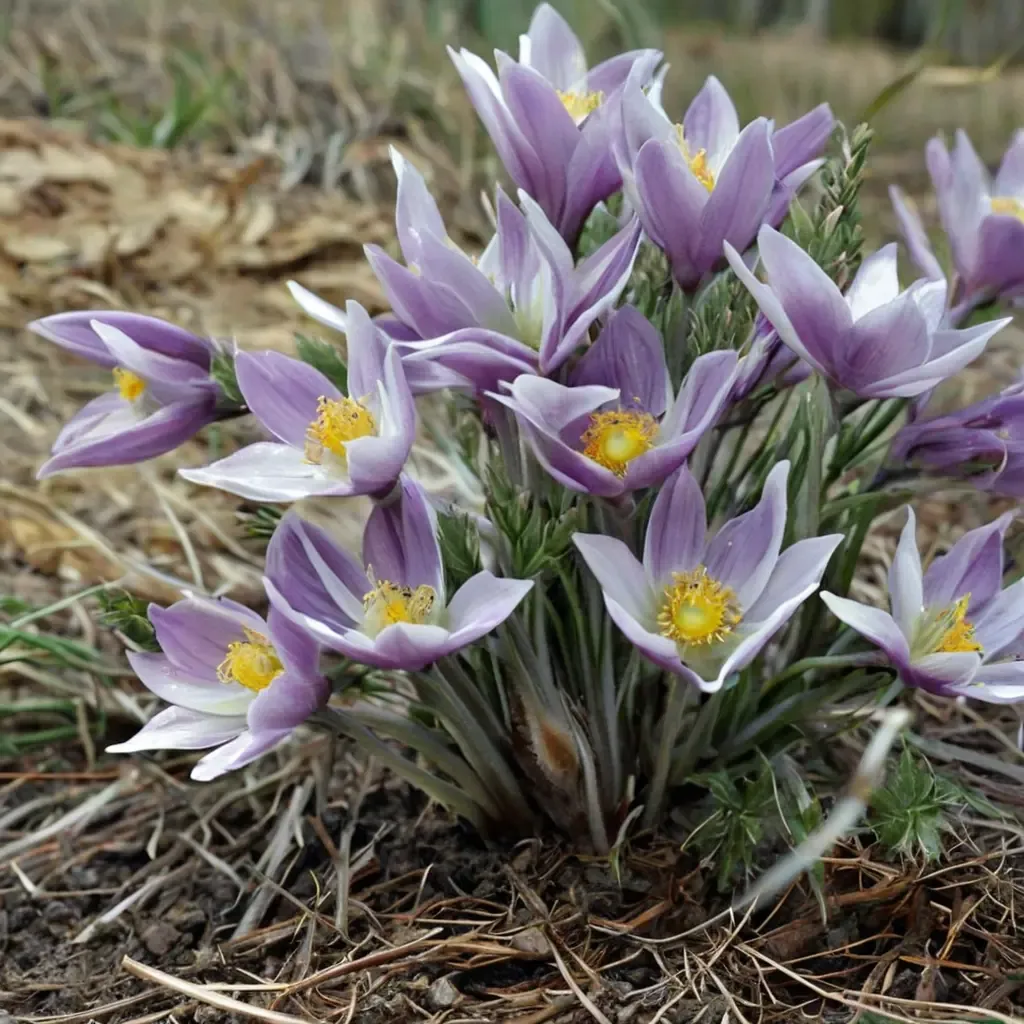
Pulsatilla nuttalliana is a low-growing, clump-forming perennial herb native to North American prairies, sandy hillsides, and high-altitude meadows. Emergent spring foliage and buds are densely covered in long, silky, silvery-white hairs that create a woolly sheen before opening into upward-facing, bell-shaped purple flowers.
Following early spring bloom, the flowers transform into feathery, plume-like seed heads that persist above the fine-textured basal foliage through summer. The entire plant arises from a deep, branching woody caudex that provides high drought tolerance once established in lean soils.
Uses & Benefits:
Essentials
At a Glance
Plant Type
Perennial
Height
16"
Width
12"
Light
Full Sun
Zones
4, 5, 6
Water
Low
Humidity
Low
Lifespan
Perennial
Native To
North America
Toxicity
Toxic if ingested / skin irritant
Bloom period
Early spring – Mid spring
In flower about 2 months of the year
Planting
How to Grow
- Select a full-sun site with sandy, gravelly, or calciphilic soil that drains rapidly.
- Amend acidic garden beds with lime to establish a soil pH between 6.8 and 8.0.
- Set bare-root crowns or young container plugs gently into the soil without bending or snapping the brittle main taproot.
- Water lightly to settle the soil, then withhold supplemental irrigation except during prolonged drought.
Pro Tip
Plant in lean, gravelly, alkaline soil with sharp drainage, and avoid disturbing the taproot or overwatering during summer dormancy.
Keep It Thriving
Care Guide
Do
- Provide full sun exposure and exceptionally sharp soil drainage.
- Maintain a neutral to alkaline soil pH.
- Leave spent feathery seed heads intact for decorative summer interest.
Don't
- Do not amend planting holes with rich compost or organic fertilizers.
- Do not allow soil to remain wet or waterlogged during winter dormancy.
- Do not attempt to divide or relocate established plants.
Seasonal Care Calendar
| Task | Jan | Feb | Mar | Apr | May | Jun | Jul | Aug | Sep | Oct | Nov | Dec |
|---|---|---|---|---|---|---|---|---|---|---|---|---|
| Pest Check | ||||||||||||
| Plant | ||||||||||||
| Propagate | ||||||||||||
| Spring Cleanup |
Watch Out For
Pests & Diseases
Common Pests
Common Diseases
In the Garden
Landscape Uses & Companions
Landscape Uses
Multiply
Propagation Methods
Good to Know
Common Questions
American Pasqueflower questions
What zones can American Pasqueflower grow in?
American Pasqueflower is hardy in USDA Zones 4–6: in that range it survives winter in the ground. Warmer than Zone 6, winter isn't the problem: it prefers colder winters, and summer heat can shorten its life.
Is American Pasqueflower deer resistant?
Not reliably. Deer may browse American Pasqueflower, especially tender spring growth — plan on repellents or fencing where pressure is high.
When does American Pasqueflower bloom?
American Pasqueflower typically blooms in early to mid-spring. Exact timing shifts a week or two with your zone — Sow's bloom calendar maps it to your garden.
Does American Pasqueflower need full sun?
American Pasqueflower does best in full sun (6+ hours).
Is American Pasqueflower drought tolerant?
Yes — once established (usually after the first full season), American Pasqueflower handles dry spells with minimal watering. Water deeply its first year to build the root system that makes that possible.
More Pulsatilla to compare
Keep exploring
Explore the genus
Hardy in your zone?
Grow American Pasqueflower with confidence
See it in a design of your actual yard, get zone-matched care reminders, and track it season by season in your garden journal.