The Story
Plant Bio
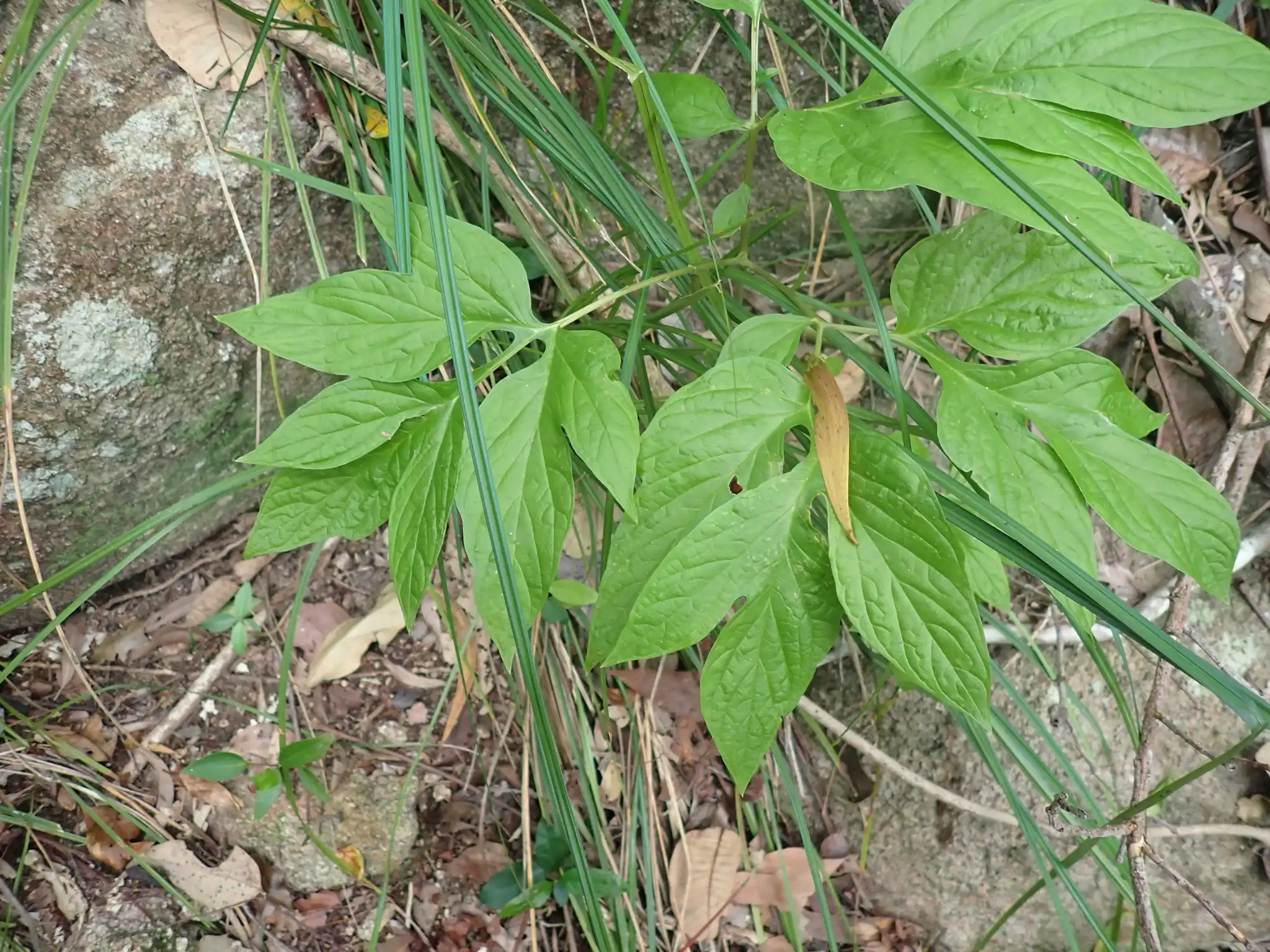
Tacca leontopetaloides is a tuberous perennial that grows from an underground tuber, sending up one or two large, deeply lobed leaves to two feet long on fleshy stalks. In summer it sends up a tall leafless stalk topped by an umbel of small yellow-green to purple flowers hung with thread-like bracts to ten inches long.
It is distinguished by narrow leafy bracts beneath the flower head and a spray of green to purple filaments around twenty blooms per umbel. The tuber stores a bitter starch laced with taccalin and calcium oxalates, edible only after repeated soaking and washing, and the plant drops its leaves and rests dry in dormancy.
Uses & Benefits:
Essentials
At a Glance
Plant Type
Bulb Corm Tuber
Height
36"
Width
36"
Light
Full Sun, Partial Sun
Zones
8, 9, 10
Water
Medium
Humidity
High
Lifespan
Perennial
Native To
Tropical Africa, Asia, Australia and Pacific Islands
Toxicity
Toxic if ingested raw
Bloom period
Summer – Fall
In flower about 6 months of the year
Planting
How to Grow
- Plant the dormant tuber 2 inches deep in sandy, humus-rich mix after last frost, bud up.
- Place in full sun to part shade with shelter from midday wind.
- Water evenly while leaves are up, keeping soil moist but never waterlogged.
- Feed lightly once in early summer with balanced fertilizer and withhold feed in dormancy.
- Move pots indoors before first frost and store the leafless tuber dry until spring.
Pro Tip
When the leaves yellow and collapse, stop watering and keep the tuber dry until new growth starts; watering a leafless tuber rots it.
Keep It Thriving
Care Guide
Do
- Plant in sandy, humus-rich soil that drains freely
- Water evenly during active leaf growth in warm humid weather
- Bring pots indoors before frost in Zone 8 and colder
Don't
- Do not water after the leaves collapse into dormancy
- Do not eat raw tuber or peels; they irritate mouth and gut
- Do not plant in heavy clay that stays wet around the tuber
Seasonal Care Calendar
| Task | Jan | Feb | Mar | Apr | May | Jun | Jul | Aug | Sep | Oct | Nov | Dec |
|---|---|---|---|---|---|---|---|---|---|---|---|---|
| Fertilize | ||||||||||||
| Lift Store | ||||||||||||
| Pest Check | ||||||||||||
| Plant | ||||||||||||
| Winter Prep |
Watch Out For
Pests & Diseases
Common Pests
Common Diseases
In the Garden
Landscape Uses & Companions
Landscape Uses
Companion Plants
Multiply
Propagation Methods
Good to Know
Common Questions
Polynesian Arrowroot questions
What zones can Polynesian Arrowroot grow in?
Polynesian Arrowroot is hardy in USDA Zones 8–10: in that range it survives winter in the ground. Colder than Zone 8, grow it in a container you can move to shelter for the winter, or as an annual.
When does Polynesian Arrowroot bloom?
Polynesian Arrowroot typically blooms from summer to fall. Exact timing shifts a week or two with your zone — Sow's bloom calendar maps it to your garden.
Does Polynesian Arrowroot need full sun?
Polynesian Arrowroot does best in full sun to part shade. In hot climates, afternoon shade keeps blooms fresher longer.
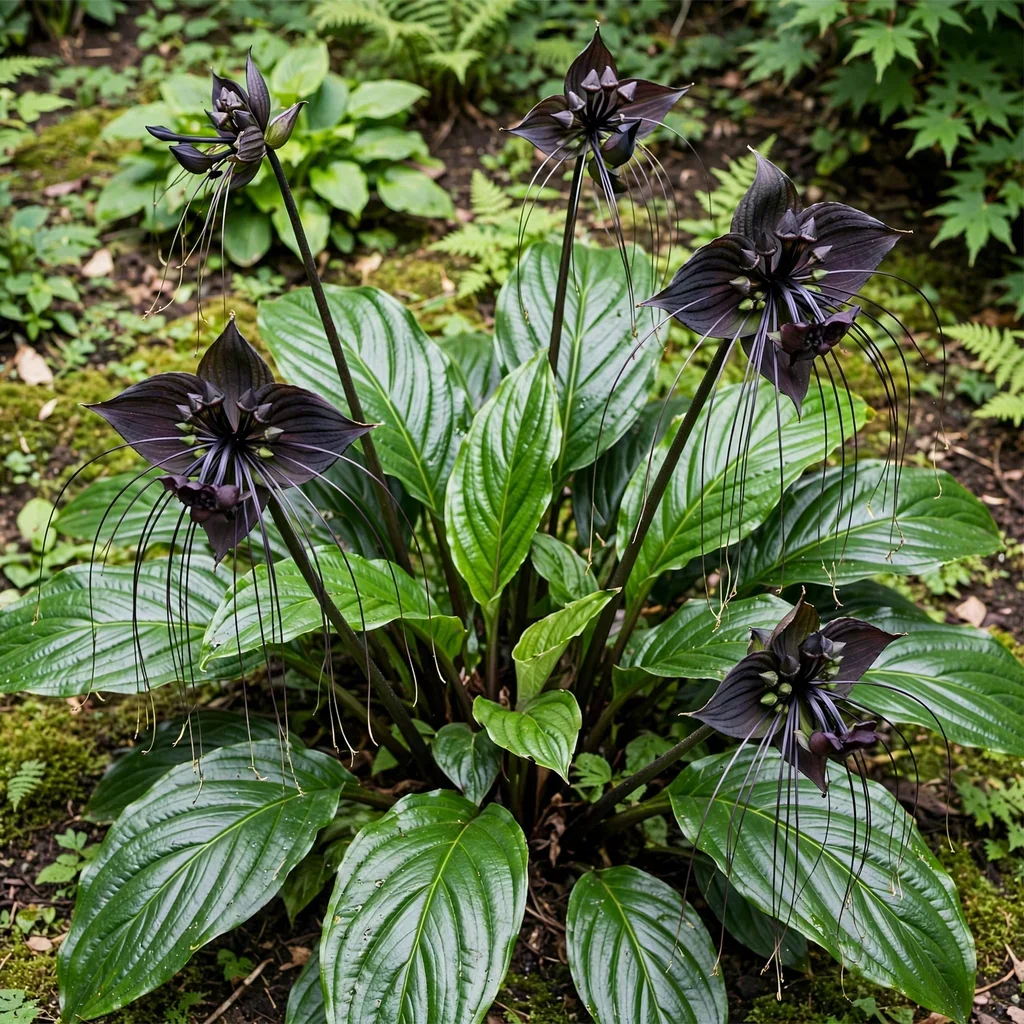
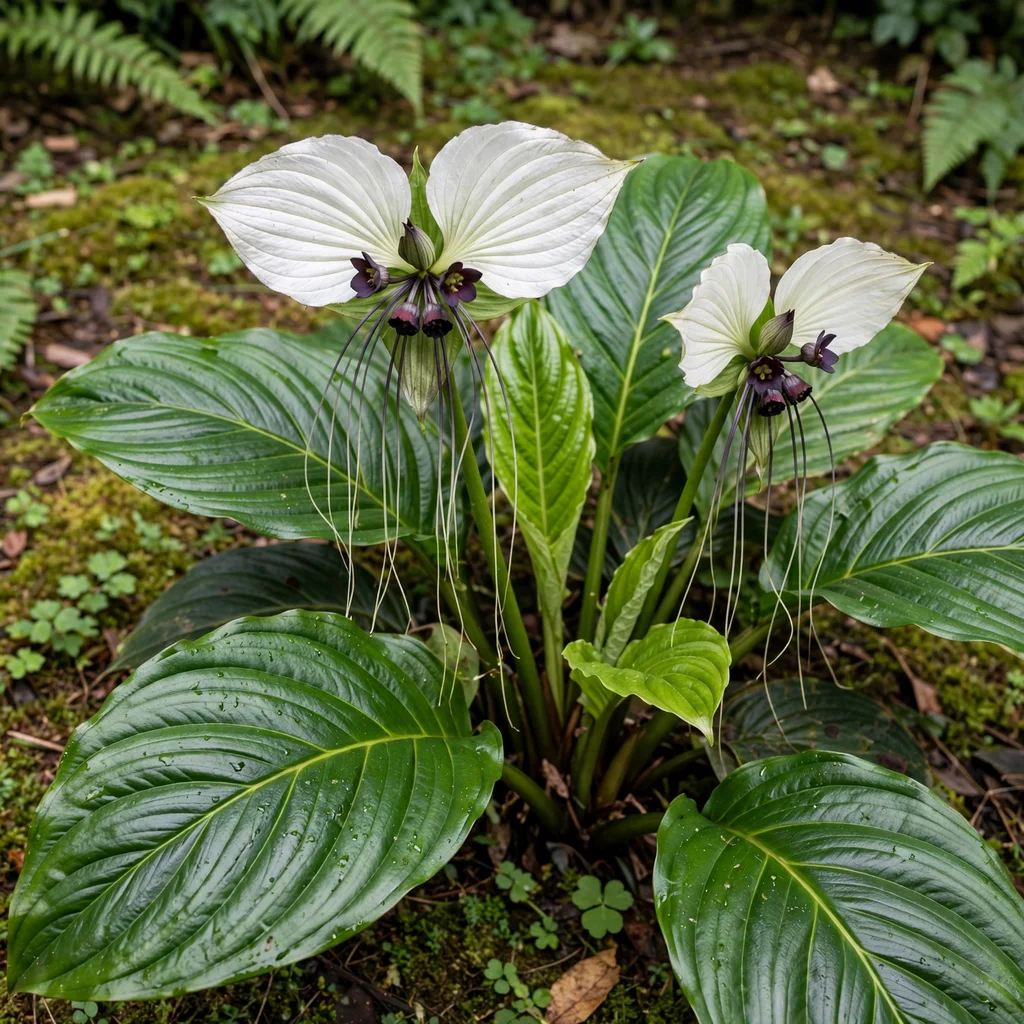
More Tacca to compare
Keep exploring
Explore the genus
Hardy in your zone?
Grow Polynesian Arrowroot with confidence
See it in a design of your actual yard, get zone-matched care reminders, and track it season by season in your garden journal.