The Story
Plant Bio
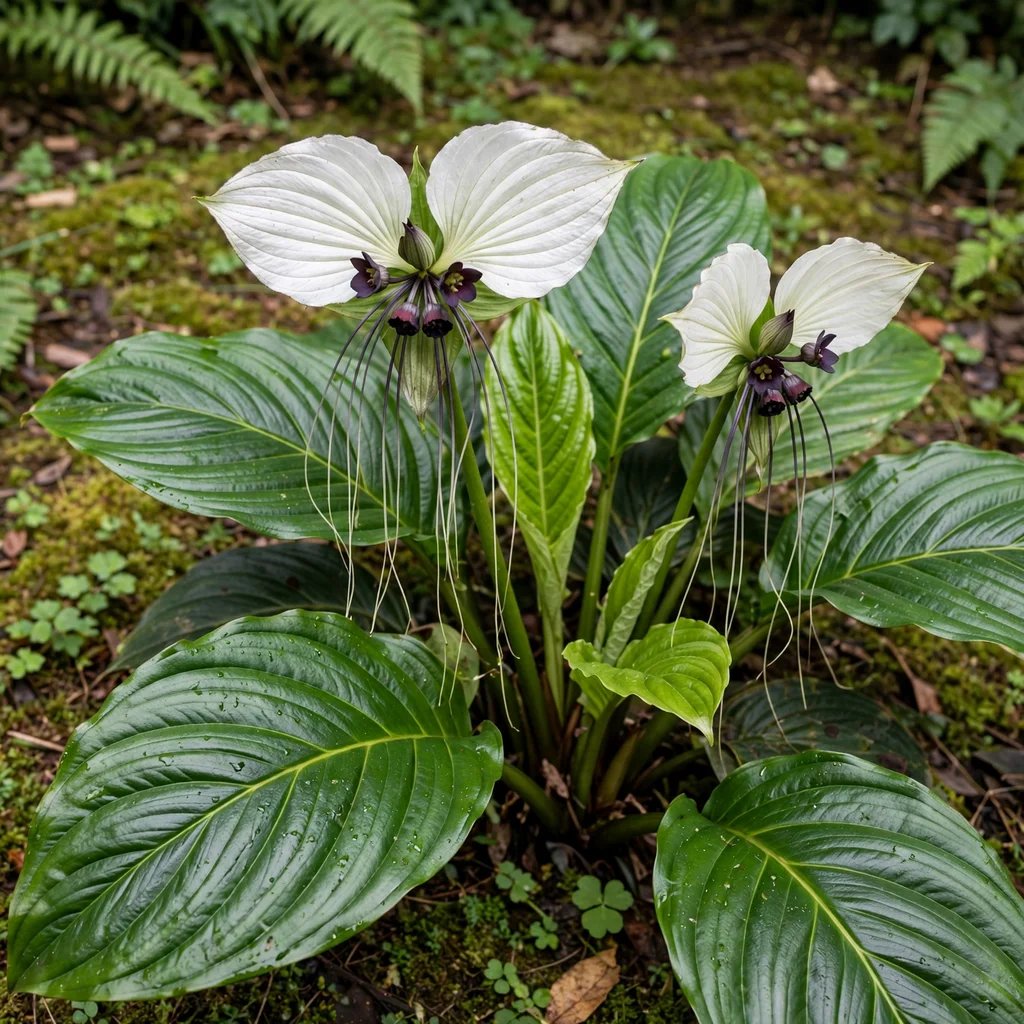
Tacca integrifolia is a short-stemmed rhizomatous evergreen perennial from tropical Asian rainforest understory, forming a clump of large upright green leaves from a thick rhizome. The inflorescence holds small dark nodding true flowers under two broad bracts, with many long thread-like filaments that hang well below the flower head.
'Nivea' is the white form sold as Tacca nivea, distinguished by ivory-white wing-like bracts veined green to light brown that spread about 6 inches across. Its trailing whisker filaments reach to 16 inches, and the clump reaches 24 to 36 inches tall with a 16-inch spread in pots and shaded beds.
Uses & Benefits:
Essentials
At a Glance
Plant Type
Tropical
Height
30"
Width
16"
Light
Partial Sun, Shade
Zones
9, 10
Water
Medium - evenly moist
Humidity
High - above 60%
Lifespan
Long-lived perennial
Native To
Tropical Asia
Toxicity
Unknown - no data
Bloom period
Spring – Fall
In flower about 9 months of the year
Planting
How to Grow
- Give bright indirect light or partial shade with no direct sun and no cold drafts.
- Pot in an acid humus-rich mix of ordinary flower soil plus peat and perlite that drains fast but holds moisture.
- Water regularly to keep evenly moist, letting the top inch dry, with very little water in winter; never leave bone-dry or waterlogged.
- Hold 77-84F in summer and 59-64F in winter, never below 50F, with humidity above 60% and good air circulation.
- Repot annually in February to March and remove only spent leaves and flowers; do not cut the clump back hard.
Pro Tip
Keep humidity above 60% with dappled shade and sharp drainage, and water when the top inch dries; sun, cold below 50F, dry air and soggy mix kill it.
Keep It Thriving
Care Guide
Do
- Do maintain high humidity with pebble tray or humidifier and space plants for airflow.
- Do use rain, distilled, or reverse-osmosis water if leaf tips brown from fluoride or chlorine.
- Do inspect leaf undersides regularly for scale, mealybugs, and spider mites.
Don't
- Don't place in direct sun, near heating vents, or where frost or temperatures near 37F occur.
- Don't overwater or use a heavy water-retentive mix that rots the rhizome.
- Don't prune hard into the crown; remove only dead leaves and finished flowers.
Seasonal Care Calendar
| Task | Jan | Feb | Mar | Apr | May | Jun | Jul | Aug | Sep | Oct | Nov | Dec |
|---|---|---|---|---|---|---|---|---|---|---|---|---|
| Deadhead | ||||||||||||
| Fertilize | ||||||||||||
| Pest Check | ||||||||||||
| Plant | ||||||||||||
| Winter Prep |
Watch Out For
Pests & Diseases
Common Pests
Common Diseases
In the Garden
Landscape Uses & Companions
Landscape Uses
Companion Plants
Multiply
Propagation Methods
Good to Know
Common Questions
White Bat Flower questions
What zones can White Bat Flower grow in?
White Bat Flower is hardy in USDA Zones 9–10: in that range it survives winter in the ground. Colder than Zone 9, grow it in a container you can move to shelter for the winter, or as an annual.
When does White Bat Flower bloom?
White Bat Flower typically blooms from spring to fall. Exact timing shifts a week or two with your zone — Sow's bloom calendar maps it to your garden.
Does White Bat Flower need full sun?
White Bat Flower does best in part shade.
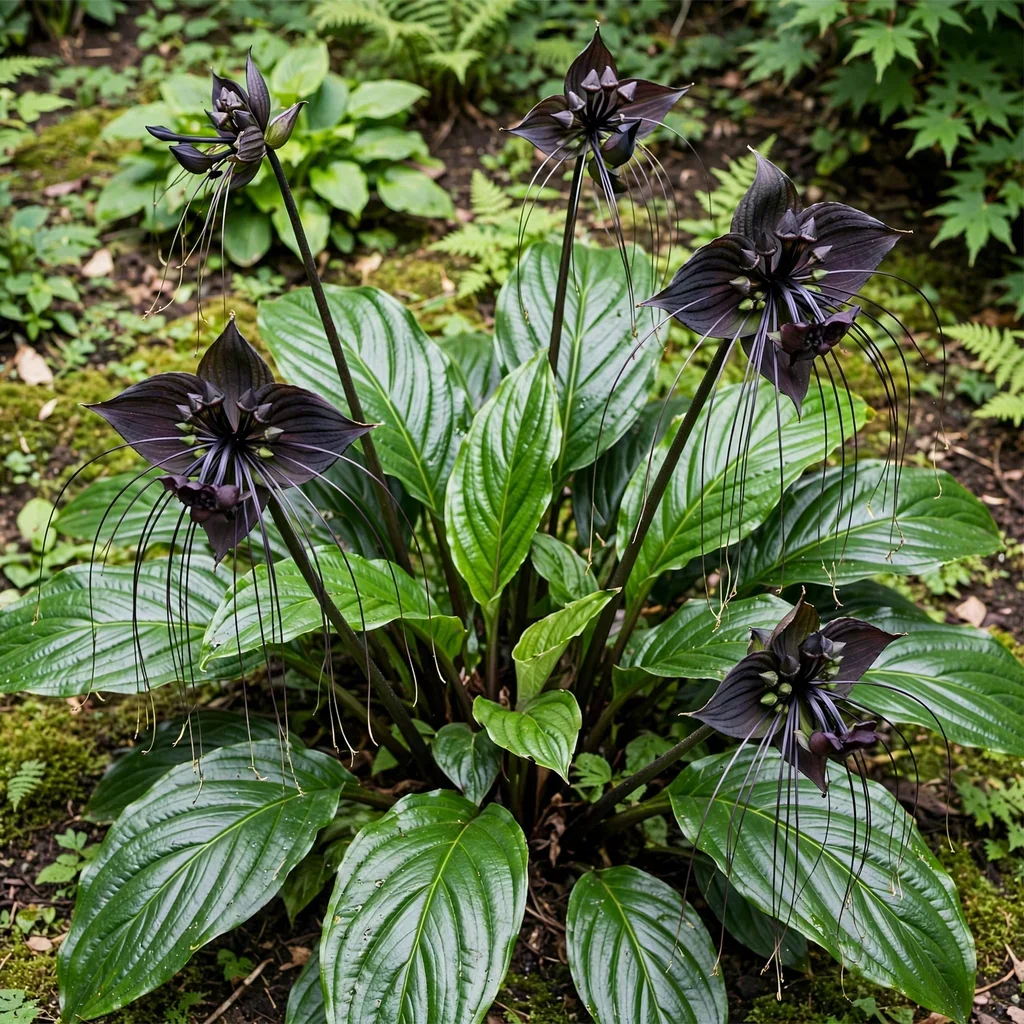
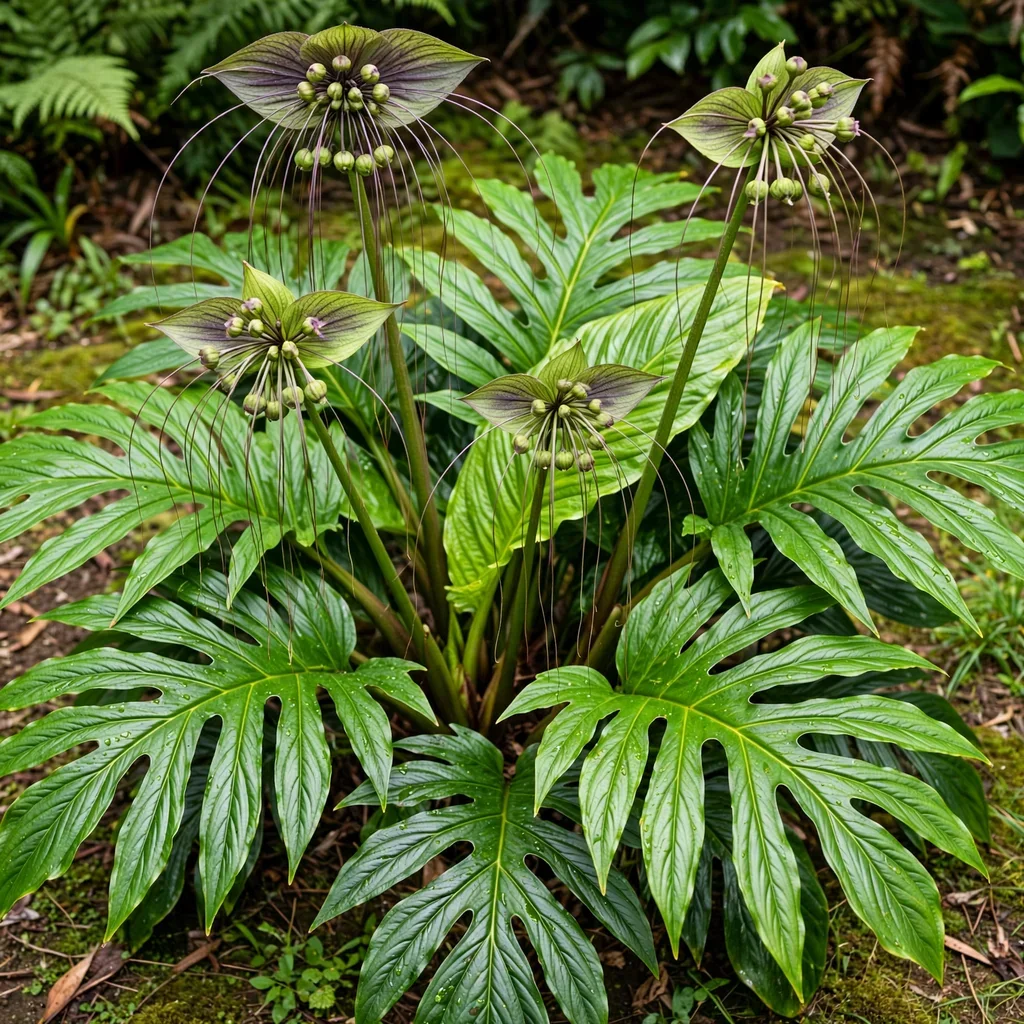
More Tacca to compare
Keep exploring
Explore the genus
Hardy in your zone?
Grow White Bat Flower with confidence
See it in a design of your actual yard, get zone-matched care reminders, and track it season by season in your garden journal.