The Story
Plant Bio
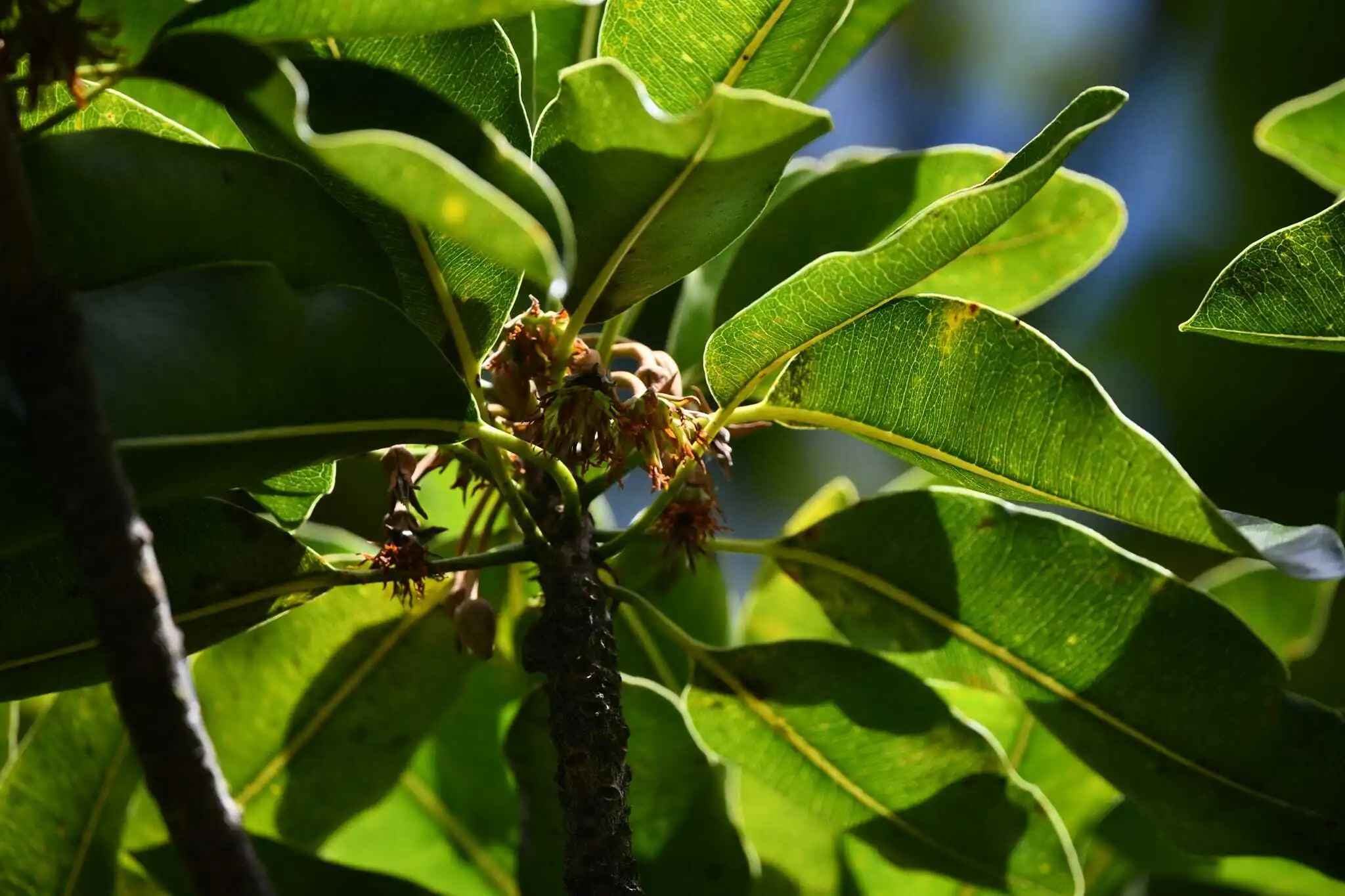
Mimusops balata in the strict sense is a Sapotaceae tree native only to Mauritius and Reunion, seldom grown under that name outside the Mascarenes. Stock sold as Mimusops balata in North America is the Neotropical ausubo, Manilkara bidentata, a very large evergreen timber tree with a long clean trunk and dense crown.
The trade tree reaches 100 to 150 feet tall with a trunk clear for 60 feet and 2 to 4 feet through, basally swollen and crowned with alternate entire elliptical leaves 4 to 8 inches long, glossy dark green above. Small white flowers borne at the start of the rainy season develop into round yellow-skinned fruit about 2 inches across with yellow sapodilla-like flesh that is reported edible.
Uses & Benefits:
Essentials
At a Glance
Plant Type
Tree
Height
1800"
Width
47"
Light
Full Sun, Partial Sun, Shade
Zones
10
Water
Moderate
Humidity
Unknown
Lifespan
Very long-lived
Native To
Mauritius, Reunion; trade stock from tropical Americas
Toxicity
Wood poisonous, latex irritant
Bloom period
Year round
In flower about 12 months of the year
Planting
How to Grow
- Plant potted stock in full sun to light shade after soils warm, allowing room for a 100- to 150-foot mature tree.
- Set into well-draining loamy soil that stays moist but never waterlogged, from near sea level to about 2000 feet.
- Water to establish and maintain an organic mulch ring, keeping mulch back from the trunk.
- Harvest yellow fruit when fully colored and soft; avoid ingesting latex and treat wood dust as poisonous.
Pro Tip
Plant only where a 100-foot evergreen can mature and confirm stock as true-to-name Manilkara bidentata, because this name never buys a small garden shrub.
Keep It Thriving
Care Guide
Do
- Plant only in Zones 10-11 where brief frost is the limit and room for a very large tree exists
- Provide well-draining loamy soil that stays moist but not waterlogged
- Allow full mature height and trunk clearance without size-controlling pruning
Don't
- Do not plant on small suburban lots or as a container shrub
- Do not waterlog soil or plant where drainage is poor
- Do not expect drought, salt or pH tolerance without site proof
Seasonal Care Calendar
| Task | Jan | Feb | Mar | Apr | May | Jun | Jul | Aug | Sep | Oct | Nov | Dec |
|---|---|---|---|---|---|---|---|---|---|---|---|---|
| Harvest | ||||||||||||
| Mulch | ||||||||||||
| Pest Check | ||||||||||||
| Plant |
Watch Out For
Pests & Diseases
Common Pests
Common Diseases
In the Garden
Landscape Uses & Companions
Landscape Uses
Multiply
Propagation Methods
Good to Know
Common Questions
Balata questions
What zones can Balata grow in?
Balata is hardy in USDA Zone 10: in that range it survives winter in the ground. Colder than Zone 10, winters are too cold for it to survive outdoors.
When does Balata bloom?
Balata typically blooms year-round. Exact timing shifts a week or two with your zone — Sow's bloom calendar maps it to your garden.
Does Balata need full sun?
Balata does best in full sun to part shade. In hot climates, afternoon shade keeps blooms fresher longer.
Keep exploring
Explore the genus
Hardy in your zone?
Grow Balata with confidence
See it in a design of your actual yard, get zone-matched care reminders, and track it season by season in your garden journal.