The Story
Plant Bio
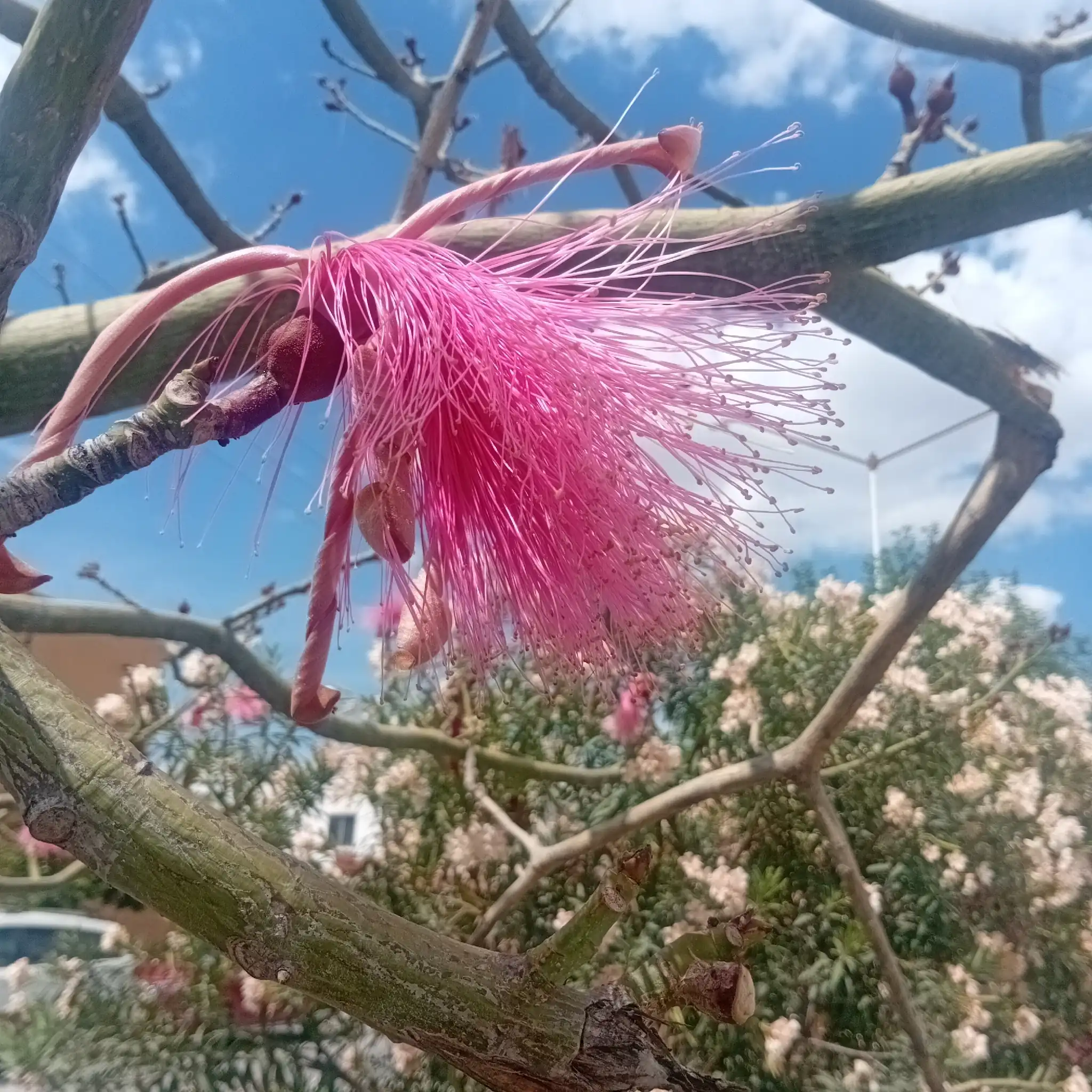
Pseudobombax ellipticum, the shaving-brush tree, is a deciduous tree from Mexico to Central America and the Caribbean with a stout gray-green water-storing trunk to four feet across. In cultivation it reaches twenty to forty feet with an open irregular crown of palmately compound leaves of five leaflets that drop in the winter dry season.
What sets it apart is its winter flowering on bare wood: large solitary fragrant brushes of pink or white stamens open at the blunt twig ends from winter into spring. New leaves emerge reddish before turning deep green, and the white-flowered selection Alba blooms the same leafless way in white.
Uses & Benefits:
Essentials
At a Glance
Plant Type
Tree
Height
480"
Width
360"
Light
Full Sun
Zones
9, 10
Water
Low
Humidity
Unknown
Lifespan
Long-lived tree
Native To
Mexico to Central America and Caribbean
Toxicity
Unknown
Bloom period
Winter – Spring
In flower about 6 months of the year
Planting
How to Grow
- Plant in full sun after frost danger in humus-rich, sharply draining soil.
- Water deeply through summer growth, letting the top few inches dry between waterings.
- Stop watering after leaf drop and keep the dormant leafless tree dry through winter.
- Protect below 30F with frost cloth or move containers to a frost-free shelter.
Pro Tip
Withhold water once the leaves drop; a leafless tree in wet winter soil rots, so resume deep summer watering only after new growth emerges.
Keep It Thriving
Care Guide
Do
- Give full sun and fast drainage, including shallow rocky soil
- Water in summer to support leaf growth and flowering
- Keep potted plants frost-free and dry in winter
Don't
- Do not water a leafless dormant tree as if it were in leaf
- Do not plant in soggy or compacted ground
- Do not expect hardiness below 25F without protection
Seasonal Care Calendar
| Task | Jan | Feb | Mar | Apr | May | Jun | Jul | Aug | Sep | Oct | Nov | Dec |
|---|---|---|---|---|---|---|---|---|---|---|---|---|
| Fertilize | ||||||||||||
| Pest Check | ||||||||||||
| Plant | ||||||||||||
| Prune | ||||||||||||
| Winter Prep |
Watch Out For
Pests & Diseases
Common Pests
Common Diseases
In the Garden
Landscape Uses & Companions
Landscape Uses
Companion Plants
Multiply
Propagation Methods
Good to Know
Common Questions
Shaving-Brush Tree questions
What zones can Shaving-Brush Tree grow in?
Shaving-Brush Tree is hardy in USDA Zones 9–10: in that range it survives winter in the ground. Colder than Zone 9, winters are too cold for it to survive outdoors.
When does Shaving-Brush Tree bloom?
Shaving-Brush Tree typically blooms from winter to spring. Exact timing shifts a week or two with your zone — Sow's bloom calendar maps it to your garden.
Does Shaving-Brush Tree need full sun?
Shaving-Brush Tree does best in full sun (6+ hours).
Is Shaving-Brush Tree drought tolerant?
Yes — once established (usually after the first full season), Shaving-Brush Tree handles dry spells with minimal watering. Water deeply its first year to build the root system that makes that possible.
Keep exploring
Explore the genus
Hardy in your zone?
Grow Shaving-Brush Tree with confidence
See it in a design of your actual yard, get zone-matched care reminders, and track it season by season in your garden journal.