The Story
Plant Bio
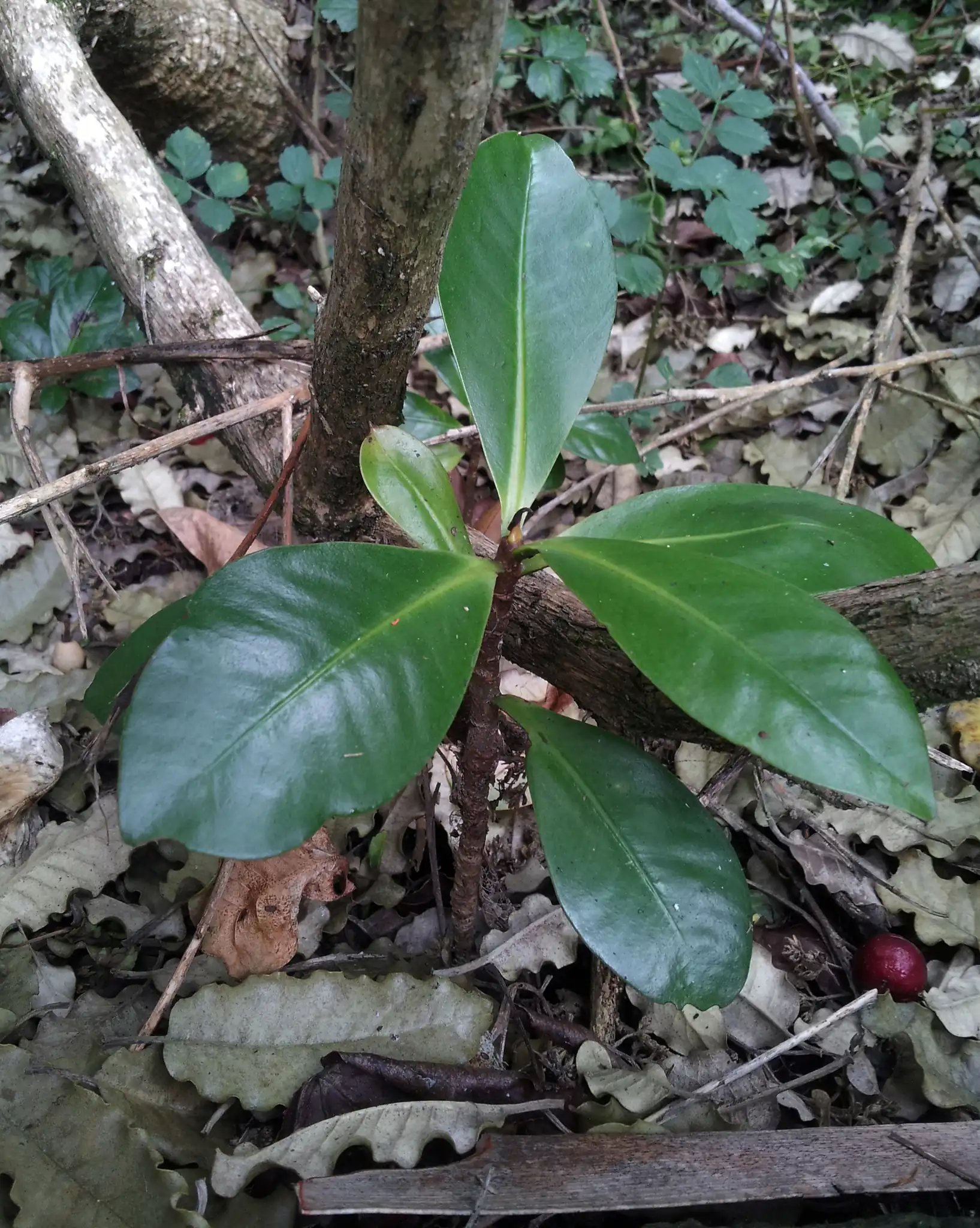
Elingamita johnsonii is a dioecious, stoutly branched evergreen shrub or small tree endemic to the rocky Three Kings Islands off northern New Zealand. It features large, leathery, dark glossy green obovate leaves with prominent midribs and fine translucent dots that are visible when held to the light.
Female plants produce dense, grape-like clusters of globose, bright red fleshy drupes following small pale yellow to pink summer flowers. Stems emerge sub-succulent before hardening into smooth grey bark, making young growth particularly vulnerable to sub-zero temperatures.
Uses & Benefits:
Essentials
At a Glance
Plant Type
Shrub
Height
315"
Width
177"
Light
Full Sun, Partial Sun
Zones
10
Water
Moderate
Humidity
Moderate to High
Lifespan
Perennial
Native To
Three Kings Islands, New Zealand
Toxicity
Non-toxic
Bloom period
Summer
In flower about 3 months of the year
Planting
How to Grow
- Select a planting location in full sun to partial shade with loose, humus-rich soil and exceptional drainage.
- Plant in a sheltered spot protected from harsh winds and winter frost, or set into a large container if growing outside USDA Zones 10–11.
- Water consistently during the establishment period, ensuring the soil never remains waterlogged.
- Apply a light top-dressing of balanced organic fertilizer in spring to support new leafy growth.
Pro Tip
Because Elingamita johnsonii is dioecious, isolated female specimens will not set fruit without a compatible male plant nearby for cross-pollination.
Keep It Thriving
Care Guide
Do
- Plant in sandy or loamy soils with high structural drainage to prevent root rot.
- Grow both male and female plants nearby if bright red fruit clusters are desired.
- Protect young plants entirely from frost and freezing temperatures.
Don't
- Do not cut back into old, leafless wood, as stems recover poorly from hard pruning.
- Do not plant in heavy, wet clay soils that hold standing water.
- Do not over-fertilize with heavy applications of nitrogen.
Seasonal Care Calendar
| Task | Jan | Feb | Mar | Apr | May | Jun | Jul | Aug | Sep | Oct | Nov | Dec |
|---|---|---|---|---|---|---|---|---|---|---|---|---|
| Fertilize | ||||||||||||
| Pest Check | ||||||||||||
| Prune | ||||||||||||
| Winter Prep |
Watch Out For
Pests & Diseases
Common Pests
Common Diseases
In the Garden
Landscape Uses & Companions
Landscape Uses
Companion Plants
Multiply
Propagation Methods
Good to Know
Common Questions
Three Kings Elingamita questions
What zones can Three Kings Elingamita grow in?
Three Kings Elingamita is hardy in USDA Zone 10: in that range it survives winter in the ground. Colder than Zone 10, grow it in a container you can move to shelter for the winter.
Is Three Kings Elingamita deer resistant?
Not reliably. Deer may browse Three Kings Elingamita, especially tender spring growth — plan on repellents or fencing where pressure is high.
When does Three Kings Elingamita bloom?
Three Kings Elingamita typically blooms in summer. Exact timing shifts a week or two with your zone — Sow's bloom calendar maps it to your garden.
Does Three Kings Elingamita need full sun?
Three Kings Elingamita does best in full sun to part shade. In hot climates, afternoon shade keeps blooms fresher longer.
Is Three Kings Elingamita drought tolerant?
Yes — once established (usually after the first full season), Three Kings Elingamita handles dry spells with minimal watering. Water deeply its first year to build the root system that makes that possible.
Keep exploring
Explore the genus
Hardy in your zone?
Grow Three Kings Elingamita with confidence
See it in a design of your actual yard, get zone-matched care reminders, and track it season by season in your garden journal.