The Story
Plant Bio
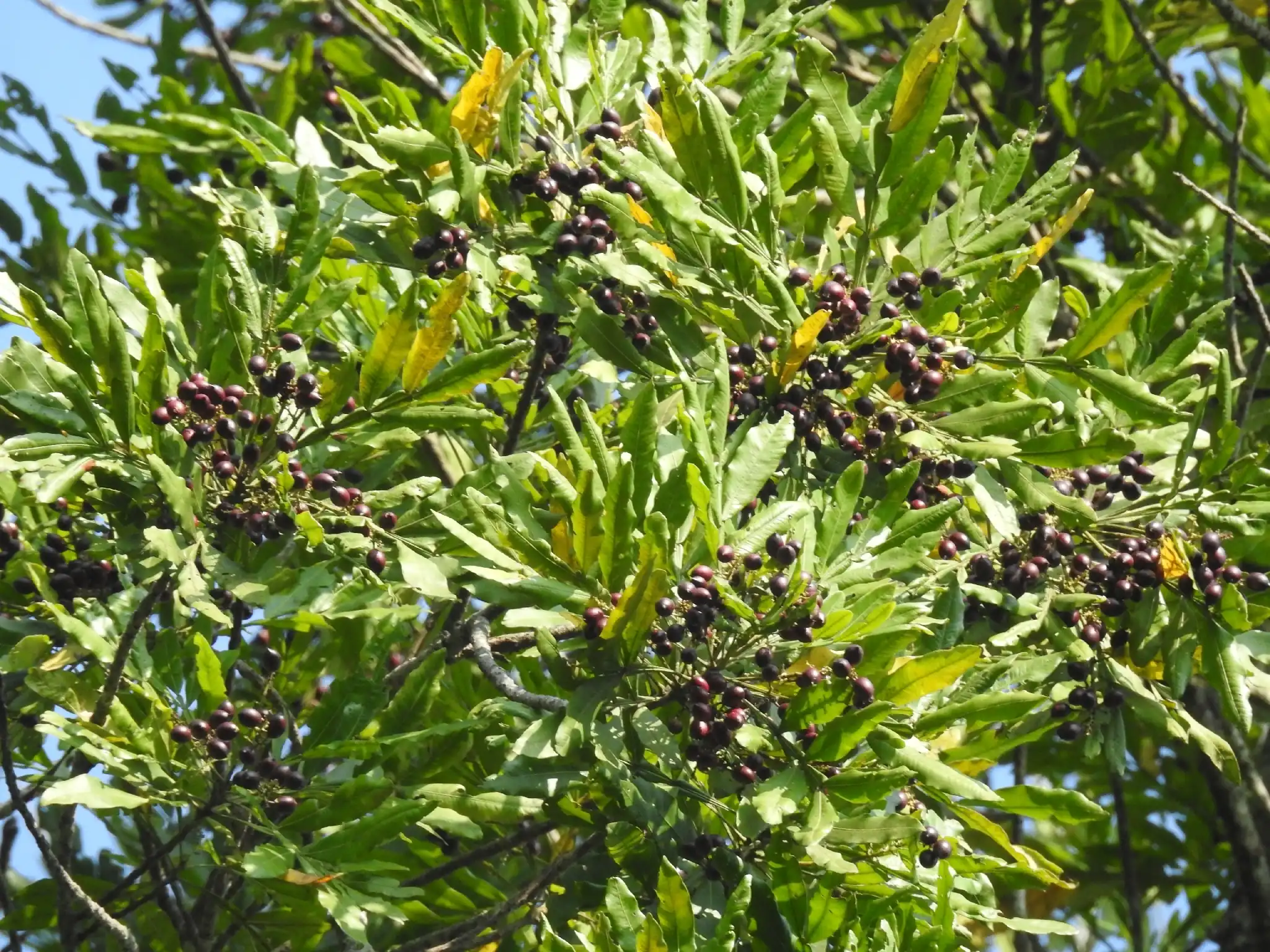
Filicium decipiens is a slow-growing evergreen tree from riverine forest in East Africa to India and Sri Lanka, reaching 20 to 25 feet in gardens with a dense rounded crown on a straight brown trunk. The leaves are pinnate with a winged stalk 6 to 12 inches long carrying five to ten pairs of sessile glossy leaflets, red and resinous when young and fern-like when mature.
Despite the common name it is neither Japanese nor a fern; decipiens means deceiving, for leaflets with entire crisped edges that fold flat like a fern frond. Flowers are tiny yellow-green clusters 2 to 8 inches long hidden in the foliage in late winter to spring, followed by ovoid drupes ripening green to purple-red to dark blue-black that seldom contain viable seed in Florida.
Uses & Benefits:
Essentials
At a Glance
Plant Type
Tree
Height
276"
Width
240"
Light
Full Sun, Partial Sun
Zones
9, 10
Water
Moderate
Humidity
High
Lifespan
Long-lived tree
Native To
East Africa to India and Sri Lanka
Toxicity
Unknown - no toxicity reported
Bloom period
Late winter – Spring
In flower about 4 months of the year
Planting
How to Grow
- Choose a full sun to part shade site with moist well-drained soil and room for a 20-foot canopy plus roots twice as wide.
- Dig a hole twice the width of the container and no deeper, then set the tree so the root flare sits at grade.
- Backfill with native soil, water deeply to settle air pockets, and build a wide mulch ring clear of the trunk.
- Water regularly through the first dry season, then reduce to deep soakings only in extended drought.
- Feed lightly in spring with balanced fertilizer only if growth is pale; no hard annual pruning is needed.
Pro Tip
Prune only to shorten a limb back to a lateral; the crown holds its rounded form without shearing and hard cuts into bare wood regrow slowly and unevenly.
Keep It Thriving
Care Guide
Do
- Give deep roots room to anchor; it is wind firm once established.
- Mulch to 3 inches to hold soil moisture in heat.
- Check stems for scale crusts through summer.
Don't
- Do not shear the canopy into shape; it splits the fern-like leaf planes.
- Do not plant where frost settles or drainage stays wet.
- Do not expect Florida-saved seed to grow; much of it is not viable.
Seasonal Care Calendar
| Task | Jan | Feb | Mar | Apr | May | Jun | Jul | Aug | Sep | Oct | Nov | Dec |
|---|---|---|---|---|---|---|---|---|---|---|---|---|
| Fertilize | ||||||||||||
| Mulch | ||||||||||||
| Pest Check | ||||||||||||
| Prune |
Watch Out For
Pests & Diseases
Common Pests
Common Diseases
In the Garden
Landscape Uses & Companions
Landscape Uses
Multiply
Propagation Methods
Good to Know
Common Questions
Japanese Fern Tree questions
What zones can Japanese Fern Tree grow in?
Japanese Fern Tree is hardy in USDA Zones 9–10: in that range it survives winter in the ground. Colder than Zone 9, winters are too cold for it to survive outdoors.
When does Japanese Fern Tree bloom?
Japanese Fern Tree typically blooms from late winter to late spring. Exact timing shifts a week or two with your zone — Sow's bloom calendar maps it to your garden.
Does Japanese Fern Tree need full sun?
Japanese Fern Tree does best in full sun to part shade. In hot climates, afternoon shade keeps blooms fresher longer.
Is Japanese Fern Tree drought tolerant?
Yes — once established (usually after the first full season), Japanese Fern Tree handles dry spells with minimal watering. Water deeply its first year to build the root system that makes that possible.
Keep exploring
Explore the genus
Hardy in your zone?
Grow Japanese Fern Tree with confidence
See it in a design of your actual yard, get zone-matched care reminders, and track it season by season in your garden journal.