The Story
Plant Bio
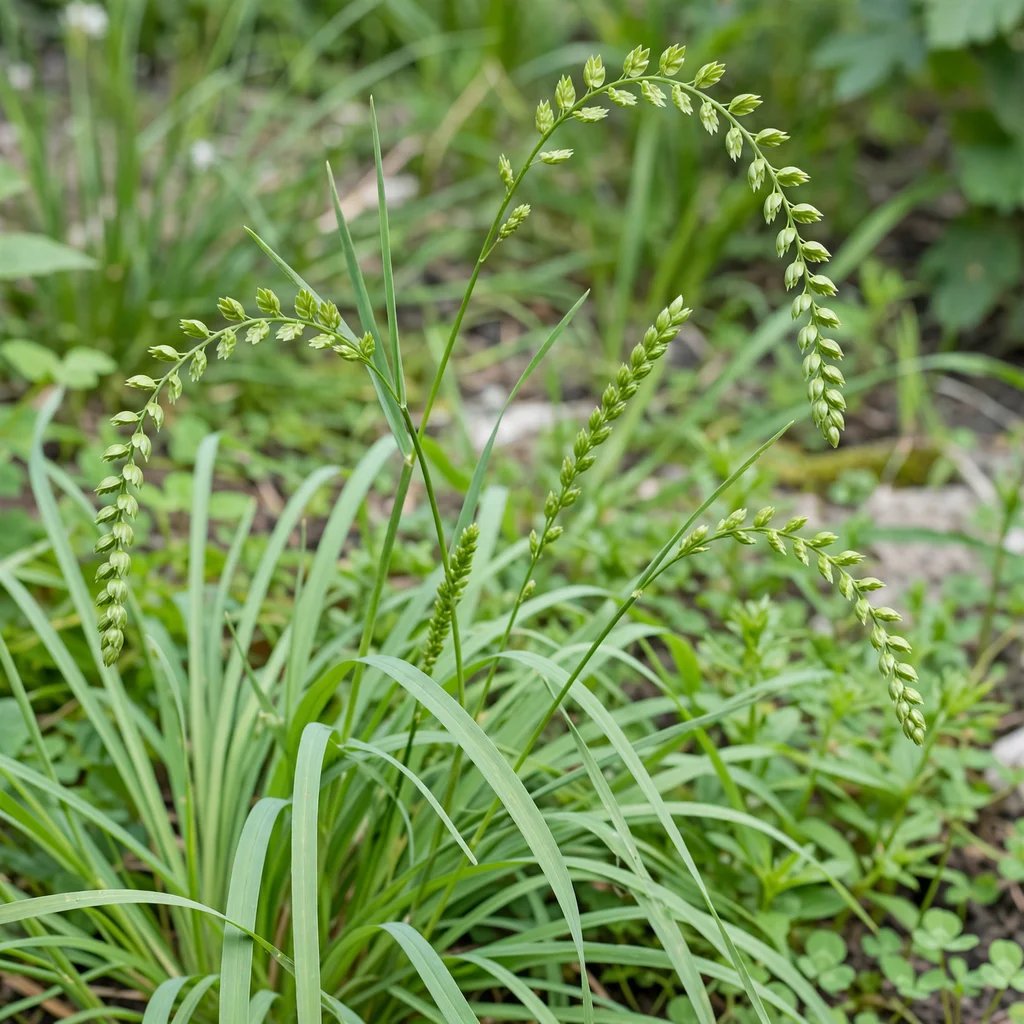
Beckmannia syzigachne, commonly known as American sloughgrass, is a native tufted bunchgrass found across wet northern habitats. It grows up to 39 inches tall with flat, light green leaves and distinctive round, cup-like spikelets arranged along narrow, one-sided panicles.
An obligate wetland plant, this species thrives in saturated soils and standing water where traditional landscape grasses fail. Its abundant seed heads provide a primary food source for waterfowl and marsh birds in native restoration plantings.
Uses & Benefits:
Essentials
At a Glance
Plant Type
Grass
Height
39"
Width
24"
Light
Full Sun, Partial Sun
Zones
4, 5, 6, 7, 8, 9
Water
High
Humidity
High
Lifespan
Annual to short-lived perennial
Native To
North America, Europe, Asia
Toxicity
Non-toxic
Bloom period
Late spring – Summer
In flower about 4 months of the year
Planting
How to Grow
- Select a planting location in full sun to partial shade with consistently wet soil or shallow standing water.
- Sow seed directly onto damp mud or press container plugs into saturated soil during early spring.
- Maintain water levels to keep the root zone continuously submerged or saturated throughout the growing season.
- Allow seed heads to mature and shatter naturally in late summer if naturalizing or wildlife foraging is desired.
Pro Tip
Amateurs frequently lose this plant by placing it in well-drained garden borders; maintain continuous soil saturation or shallow standing water to ensure survival.
Keep It Thriving
Care Guide
Do
- Do plant in saturated soils, bog gardens, or pond margins.
- Do clear dead stems in late winter if managing dry landscape edges.
Don't
- Don't allow the root zone to dry out completely during the active growing season.
- Don't apply supplemental fertilizers, as standard wetland soil nutrients are sufficient.
Seasonal Care Calendar
| Task | Jan | Feb | Mar | Apr | May | Jun | Jul | Aug | Sep | Oct | Nov | Dec |
|---|---|---|---|---|---|---|---|---|---|---|---|---|
| Pest Check | ||||||||||||
| Plant | ||||||||||||
| Propagate | ||||||||||||
| Spring Cleanup |
Watch Out For
Pests & Diseases
Common Pests
Common Diseases
In the Garden
Landscape Uses & Companions
Landscape Uses
Companion Plants
Multiply
Propagation Methods
Good to Know
Common Questions
American Sloughgrass questions
What zones can American Sloughgrass grow in?
American Sloughgrass is an annual: it grows, flowers and sets seed in one season, so winter cold doesn't limit where it grows. Gardeners in any zone can grow it by planting at the right time, usually after the last spring frost.
When does American Sloughgrass bloom?
American Sloughgrass typically blooms from late spring to late summer. Exact timing shifts a week or two with your zone — Sow's bloom calendar maps it to your garden.
Does American Sloughgrass need full sun?
American Sloughgrass does best in full sun to part shade. In hot climates, afternoon shade keeps blooms fresher longer.
Keep exploring
Explore the genus
Grow American Sloughgrass with confidence
See it in a design of your actual yard, get zone-matched care reminders, and track it season by season in your garden journal.