The Story
Plant Bio
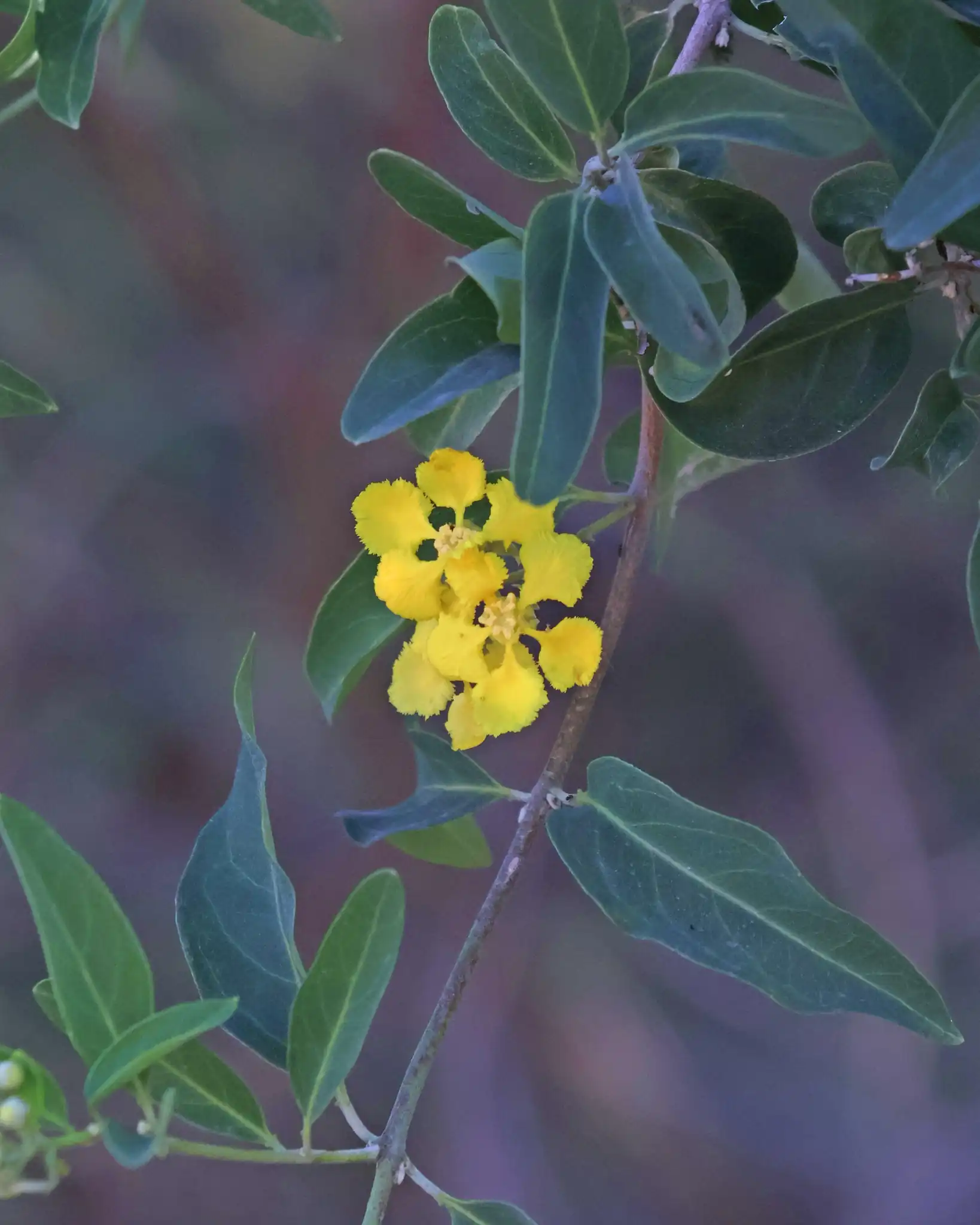
Callaeum macropterum is a fast-growing woody twining vine from Mexico that reaches 8 to 20 feet on support, evergreen where winters stay mild and resprouting from the crown after hard freeze. It carries glossy dark green lanceolate to ovate leaves and bright yellow orchid-like flowers 1 to 1.5 inches across in clusters along the twining stems.
The display after bloom is tan-brown three-winged samaras that read as butterflies and hold well for dried work. Much nursery stock sold under this name is Callaeum septentrionale, which has hairy petals and orbicular samara wings; true C. macropterum has glabrous waxy leaves and narrower wings and has no confirmed wild occurrence north of Mexico.
Uses & Benefits:
Essentials
At a Glance
Plant Type
Vine
Height
240"
Width
360"
Light
Full Sun, Partial Sun
Zones
8, 9, 10
Water
Low to moderate
Humidity
Unknown
Lifespan
Woody perennial vine
Native To
Mexico
Toxicity
Unknown
Bloom period
Spring – Fall
In flower about 9 months of the year
Planting
How to Grow
- Plant in spring after frost in full sun against a fence, trellis or arbor with room to climb 8 to 20 feet.
- Dig into well-drained sandy to loam soil amended for desert planting; set the crown at grade and keep it out of heavy unamended clay.
- Tie new shoots to the support until they twine on their own, then let them sprawl or prune to keep a 4 to 6 foot managed frame.
- Water deeply to establish, then reduce frequency; saturate the root zone and let it dry between waterings.
- Mulch the crown in zone 8 and leave evergreen top growth intact through winter unless freeze-killed.
Pro Tip
Cut freeze-killed stems to live wood in spring and mulch the crown in zone 8; established plants bloom best on sun-grown new twining growth, not on hard-sheared old wood.
Keep It Thriving
Care Guide
Do
- Provide full sun and sharp drainage with room for twining stems.
- Train on a sturdy trellis, arbor or fence and clean dead wood and spent samaras as needed.
- Mulch the crown in borderline zones to protect regrowth buds.
Don't
- Do not plant in unamended heavy clay or low spots that stay wet.
- Do not hard-shear into a hedge; it blooms on twining shoot growth.
- Do not keep soil constantly saturated once established.
Seasonal Care Calendar
| Task | Jan | Feb | Mar | Apr | May | Jun | Jul | Aug | Sep | Oct | Nov | Dec |
|---|---|---|---|---|---|---|---|---|---|---|---|---|
| Mulch | ||||||||||||
| Plant | ||||||||||||
| Propagate | ||||||||||||
| Spring Cleanup |
Watch Out For
Pests & Diseases
Common Pests
Common Diseases
In the Garden
Landscape Uses & Companions
Landscape Uses
Companion Plants
Multiply
Propagation Methods
Good to Know
Common Questions
Yellow Orchid Vine questions
What zones can Yellow Orchid Vine grow in?
Yellow Orchid Vine is hardy in USDA Zones 8–10: in that range it survives winter in the ground. Colder than Zone 8, grow it in a container you can move to shelter for the winter, or as an annual.
When does Yellow Orchid Vine bloom?
Yellow Orchid Vine typically blooms from spring to fall. Exact timing shifts a week or two with your zone — Sow's bloom calendar maps it to your garden.
Does Yellow Orchid Vine need full sun?
Yellow Orchid Vine does best in full sun to part shade. In hot climates, afternoon shade keeps blooms fresher longer.
Is Yellow Orchid Vine drought tolerant?
Yes — once established (usually after the first full season), Yellow Orchid Vine handles dry spells with minimal watering. Water deeply its first year to build the root system that makes that possible.
Keep exploring
Explore the genus
Hardy in your zone?
Grow Yellow Orchid Vine with confidence
See it in a design of your actual yard, get zone-matched care reminders, and track it season by season in your garden journal.